Secure cloud document collaboration without uncontrolled copies
Connect information classification, recipient identity, practical access rules, and observable revocation in cloud collaboration.
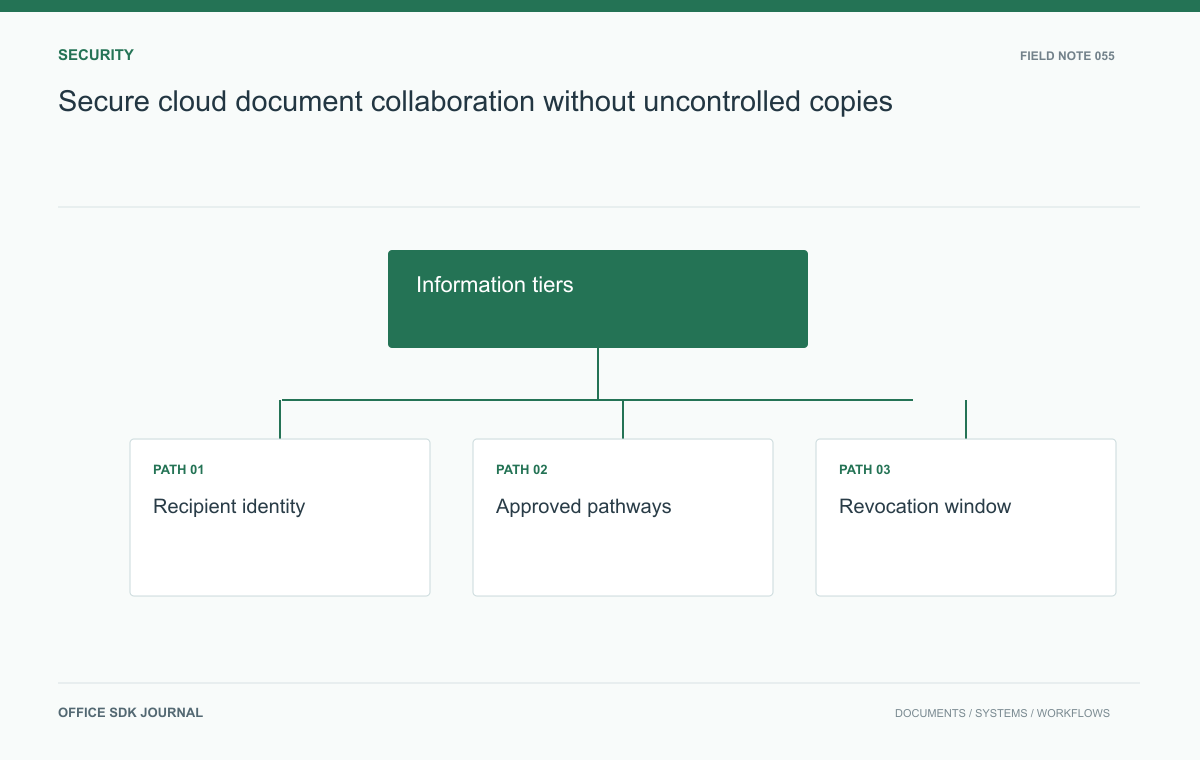
Make the approved sharing path fit the information class and recipient relationship. Verify authentication, forwarded invitations, exports, expiry, and active-session revocation; then give users a workable partner onboarding and exception route. Repeated email workarounds are evidence to investigate, not proof that staff reject security.
Match controls to information
Define a small set of information classes with clear examples and approved handling. A public brochure, an internal plan, and a confidential acquisition draft should not receive identical defaults. Map each class to permitted recipients, download behavior, review requirements, and retention obligations using verified platform capabilities. Keep the rules understandable at the point of sharing. Where a necessary restriction cannot be enforced technically, assign a procedure or change the workflow. Avoid labels that appear authoritative while no application or owner actually applies the associated access and publication decisions.
Design recipient verification
Decide when authenticated recipients are required and how outside identities are approved. Confirm what the selected platform checks when a link is opened, forwarded, or reused after membership changes. A link with an unusual identifier is still a credential if possession grants access. Record expiry and revocation behavior for active sessions and previously issued downloads. Distinguish restricting future retrieval from recalling delivered content. Give users a simple approved way to collaborate with legitimate partners, including the owner who can authorize exceptions, so security policy does not become a dead end for ordinary work.

Read workarounds as workflow evidence
If a buyer repeatedly sends attachments instead of an approved link, ask what task failed. The supplier may not be able to authenticate, the shared version may be unclear, or the invite may arrive after a deadline. Different causes need different fixes. Blocking attachments alone does not identify any of them.
| Observed workaround | Question to ask |
|---|---|
| Copy pasted into email | Was the recipient unable to open the permitted view? |
| Long-lived public link | Is partner onboarding too slow for recurring review? |
| Downloaded copy recirculated | Does the approved path clearly identify the issued version? |
Use a harmless reproduction of the task and observe both employees and external recipients. Verify controls in the actual candidate configuration, then change the process that caused the workaround. The answer may be clearer version labels, a supported external identity route, or a documented release step.
After the correction, rerun the task and inspect the information actually delivered. Measure whether the approved route became practical and whether it reduced unnecessary copies. Keep exceptions bounded by purpose, owner, and review date. Convenience should be made visible enough to evaluate, instead of being either dismissed or allowed to silently define the organization's sharing policy.
Test a supplier review
A purchasing team asks a supplier to review a specification containing internal cost assumptions in a separate appendix. Create a safe test version and share only the intended material through the approved pathway. Have the supplier forward the invitation to another test identity, then revoke the original recipient and retry access. Check comments, attachments, search previews, and export paths. Observe whether staff can complete review without emailing a broader copy. This scenario measures confidentiality and usability together and can reveal that a technically available sharing mode does not satisfy the actual recipient boundary.
Observe outcomes without collecting content
Monitor sharing events, failed authorization, expired invitations, unusual bulk downloads, and unowned external access where supported. Log identifiers and decisions without routinely copying document contents into analytics. Assign someone to review meaningful exceptions and contact the responsible document owner through the approved internal process. Tune alerts against the organization's workflow so ordinary review cycles do not overwhelm support. When users repeatedly request exceptions, inspect the task before increasing restrictions. The pattern may reveal unclear classification, missing recipient onboarding, or a control that is incompatible with the business's legitimate exchange requirements.

Sharing-path review
- Publish clear examples for each information class.
- Test recipient verification, forwarded invitations, and access revocation.
- Inspect attachments, comments, previews, and delivery artifacts.
- Provide a practical exception owner and partner onboarding route.
- Use event evidence to improve the workflow without collecting unnecessary content.
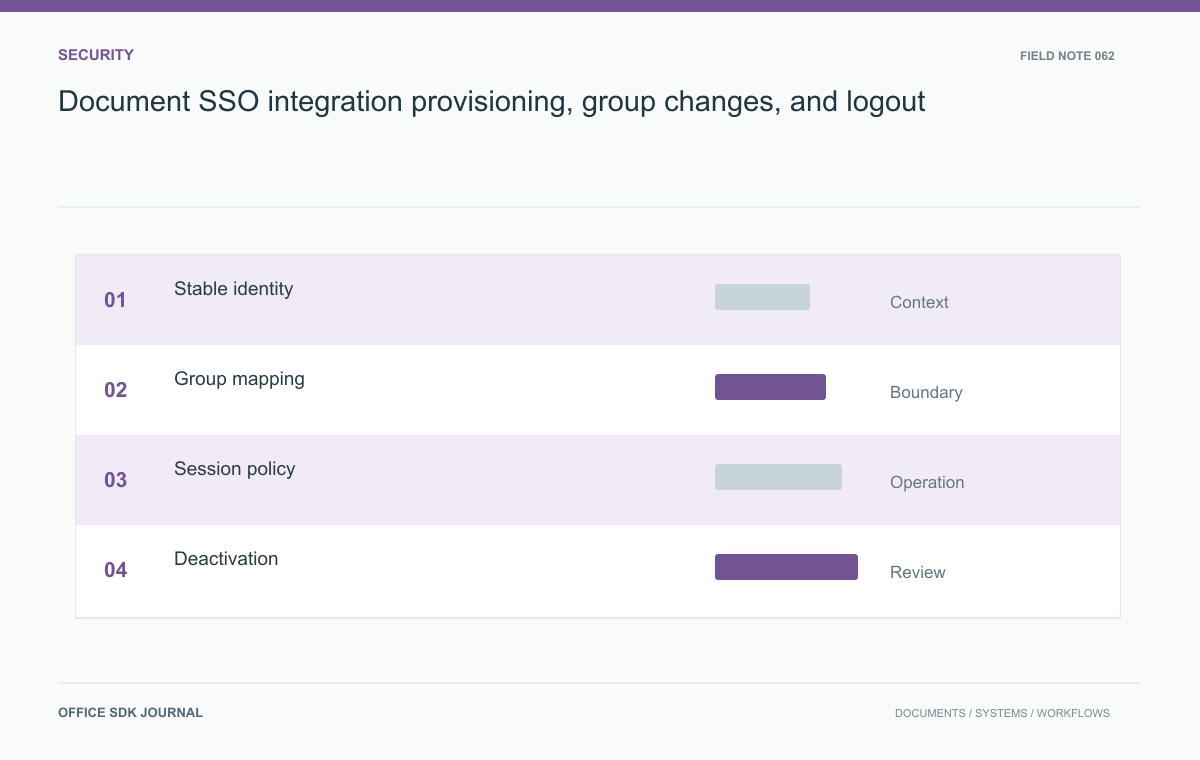
Document SSO integration: provisioning, group changes, and logout
Connect login, provisioning, group mapping, deactivation, and recovery instead of stopping at a successful redirect.
Read story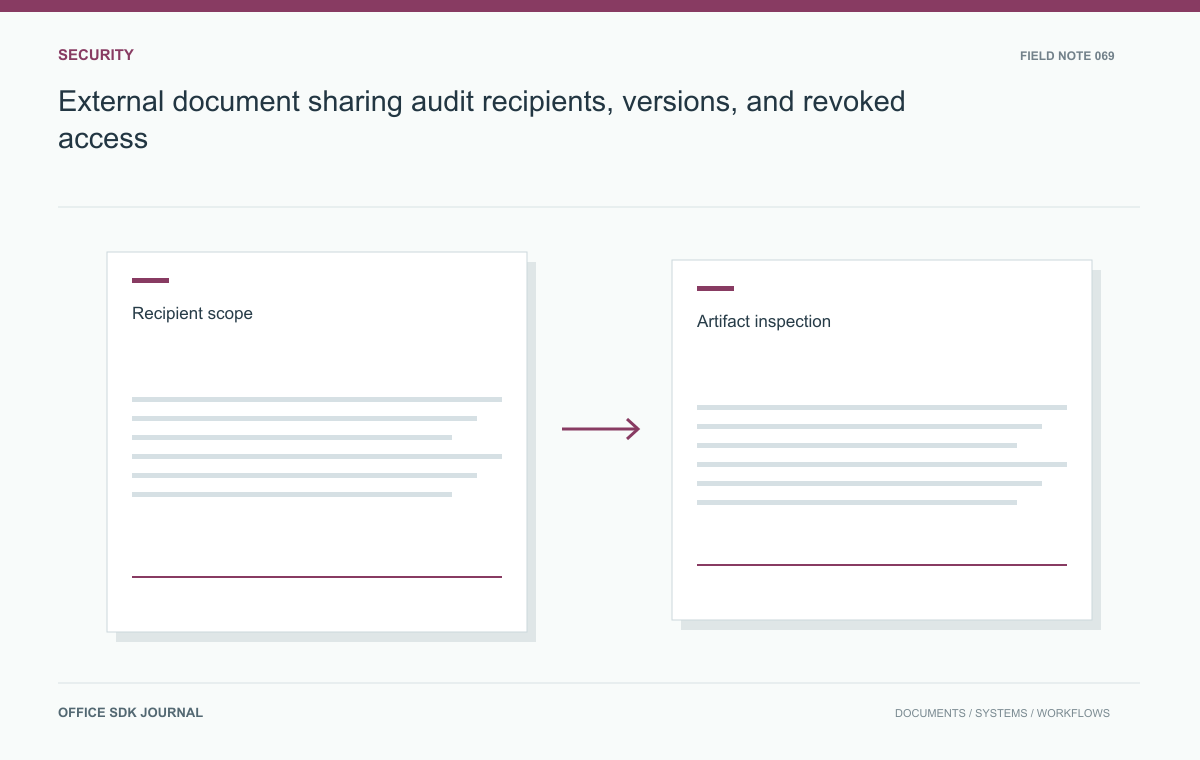
External document sharing audit: recipients, versions, and revoked access
Find external access risks by testing recipient boundaries, version scope, attachments, revocation, and ownership.
Read story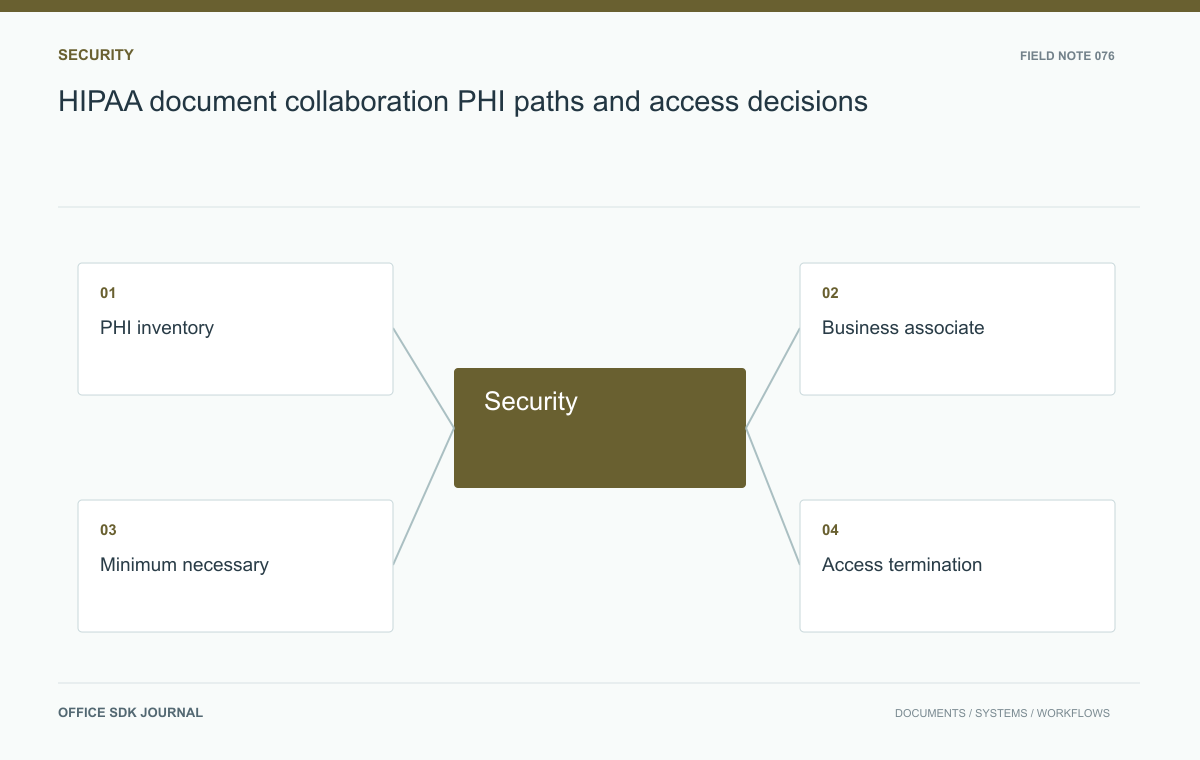
HIPAA document collaboration: PHI paths and access decisions
A workflow assessment for PHI, business associate arrangements, secondary copies, and clinical continuity.
Read story