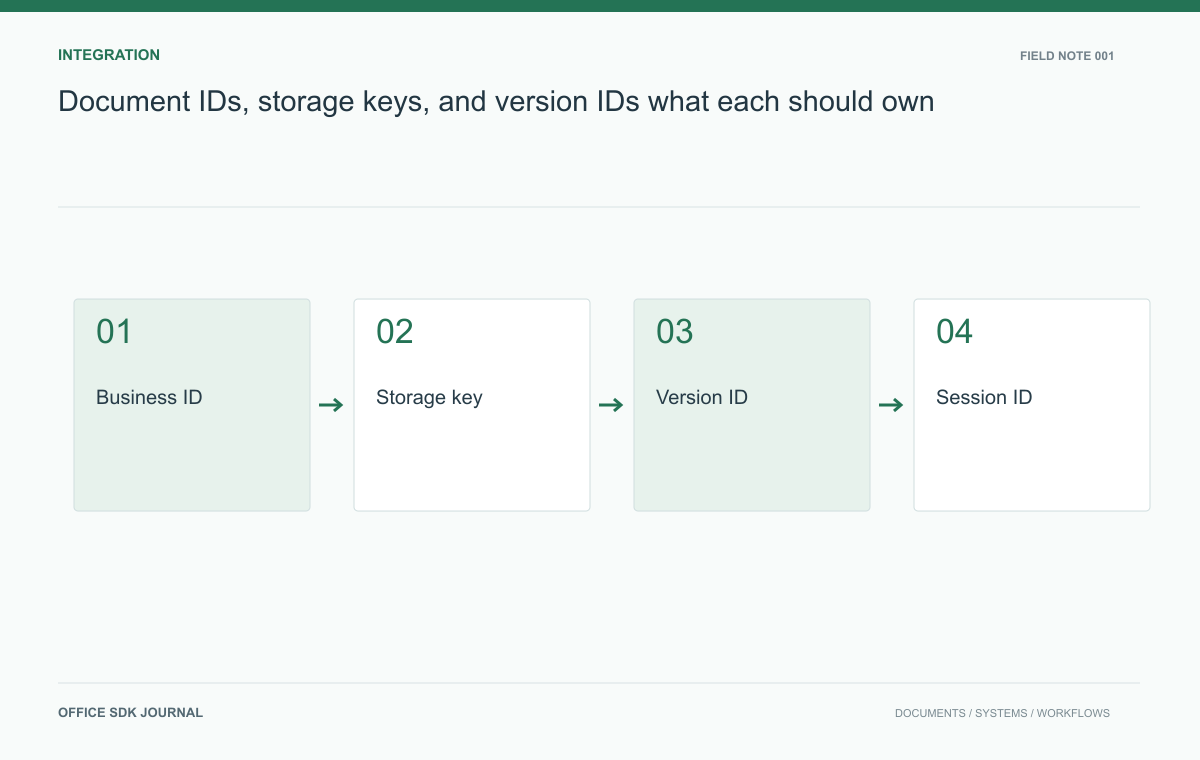
Document IDs, storage keys, and version IDs: what each should own
Separate business identity, stored objects, and editor sessions so renames, copies, and migrations remain predictable.
Read storyDocuments, systems, and the work between.
Separate business identity, stored objects, and editor sessions so renames, copies, and migrations remain predictable.
Read the storySeparate business identity, stored objects, and editor sessions so renames, copies, and migrations remain predictable.
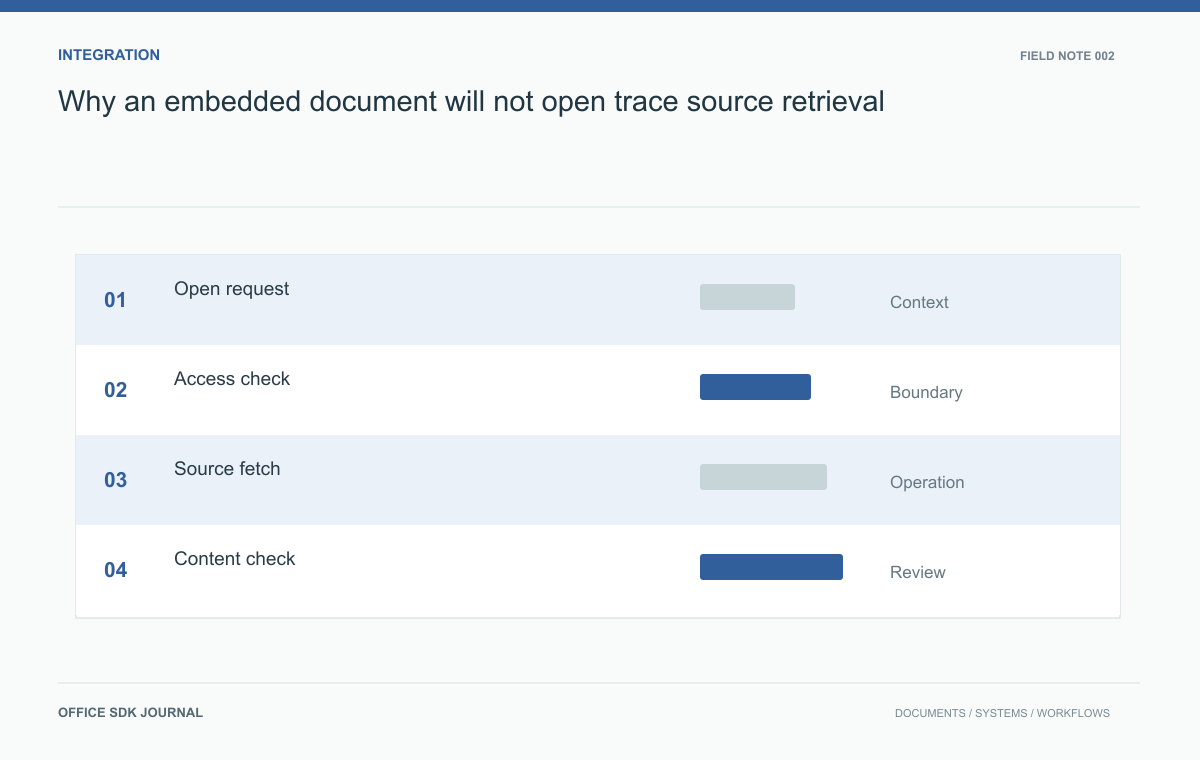
Read storyMap the first document open as a sequence of owned requests, then test the retrieval path from the system that actually fetches the file.
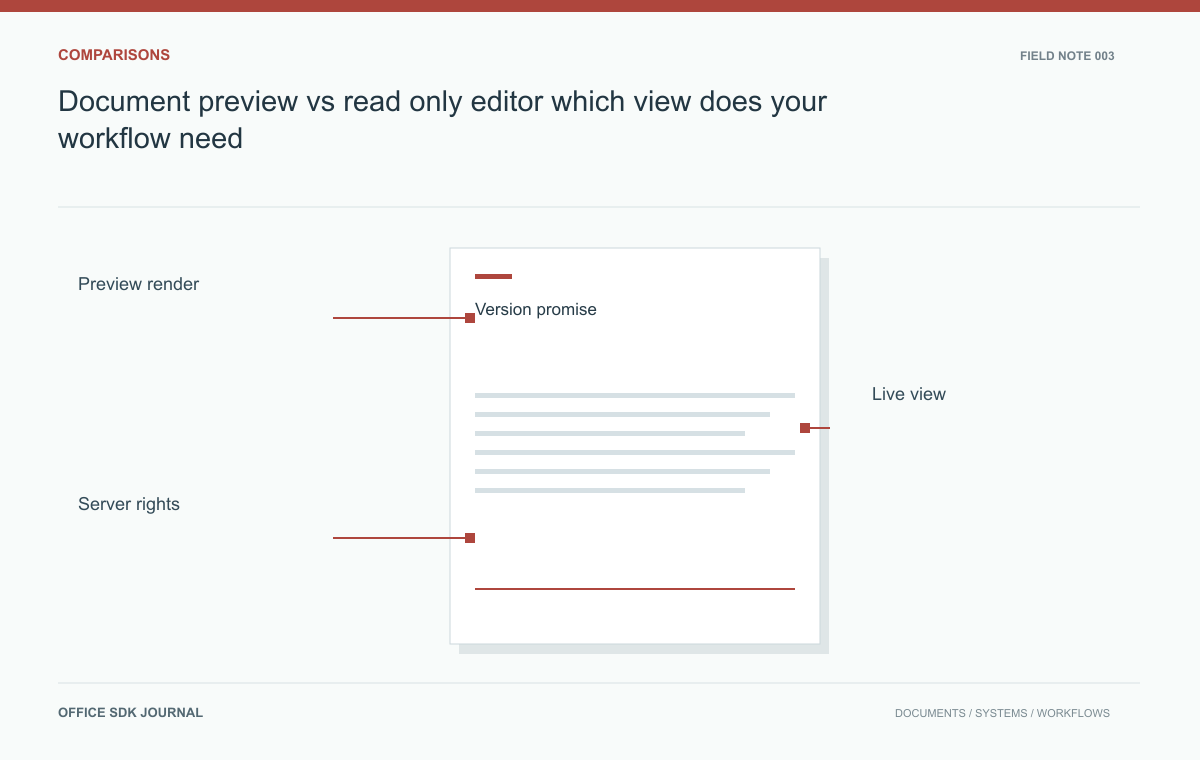
Read storyCompare viewing workflows by data path, collaboration context, and permission requirements rather than the appearance of the toolbar.
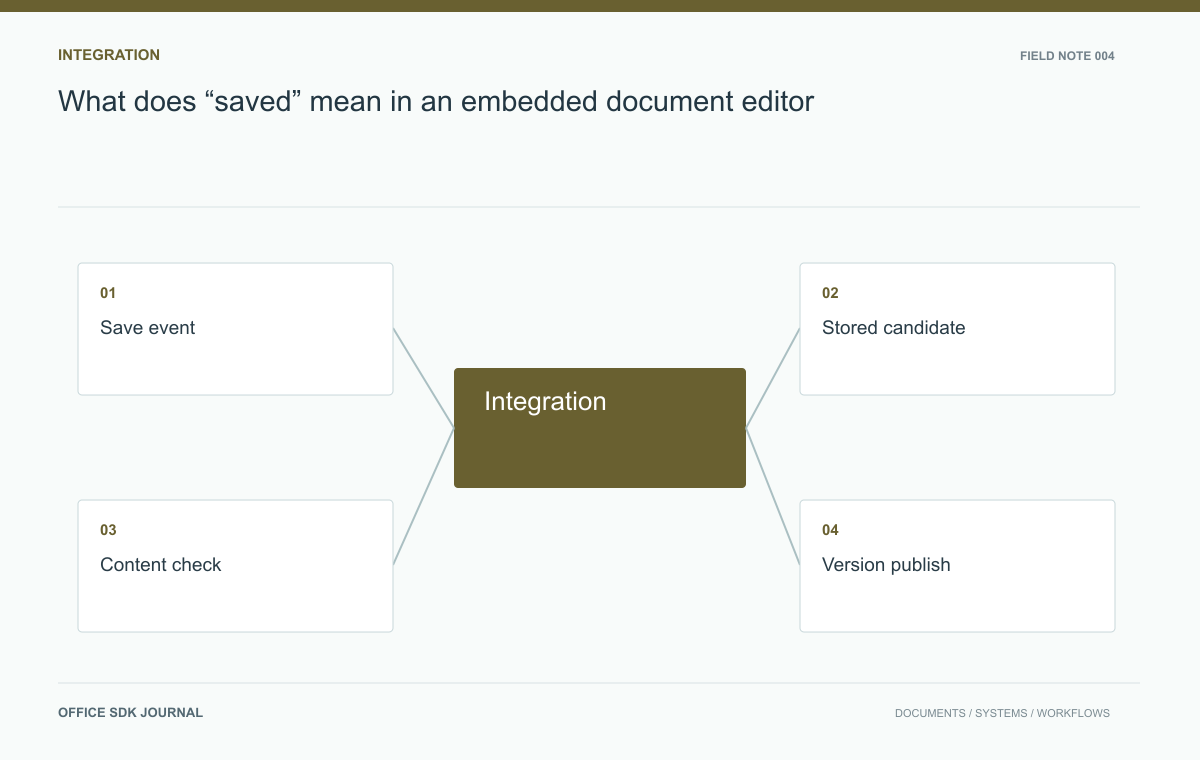
Read storyDistinguish session updates, durable application versions, and exported files to build a save contract users can trust.
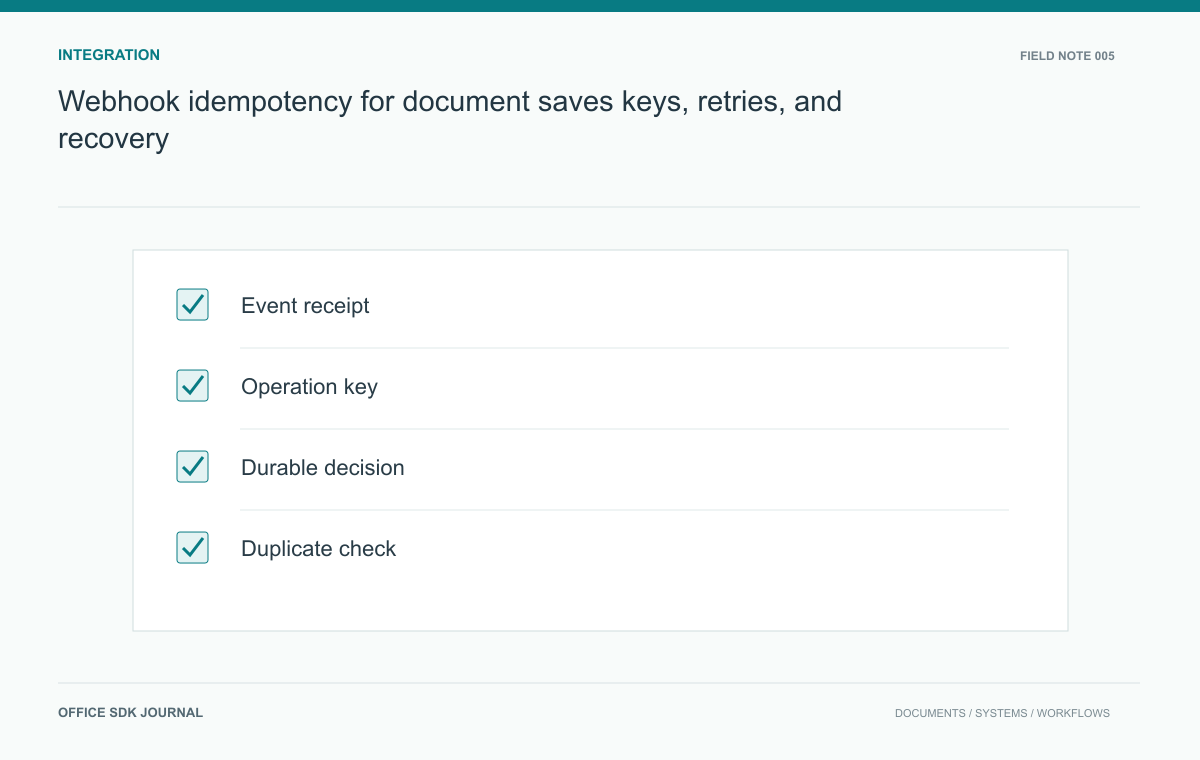
Read storyDesign callback handling around authenticated events, durable acknowledgement, and idempotent effects.
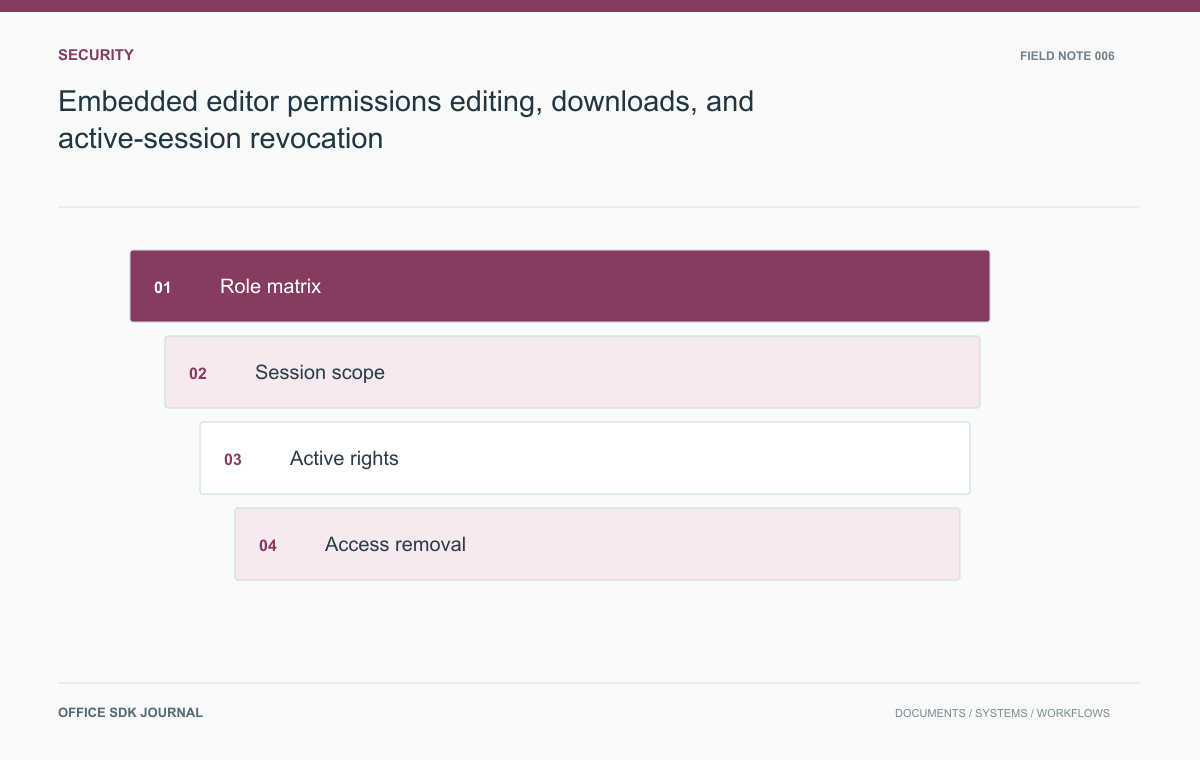
Read storyPlan authorization checks for session creation, active editing, exports, and revocation across an embedded document workflow.
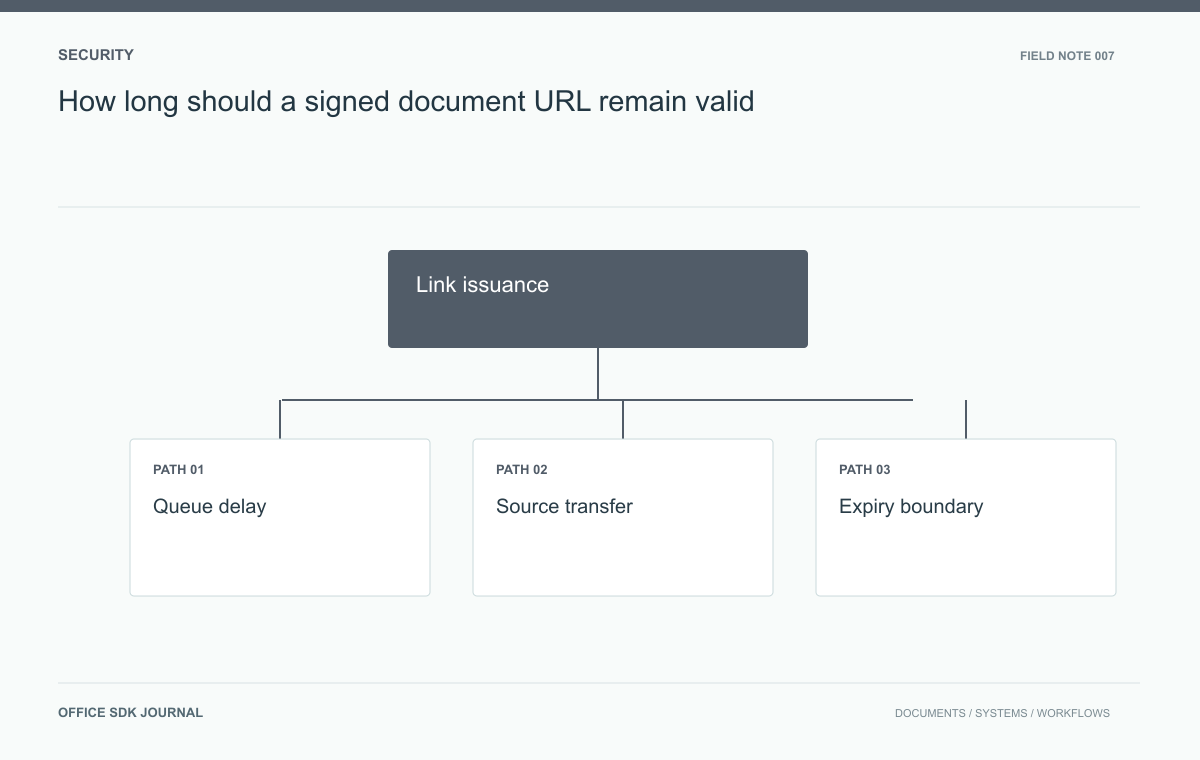
Read storyChoose link expiry from queueing, download, and retry behavior while limiting the exposure of temporary document access.
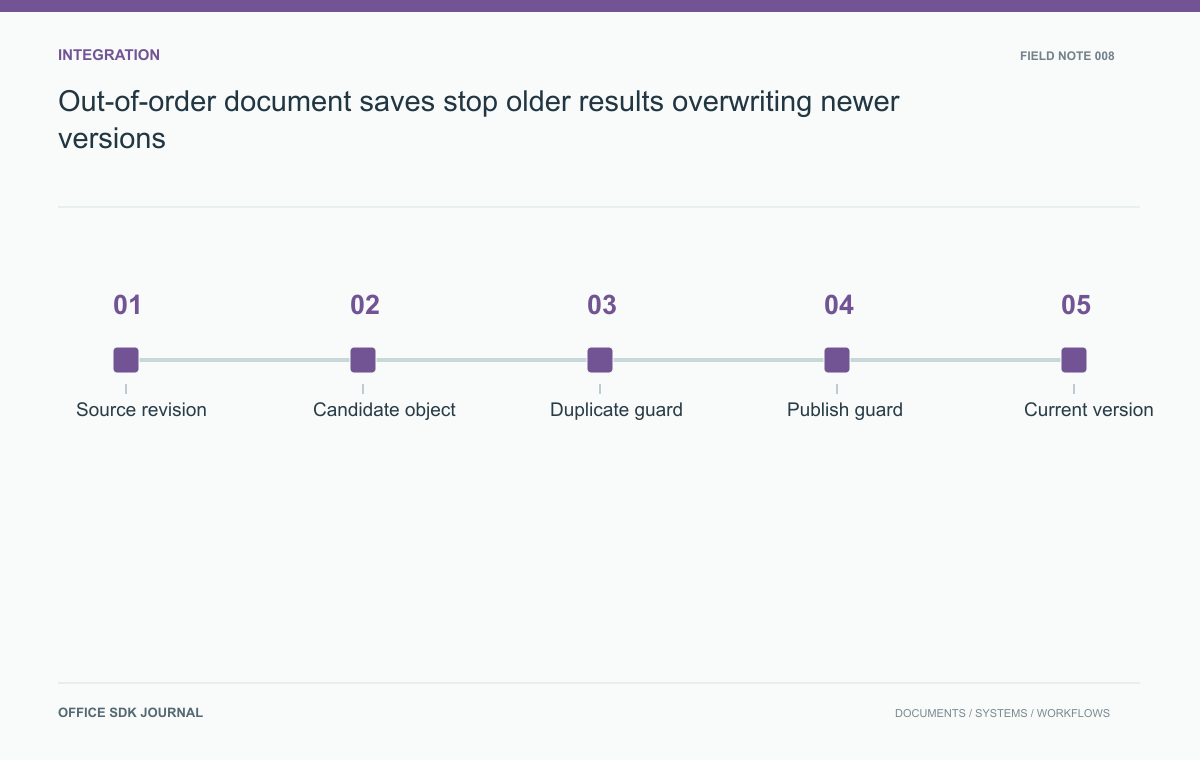
Read storyUse explicit version ordering and guarded publication to handle duplicates and delayed save delivery without moving content backward.
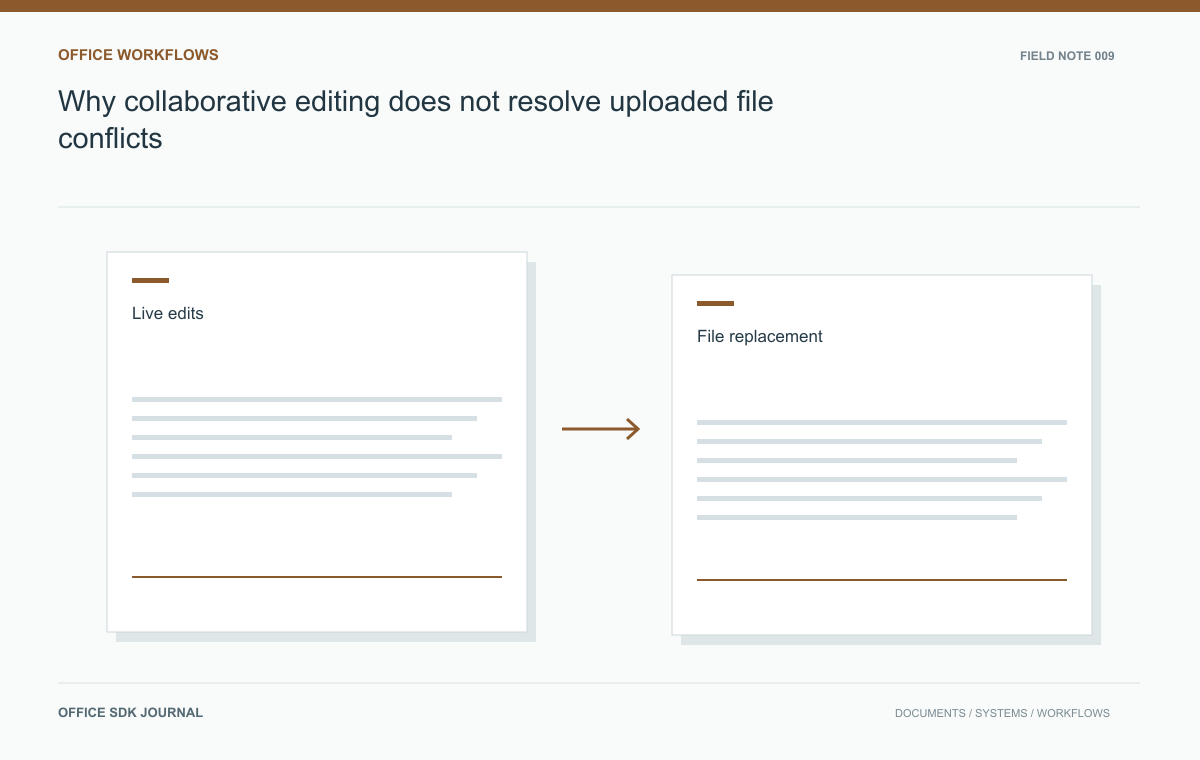
Read storyUnderstand why a collaborative editor still needs application rules for uploads, restores, and external replacements.
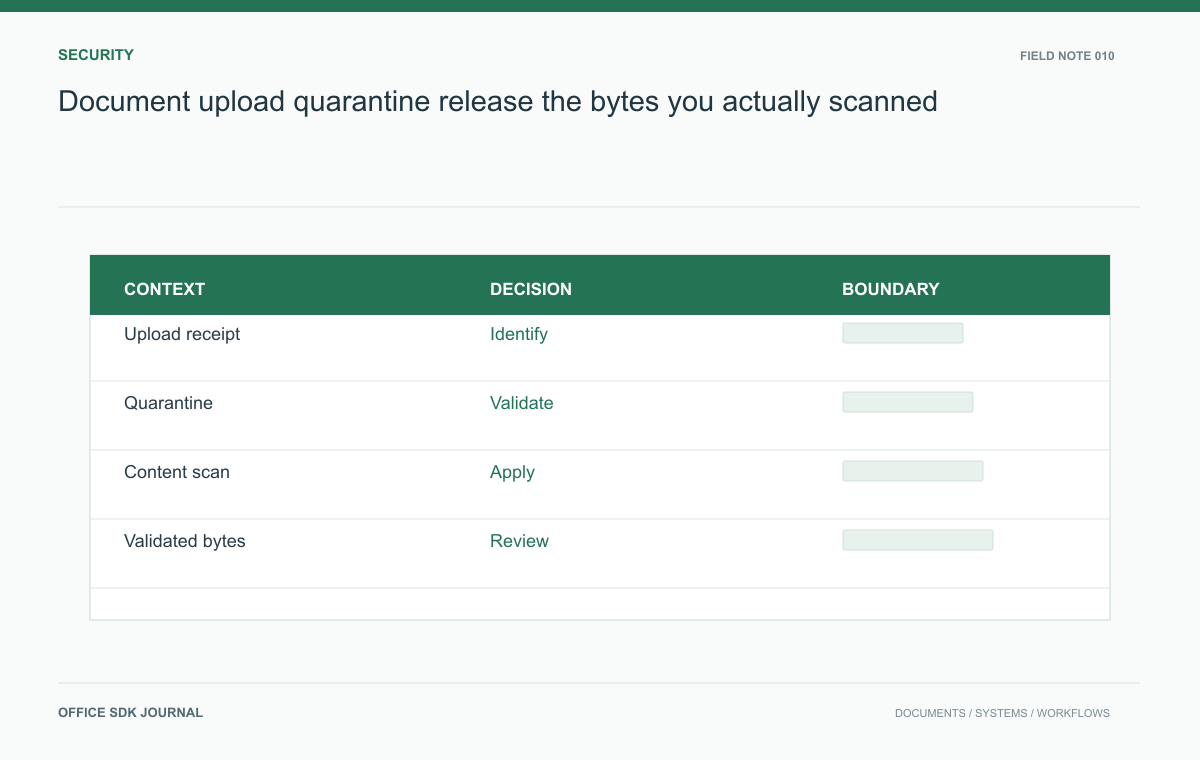
Read storyStructure uploads so validation, scanning, and release happen before untrusted files reach shared document workflows.
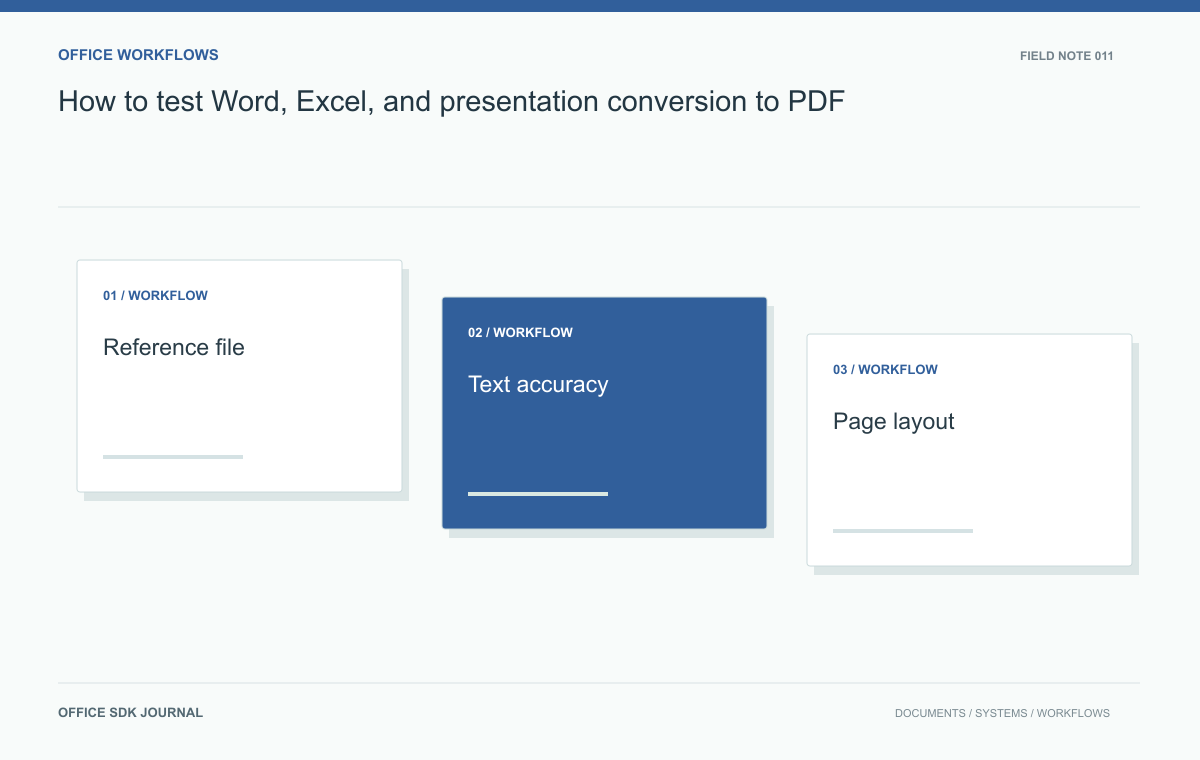
Read storyCompare structure, critical values, and rendered pages with an agreed corpus instead of relying on a successful conversion response.
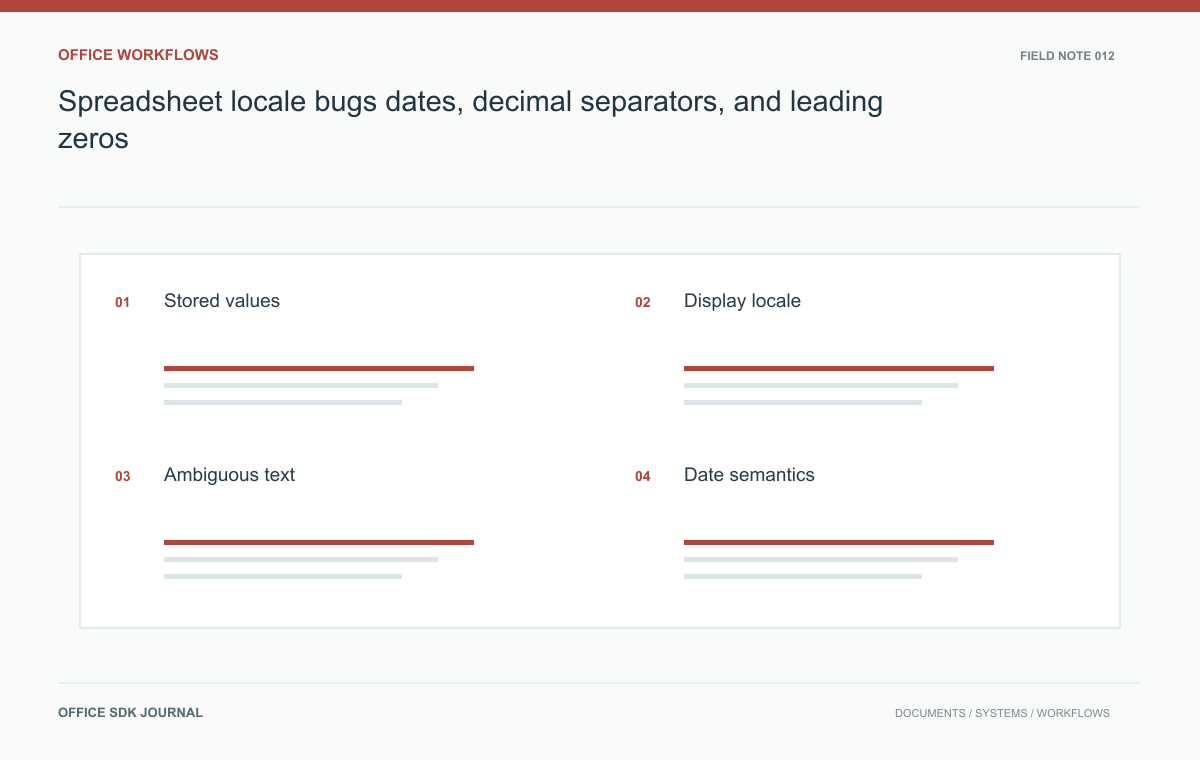
Read storyTest stored values, display formats, and text imports separately when spreadsheets move between users and systems.
Read story