

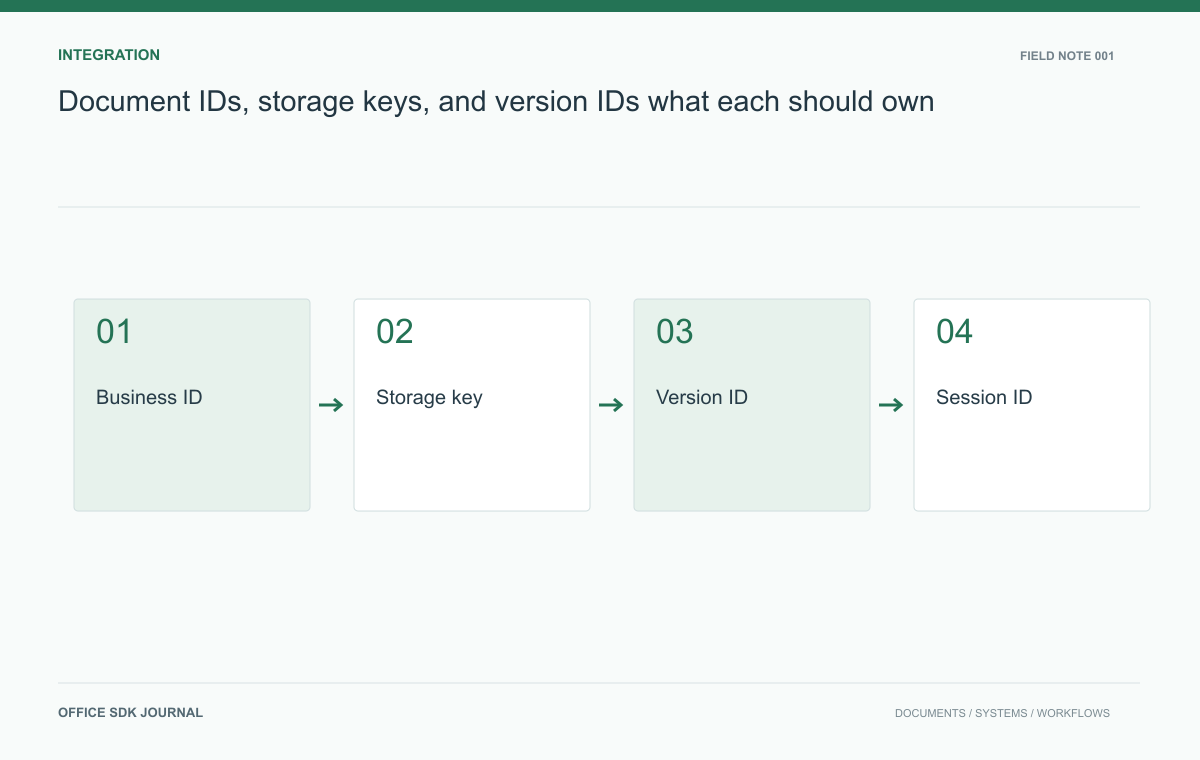
Document IDs, storage keys, and version IDs: what each should own
Separate business identity, stored objects, and editor sessions so renames, copies, and migrations remain predictable.
Read storyThe editor surface should receive context, not own the archive. These articles map the storage boundary: where files live, who issues access, and how results return to the system of record.
27 articles · Document storage
Separate business identity, stored objects, and editor sessions so renames, copies, and migrations remain predictable.
Read story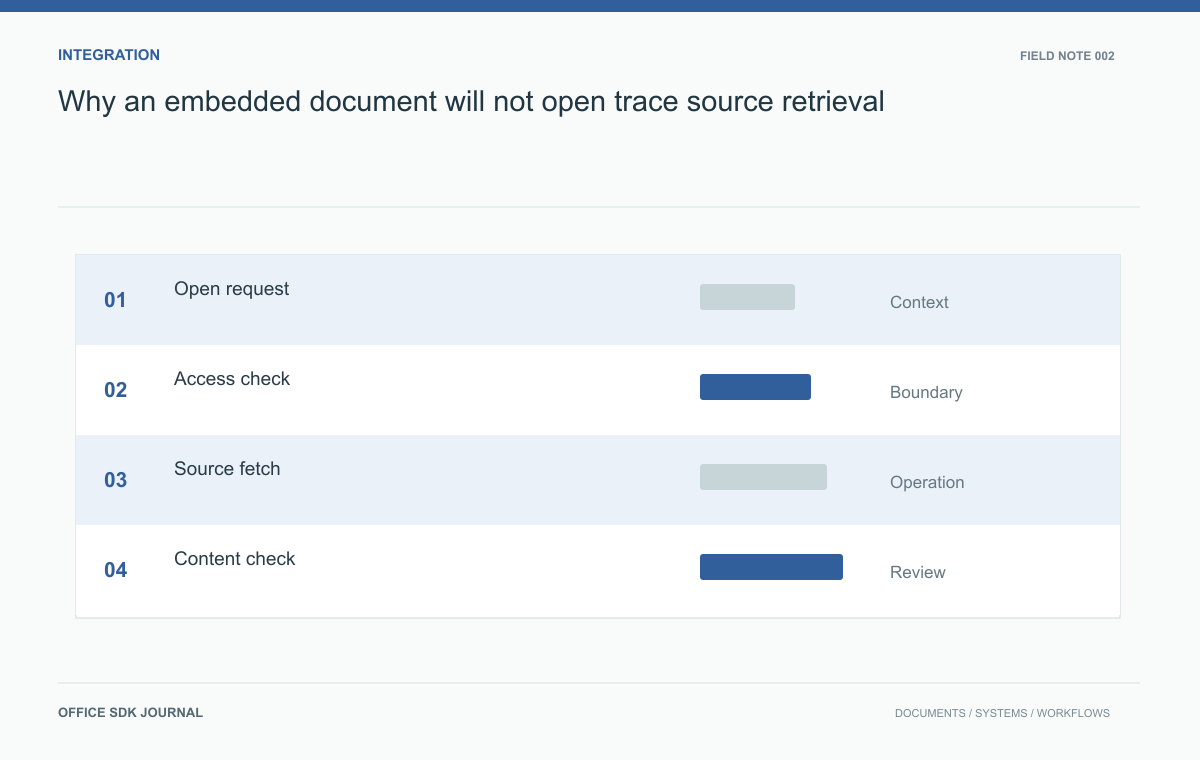
Map the first document open as a sequence of owned requests, then test the retrieval path from the system that actually fetches the file.
Read story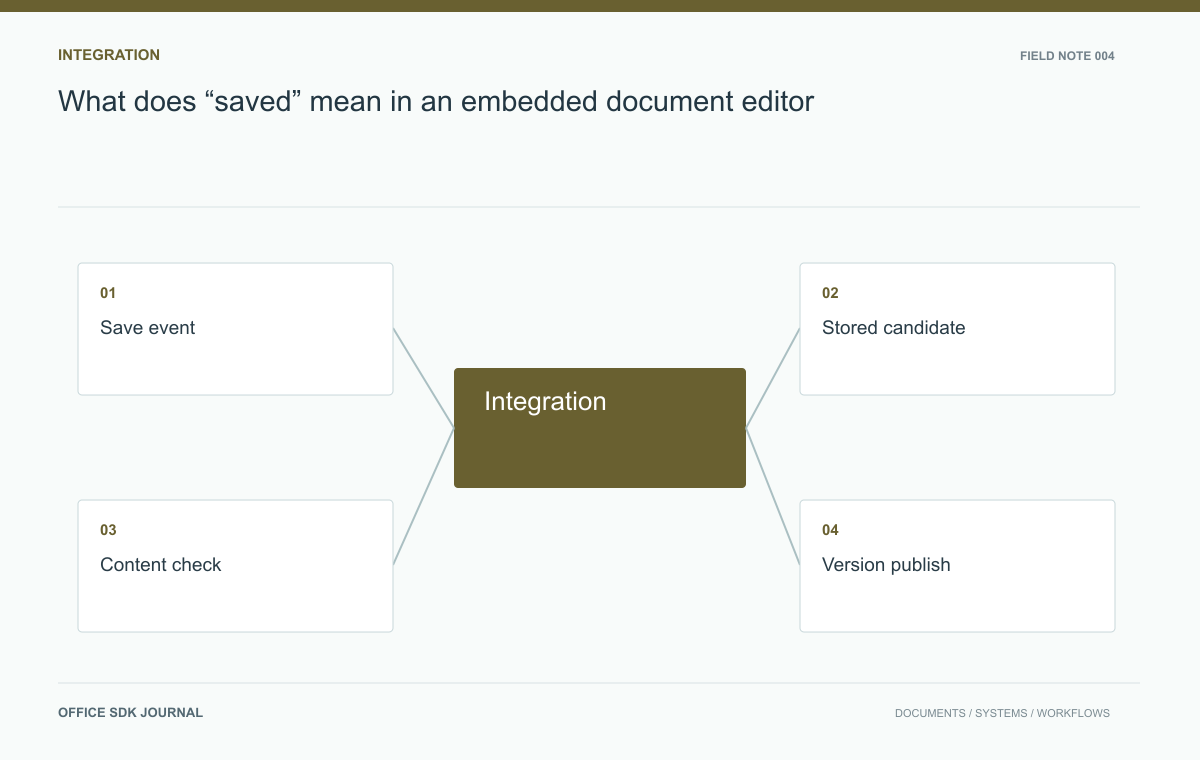
Distinguish session updates, durable application versions, and exported files to build a save contract users can trust.
Read story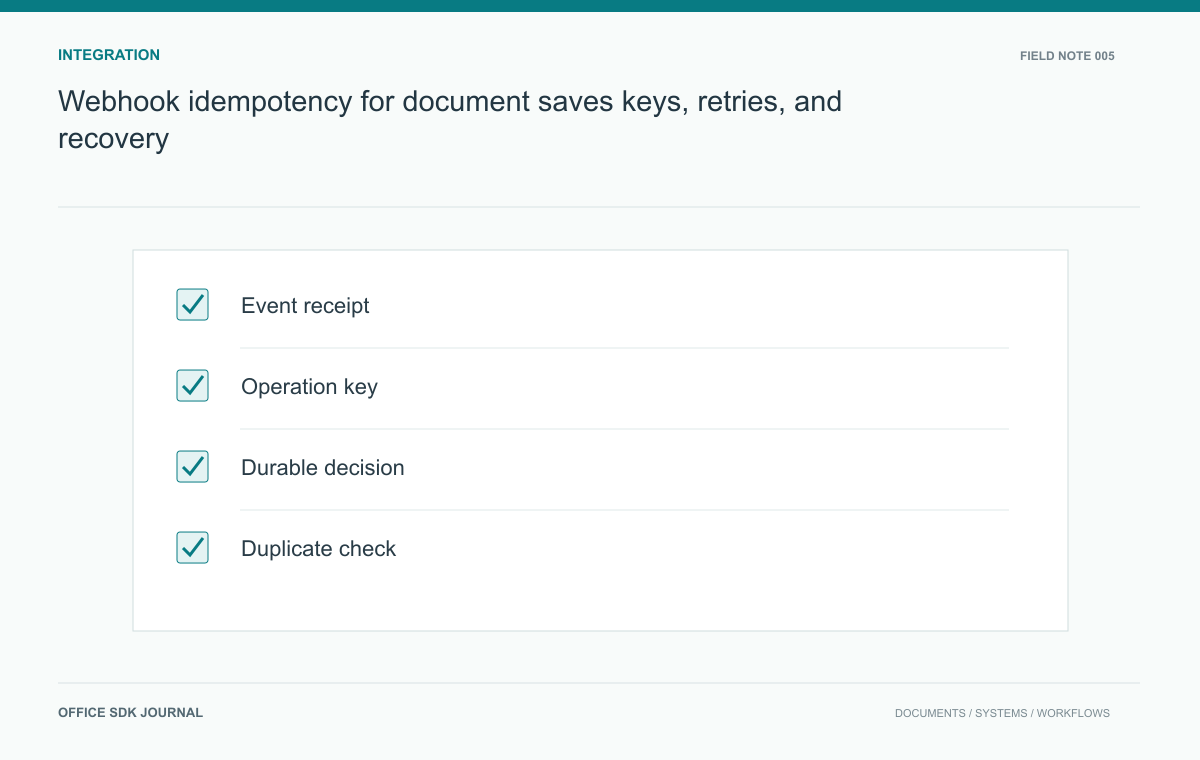
Design callback handling around authenticated events, durable acknowledgement, and idempotent effects.
Read story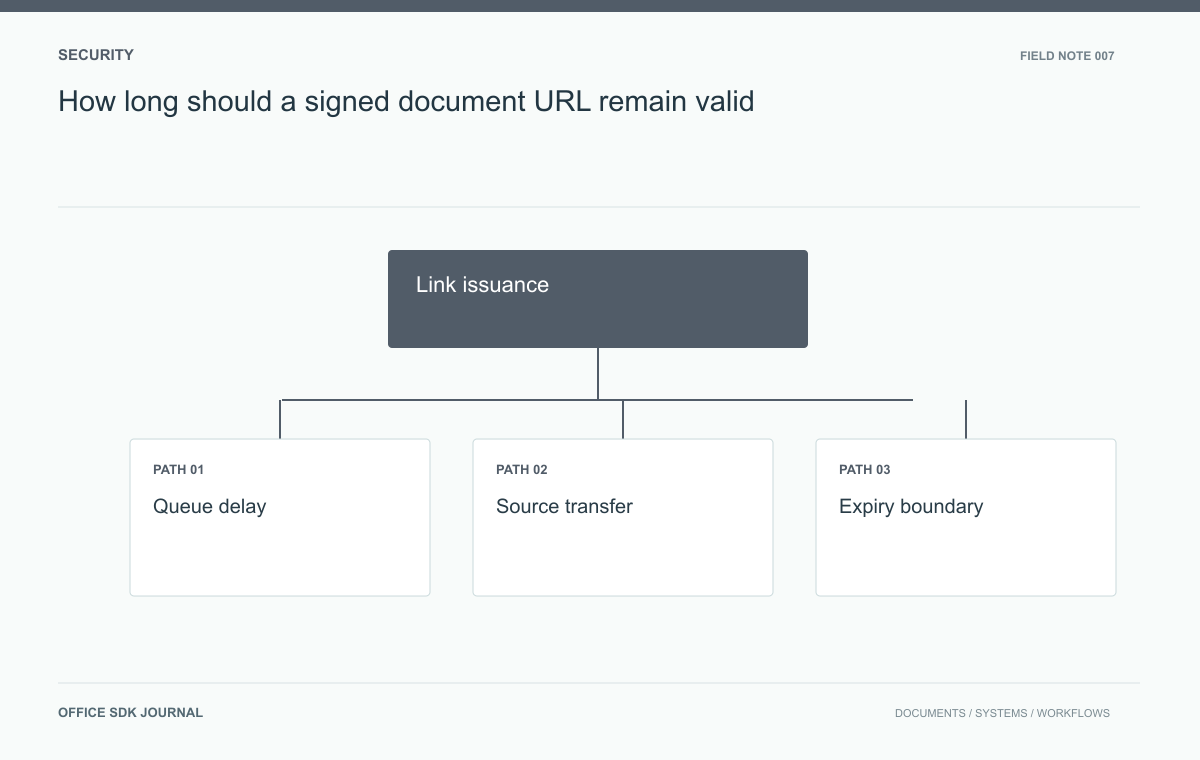
Choose link expiry from queueing, download, and retry behavior while limiting the exposure of temporary document access.
Read story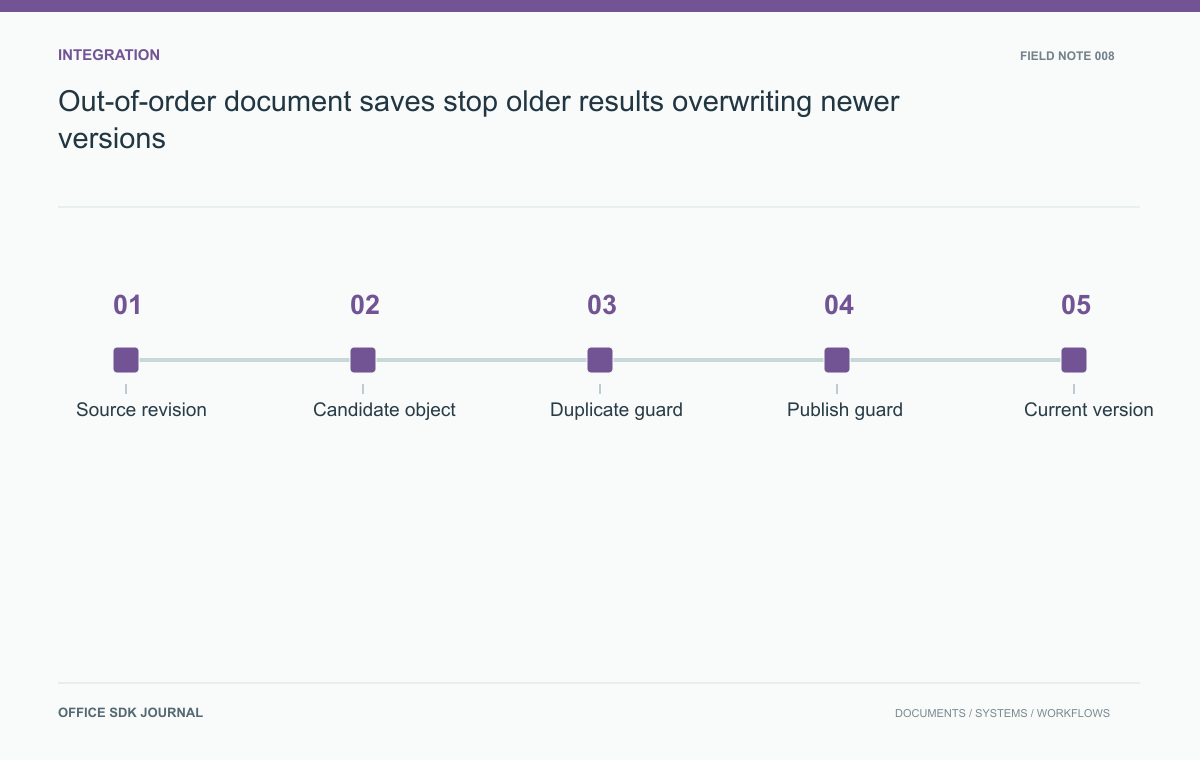
Use explicit version ordering and guarded publication to handle duplicates and delayed save delivery without moving content backward.
Read story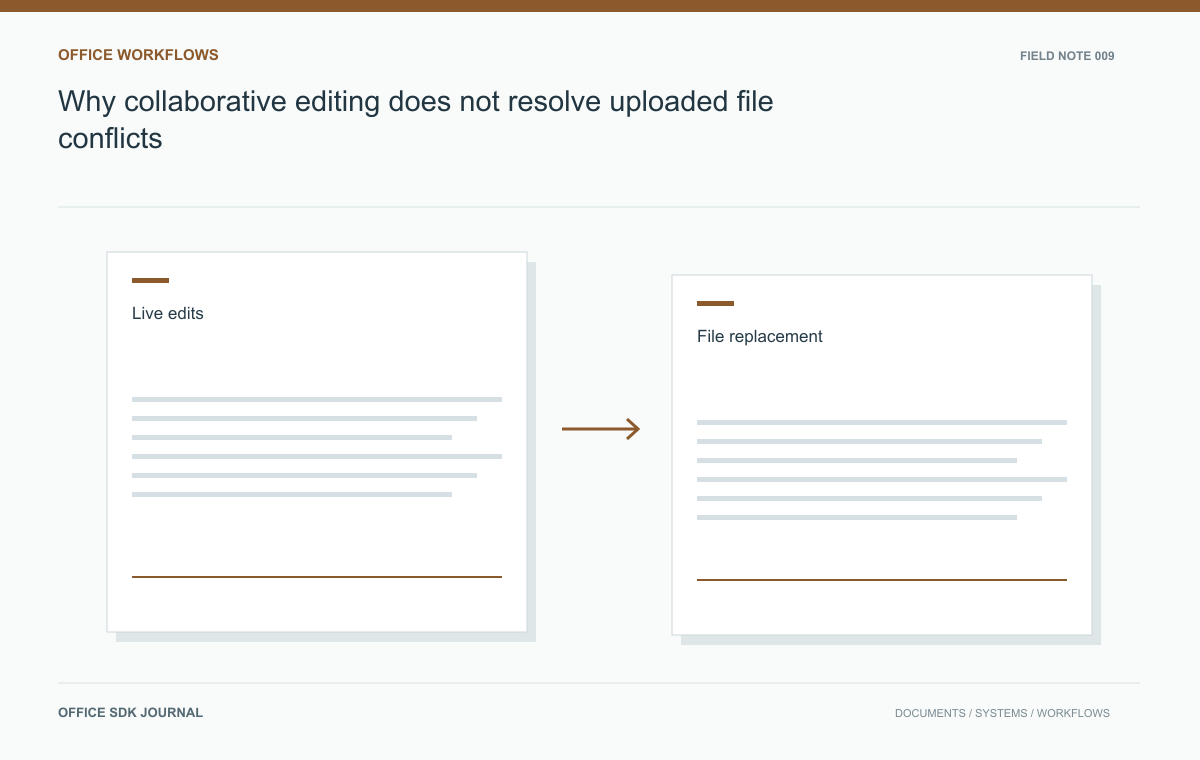
Understand why a collaborative editor still needs application rules for uploads, restores, and external replacements.
Read story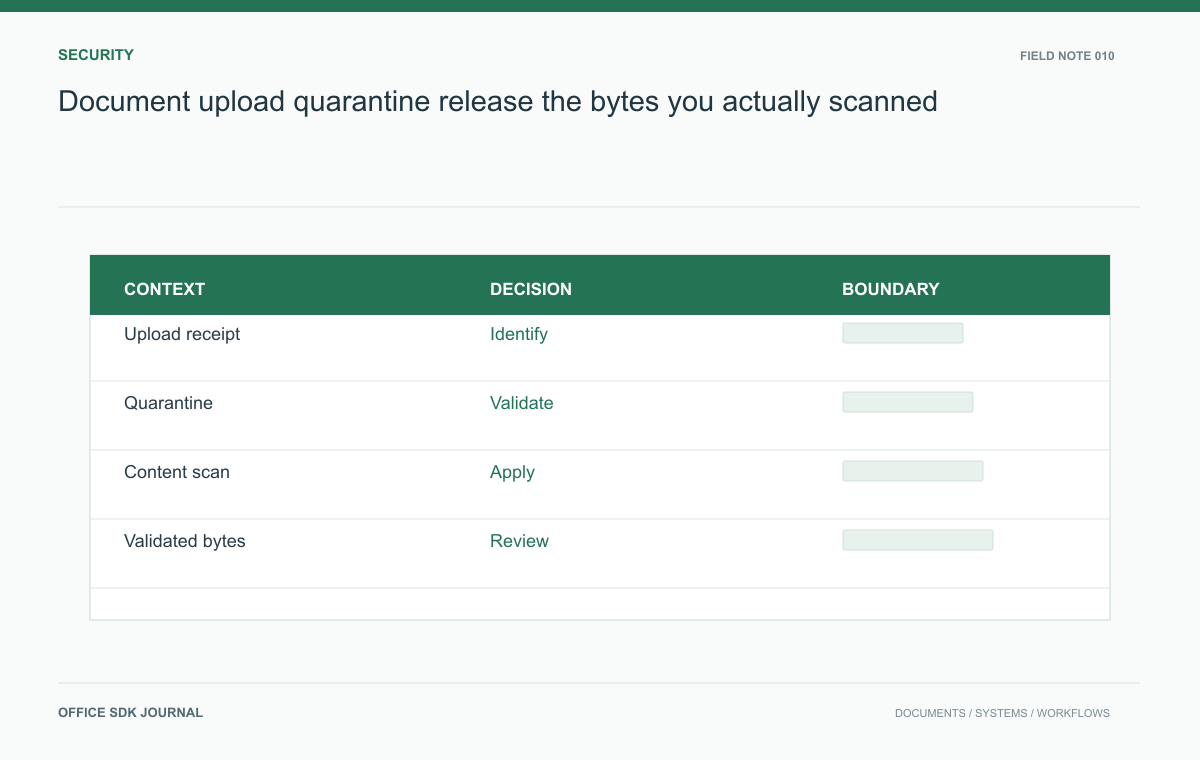
Structure uploads so validation, scanning, and release happen before untrusted files reach shared document workflows.
Read story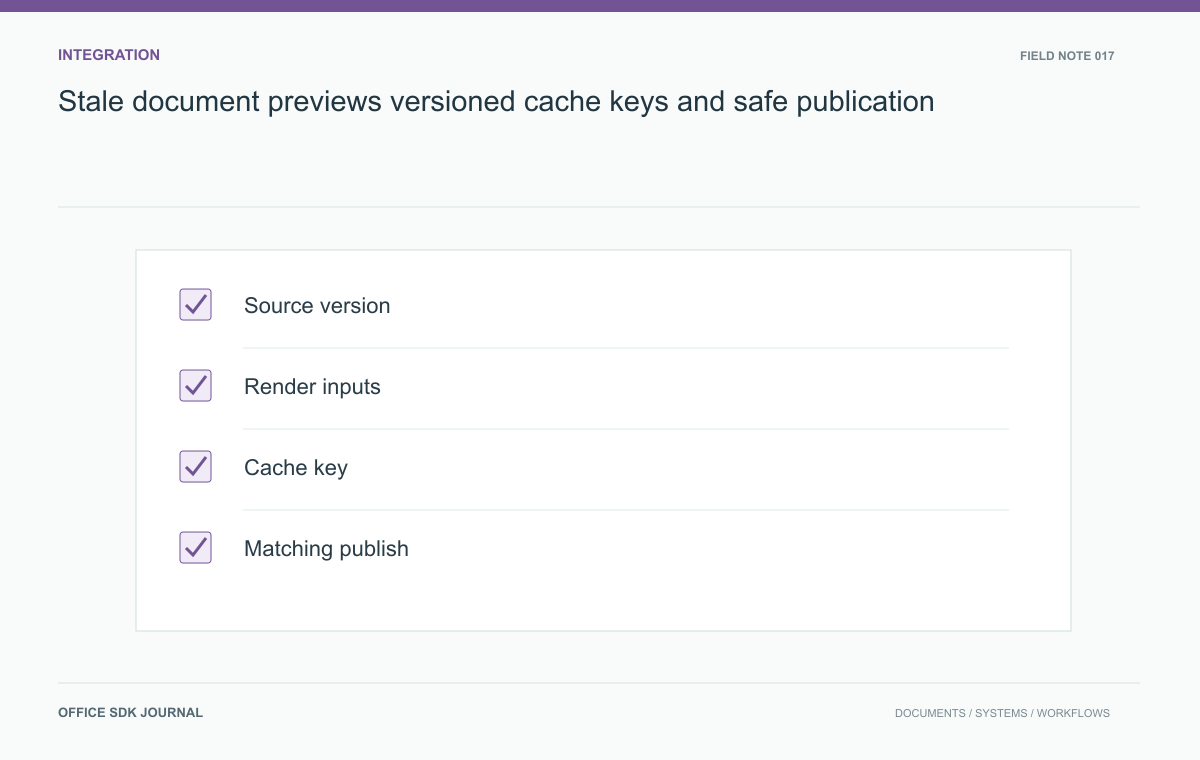
Design preview cache keys and publication rules so a fast cached response does not show silently outdated content.
Read story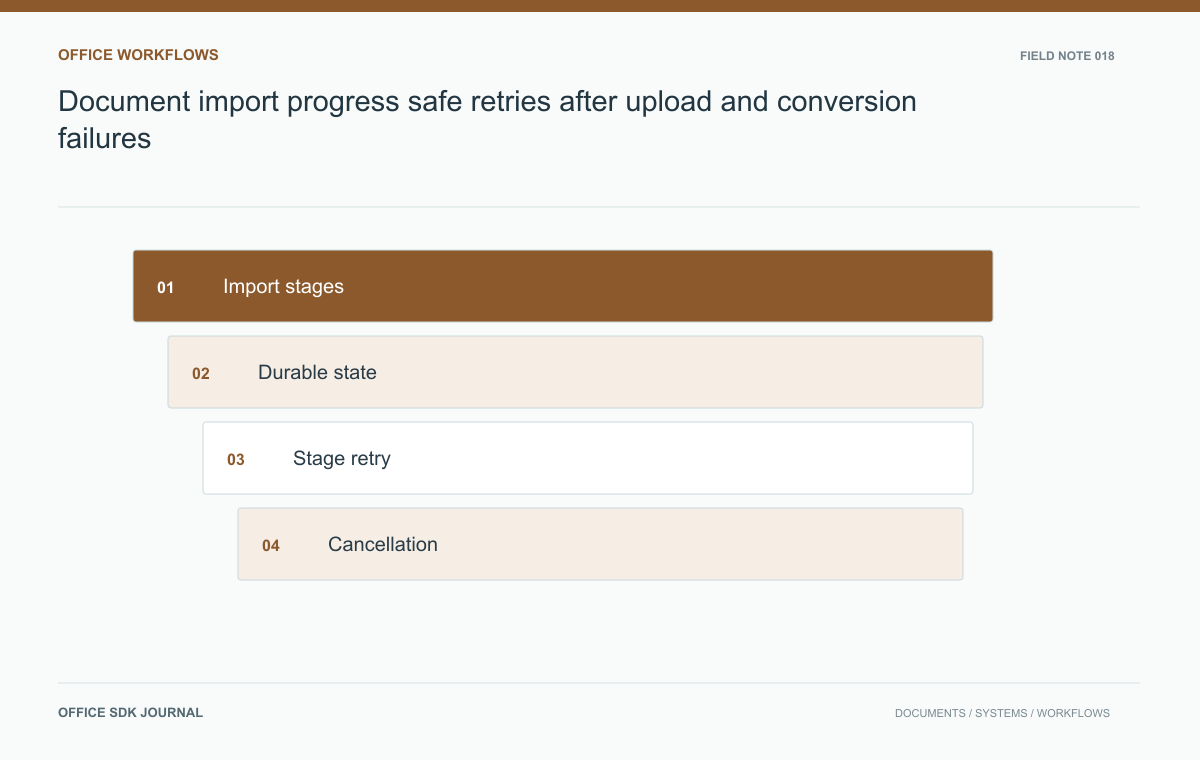
Give users honest progress, safe retries, and clear recovery when upload, validation, conversion, or registration fails.
Read story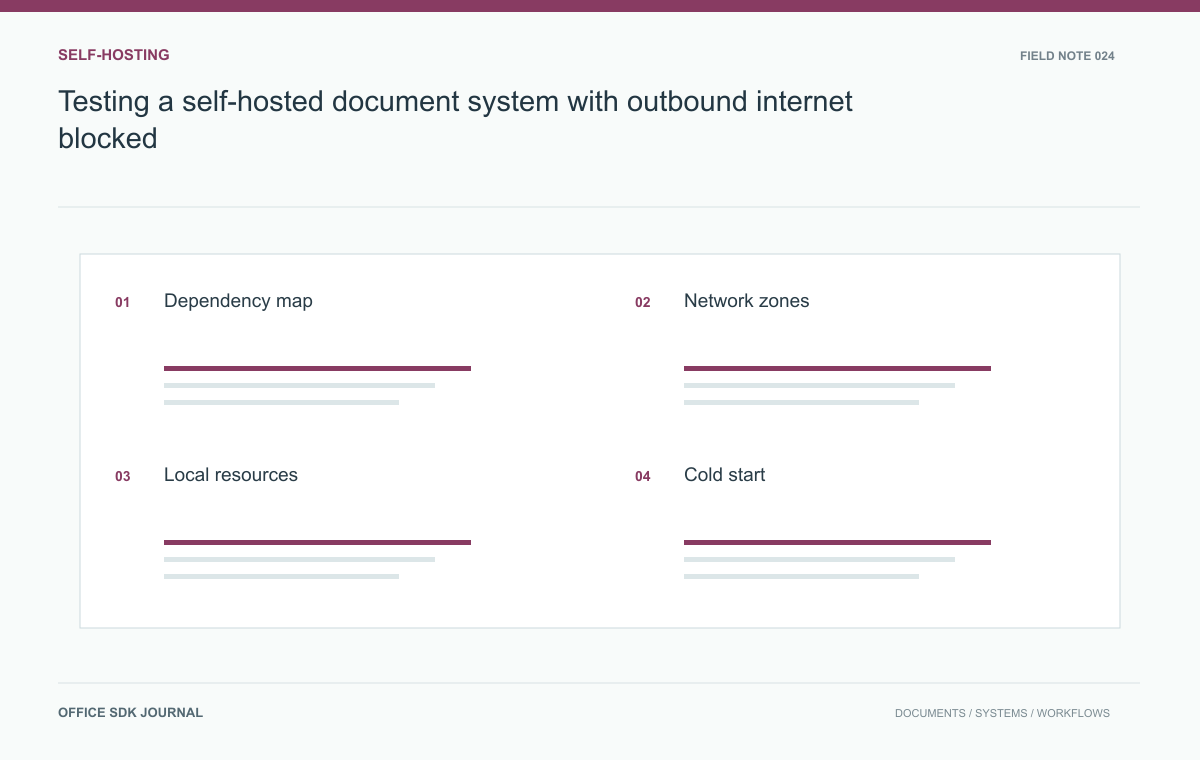
Inventory network dependencies and test complete document workflows under the actual allowed routes of an isolated environment.
Read story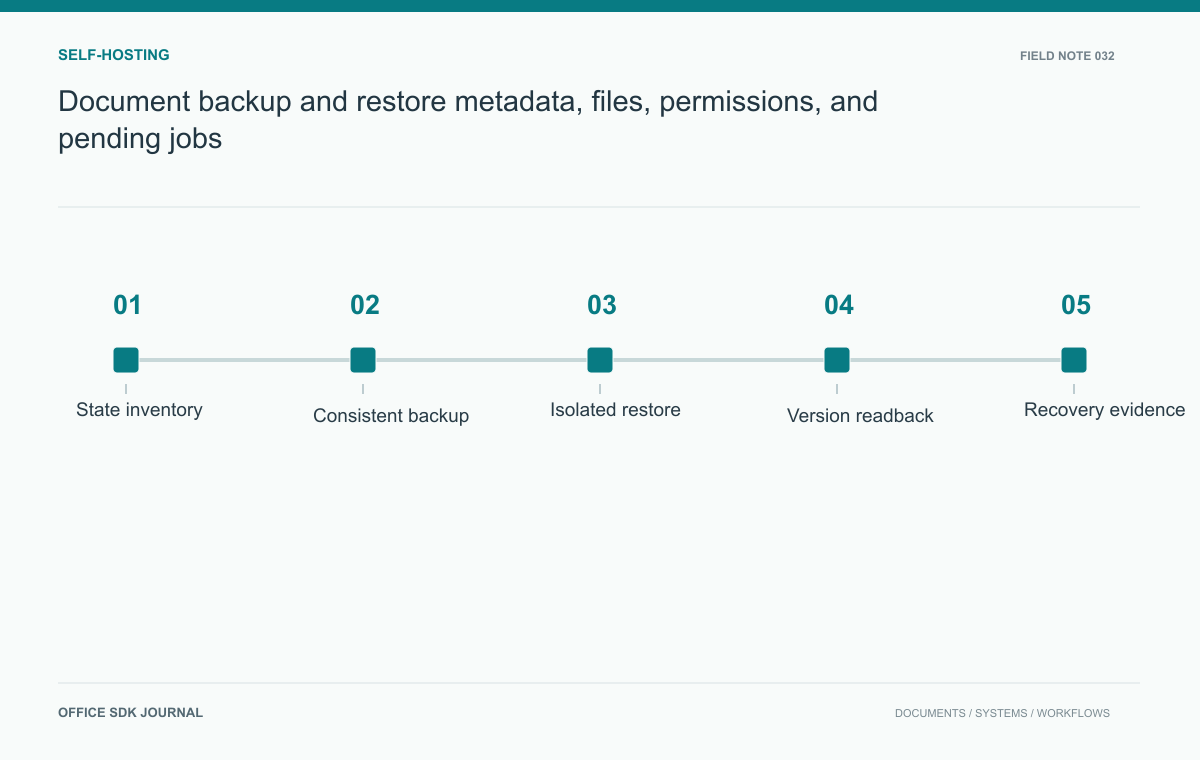
Test recovery of metadata, stored bytes, versions, permissions, and integration mappings as one coherent document state.
Read story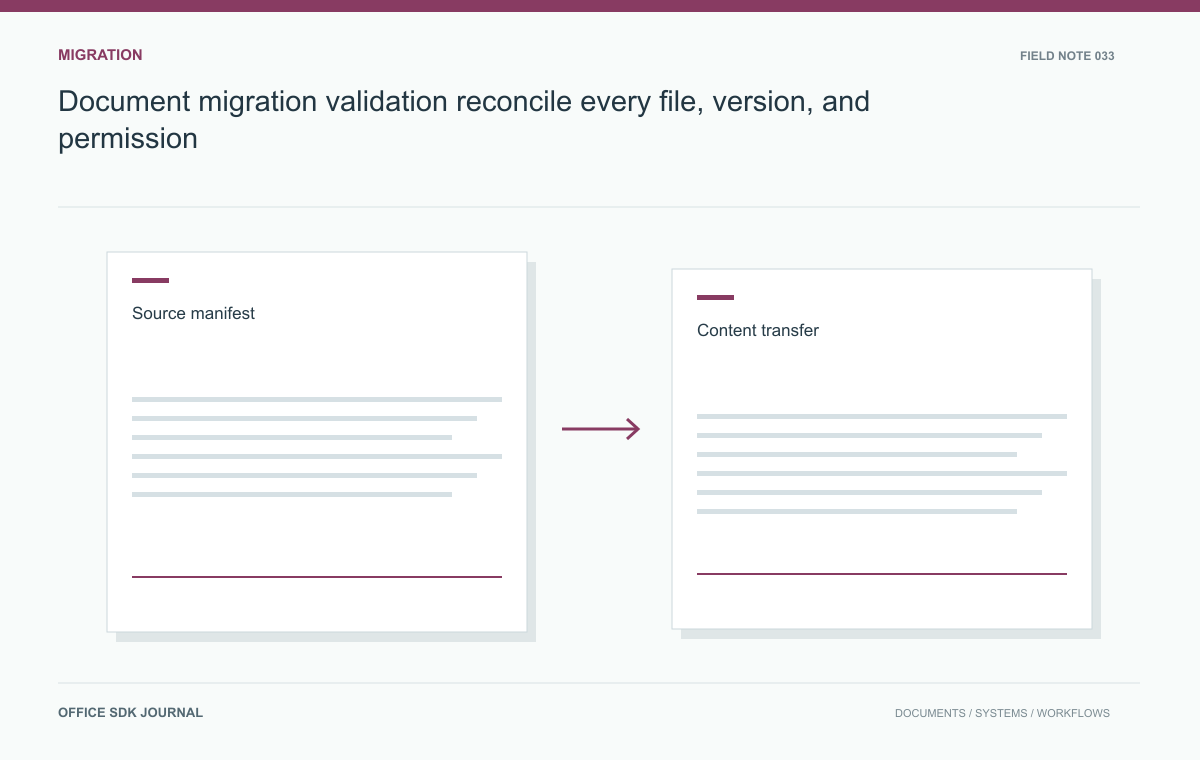
Track every source document through transfer, transformation, permission mapping, and final acceptance with an auditable manifest.
Read story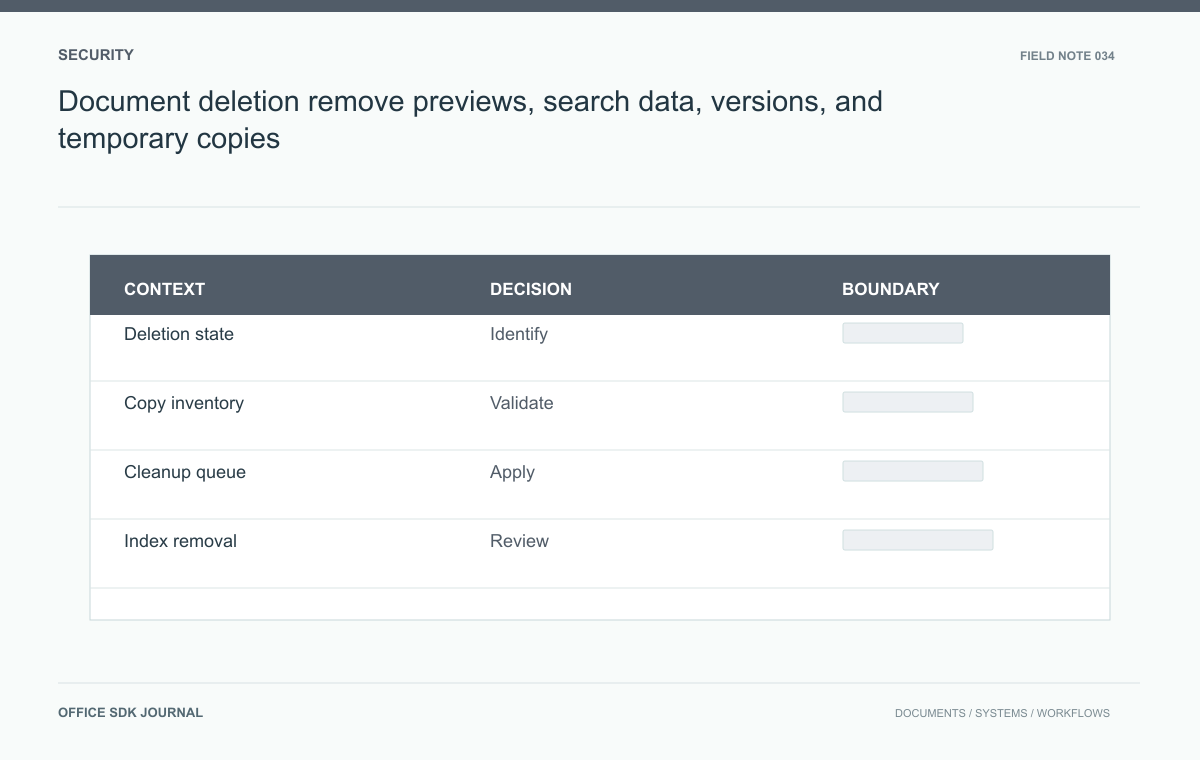
Turn document deletion into a tracked lifecycle with clear user visibility, retention rules, and cleanup of derived copies.
Read story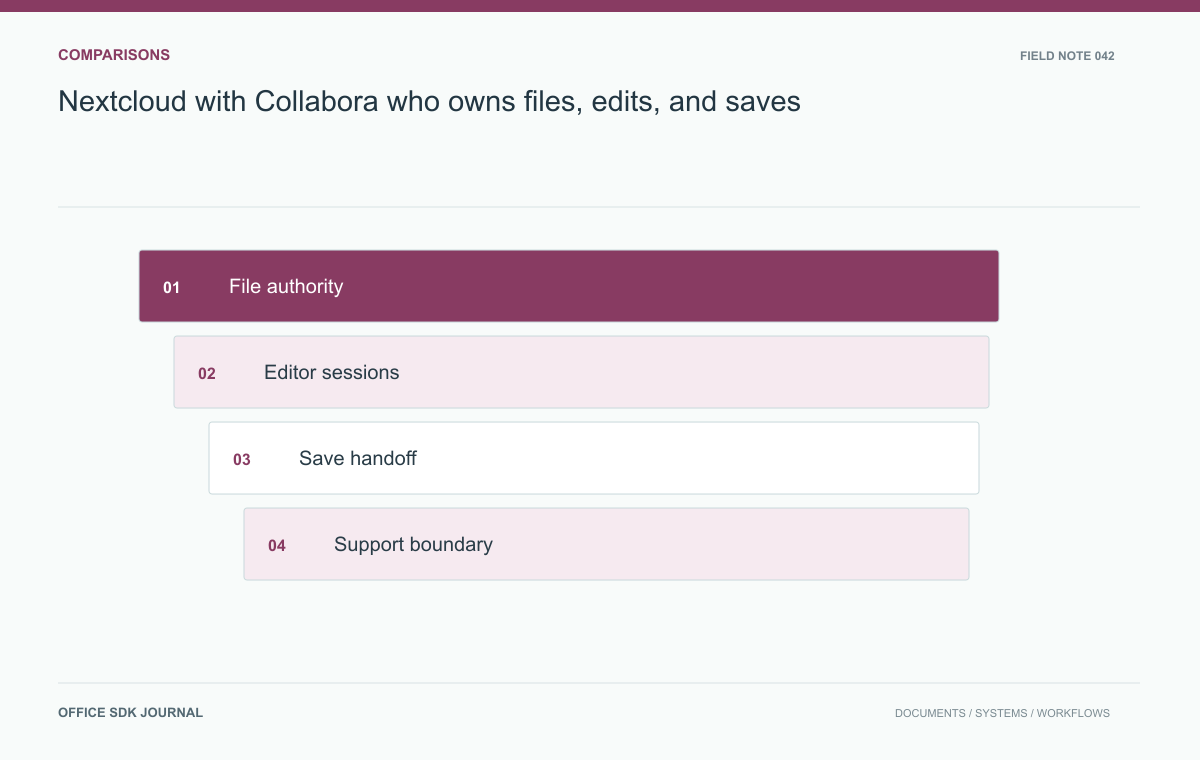
Compare an integrated file platform and editor with a document workspace through owned operations and failure paths.
Read story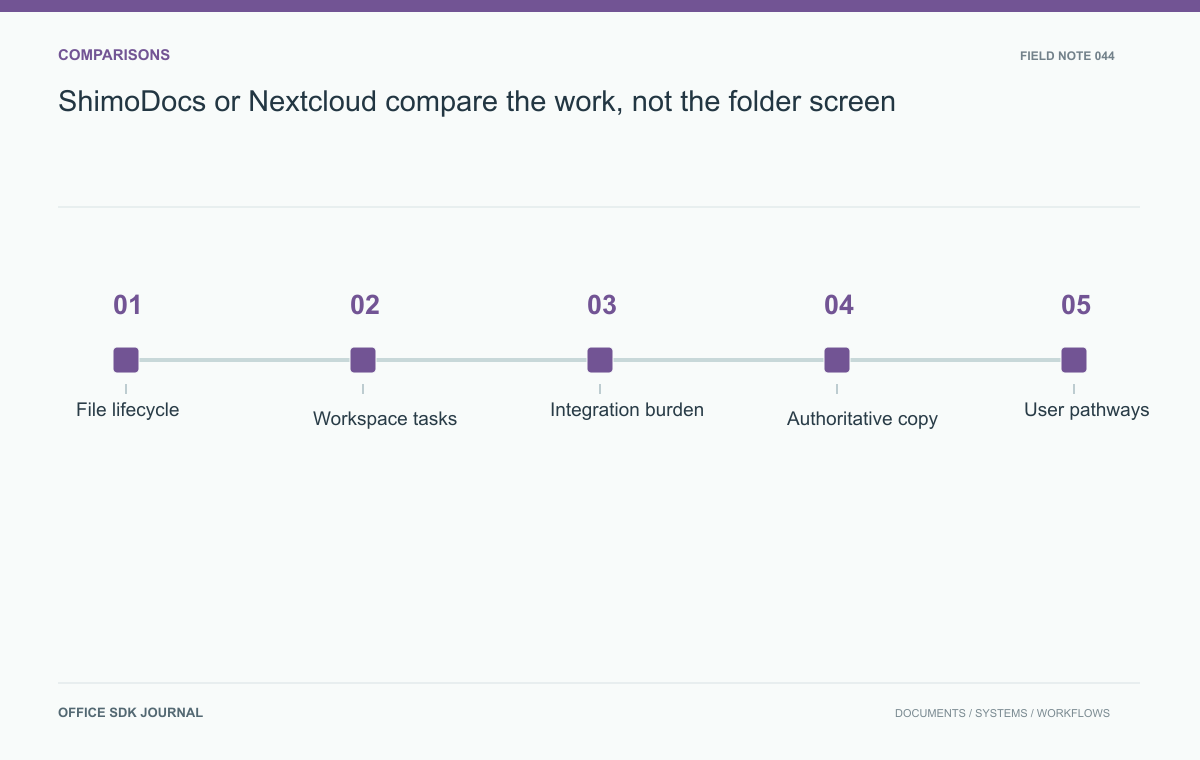
Compare platform fit through file lifecycle, collaborative tasks, integration ownership, and operating effort.
Read story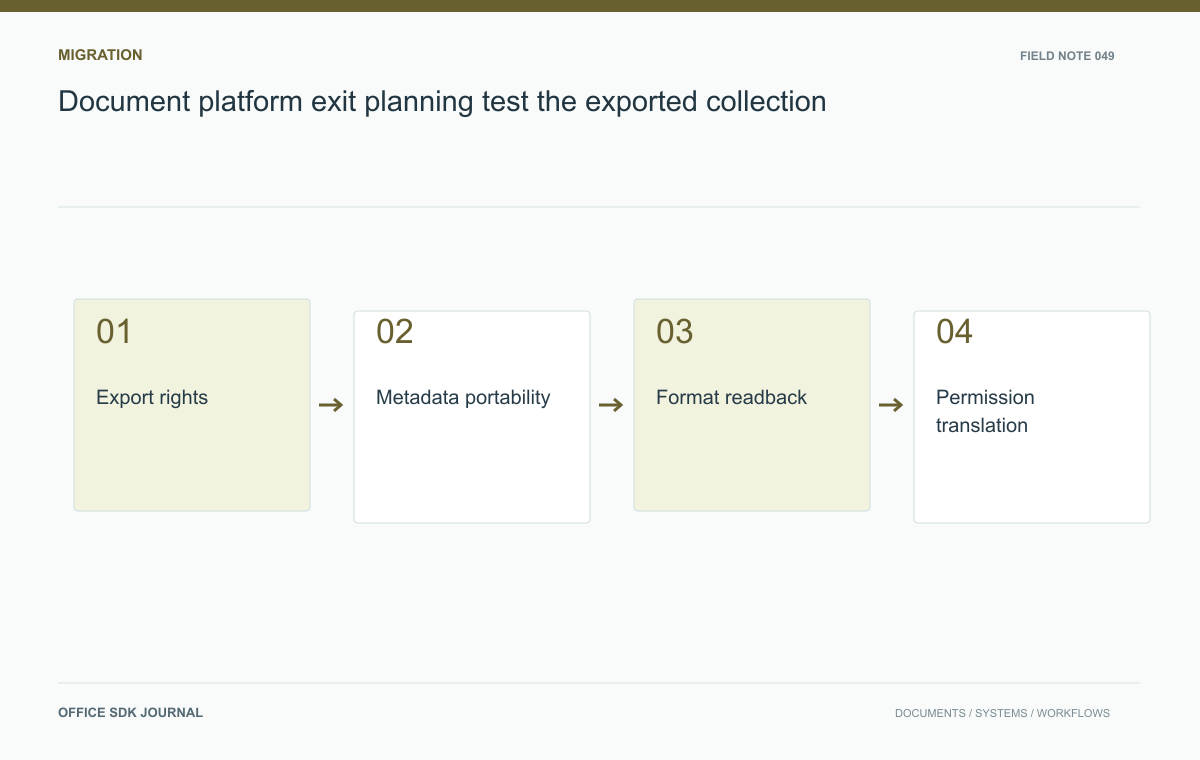
Test export, metadata recovery, permission translation, and downstream usability as an ongoing portability obligation.
Read story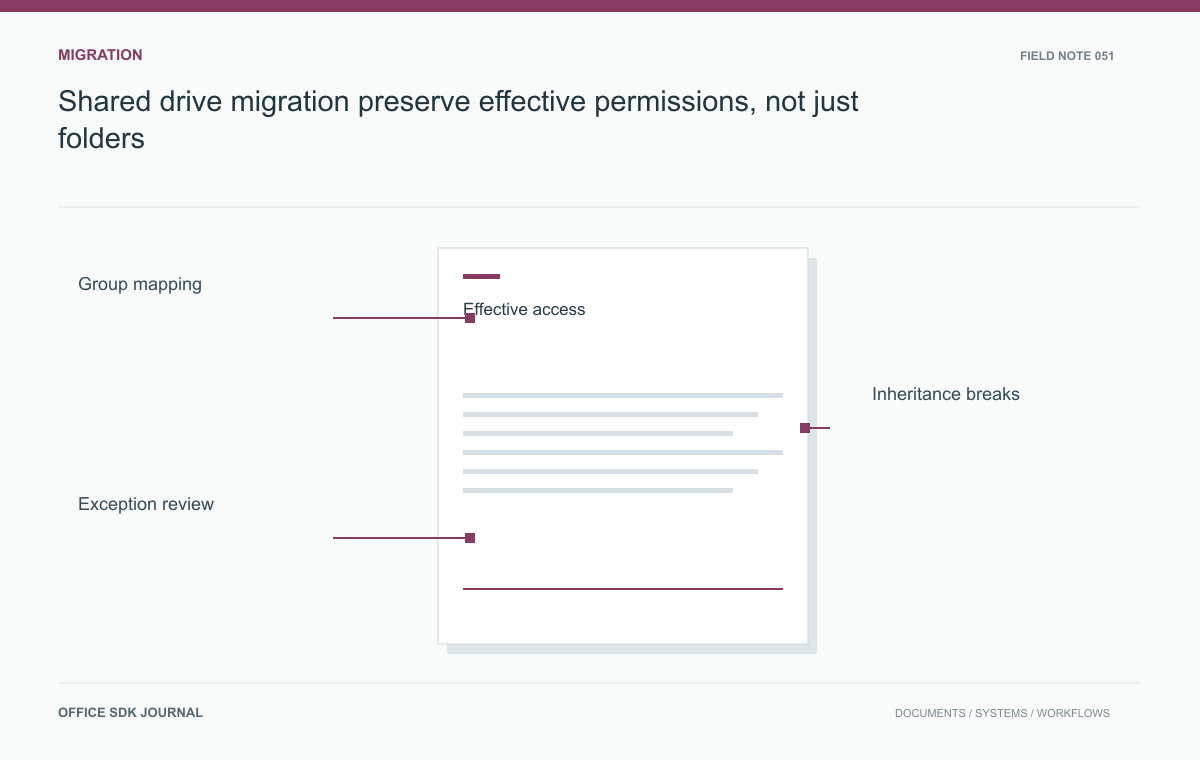
Inventory effective permissions, resolve group mappings, and verify access after a staged drive migration.
Read story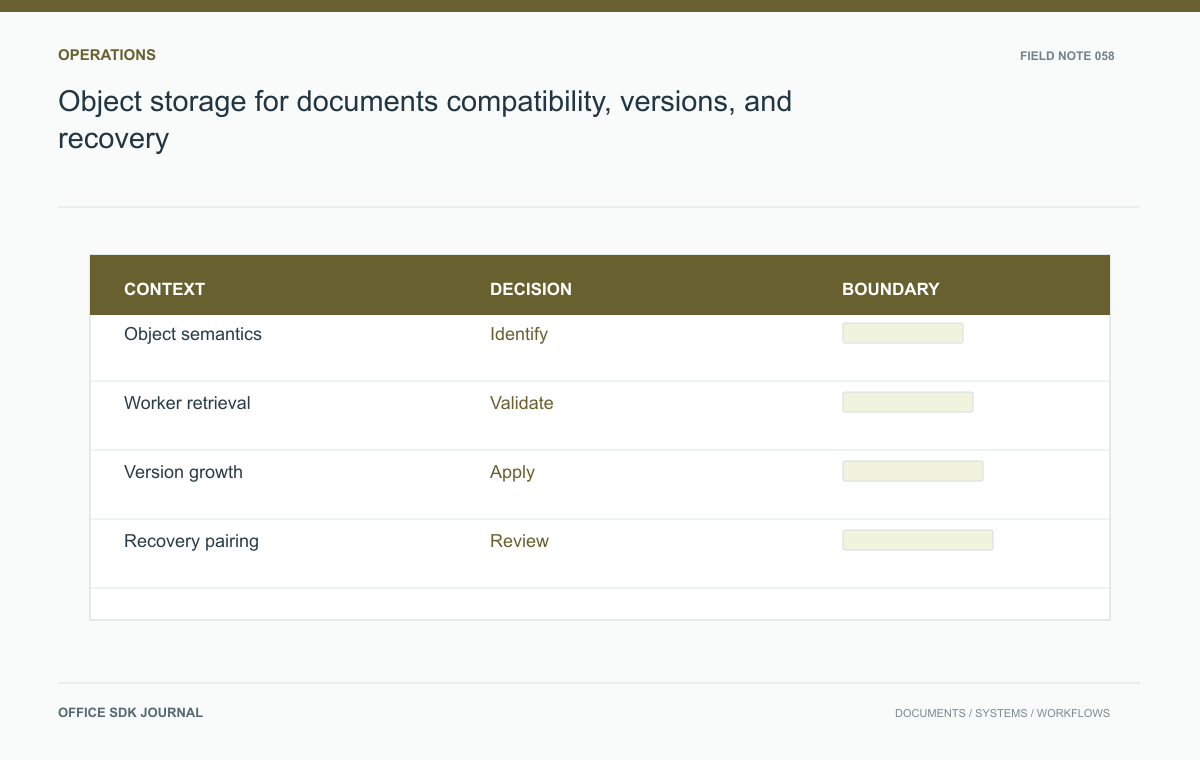
Evaluate storage semantics, temporary access, version growth, recovery, and operational responsibility with real document paths.
Read story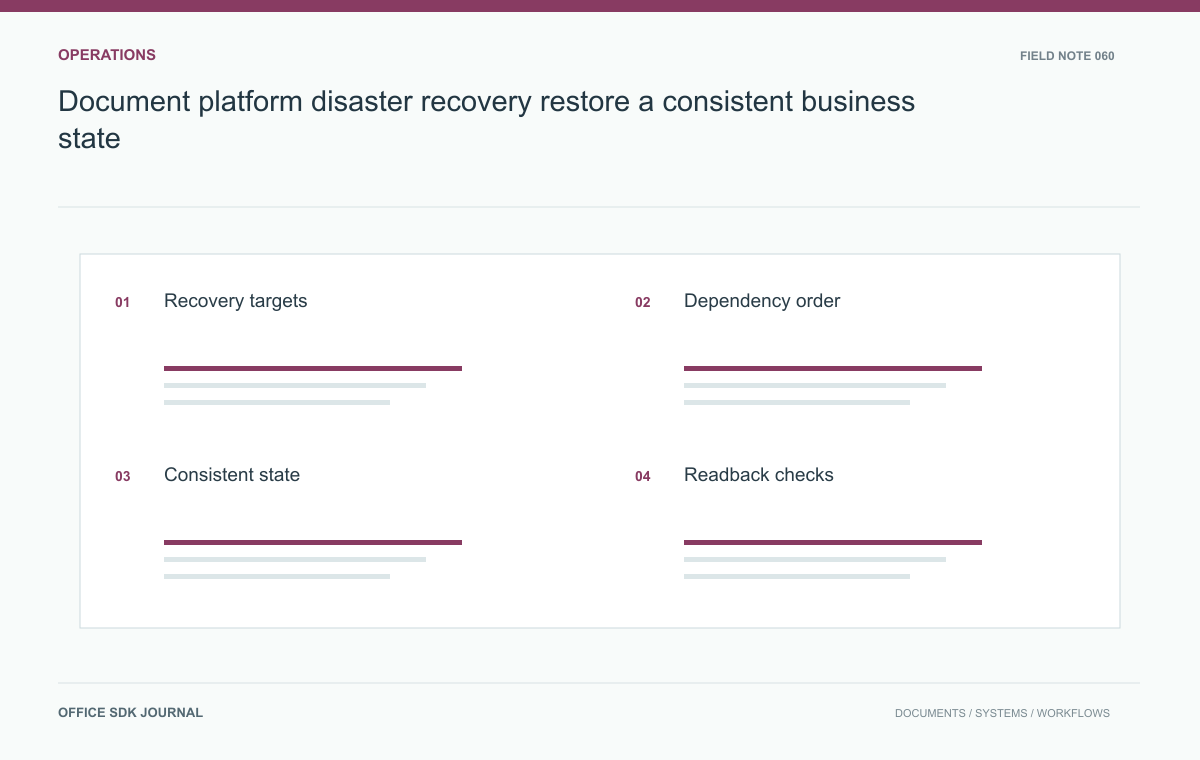
Build a disaster recovery procedure around content consistency, identity, dependencies, user readback, and controlled reopening.
Read story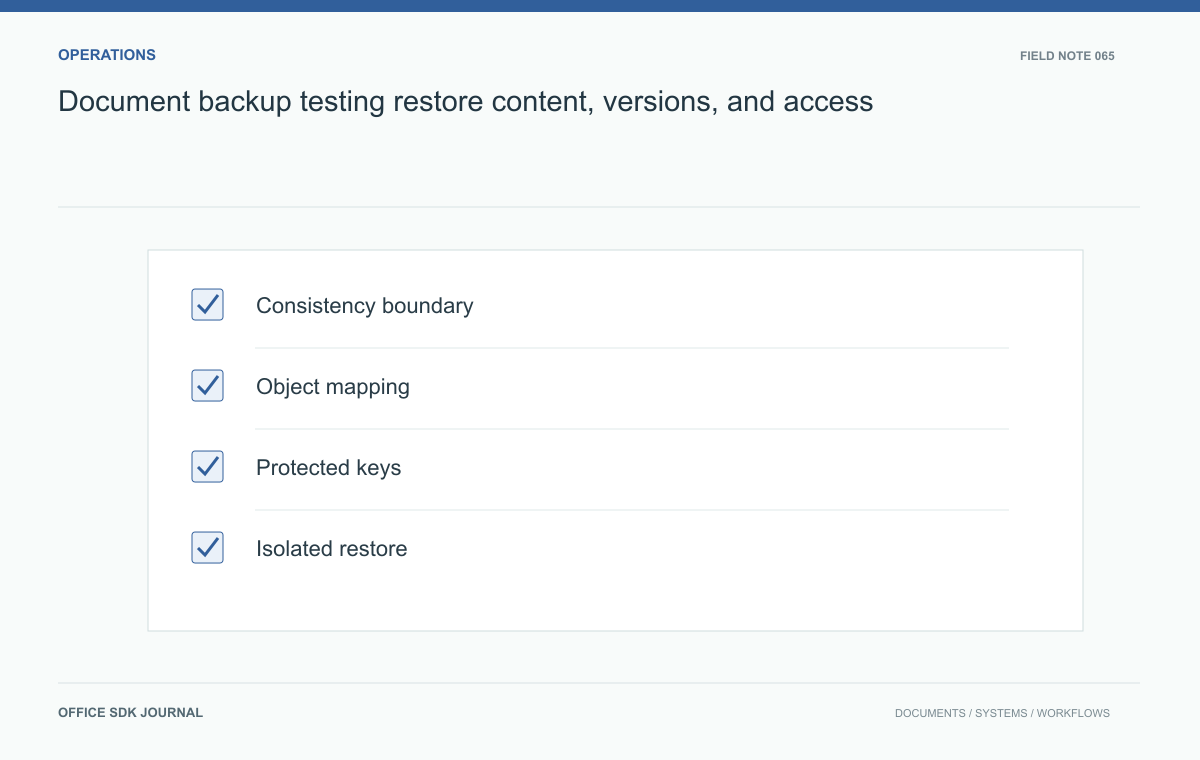
Coordinate content, metadata, configuration, and keys, then verify ordinary user readback from an isolated restore.
Read story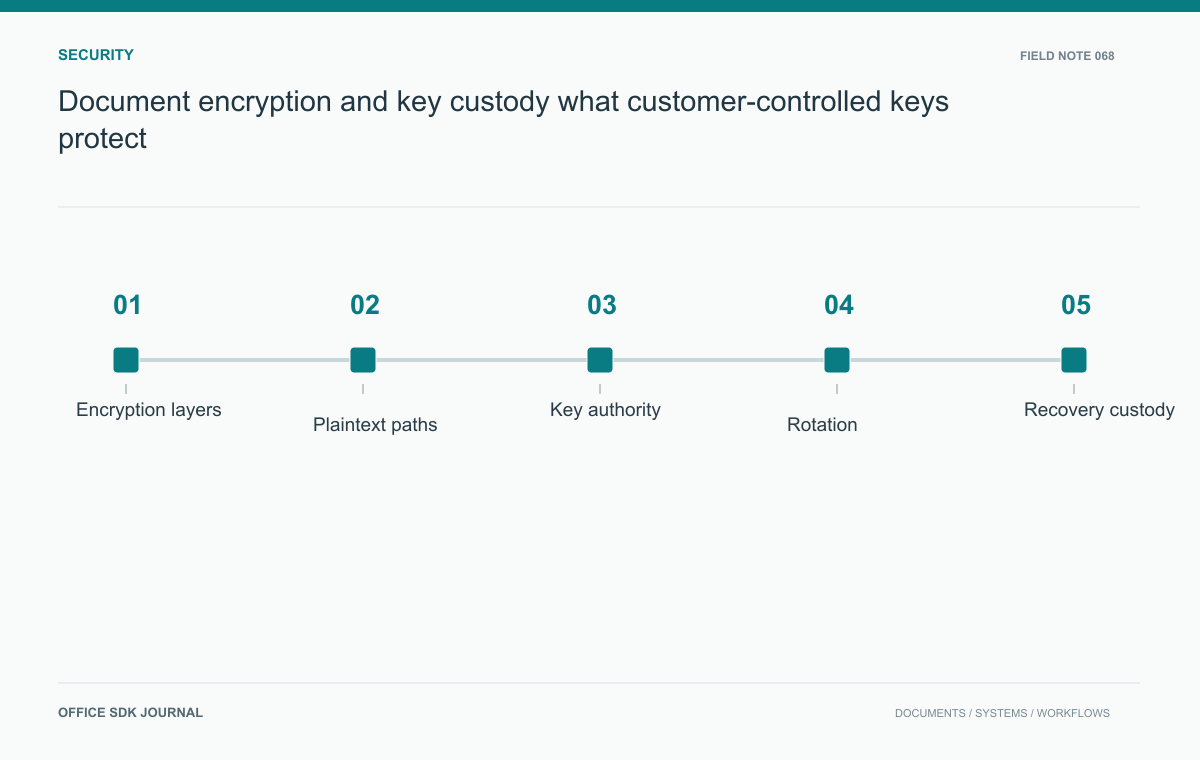
Map encryption layers, key authority, rotation, recovery, and the components that still handle readable content.
Read story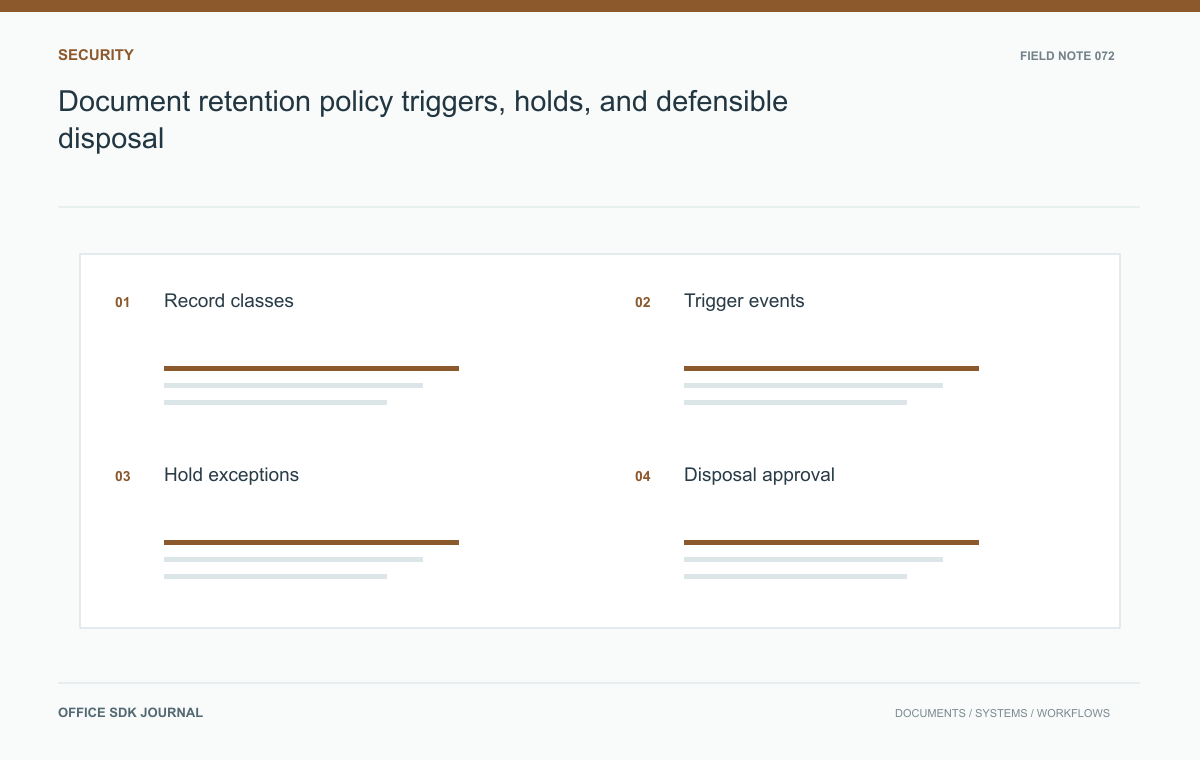
Define record classes, retention triggers, exceptions, technical mapping, and evidence of approved deletion.
Read story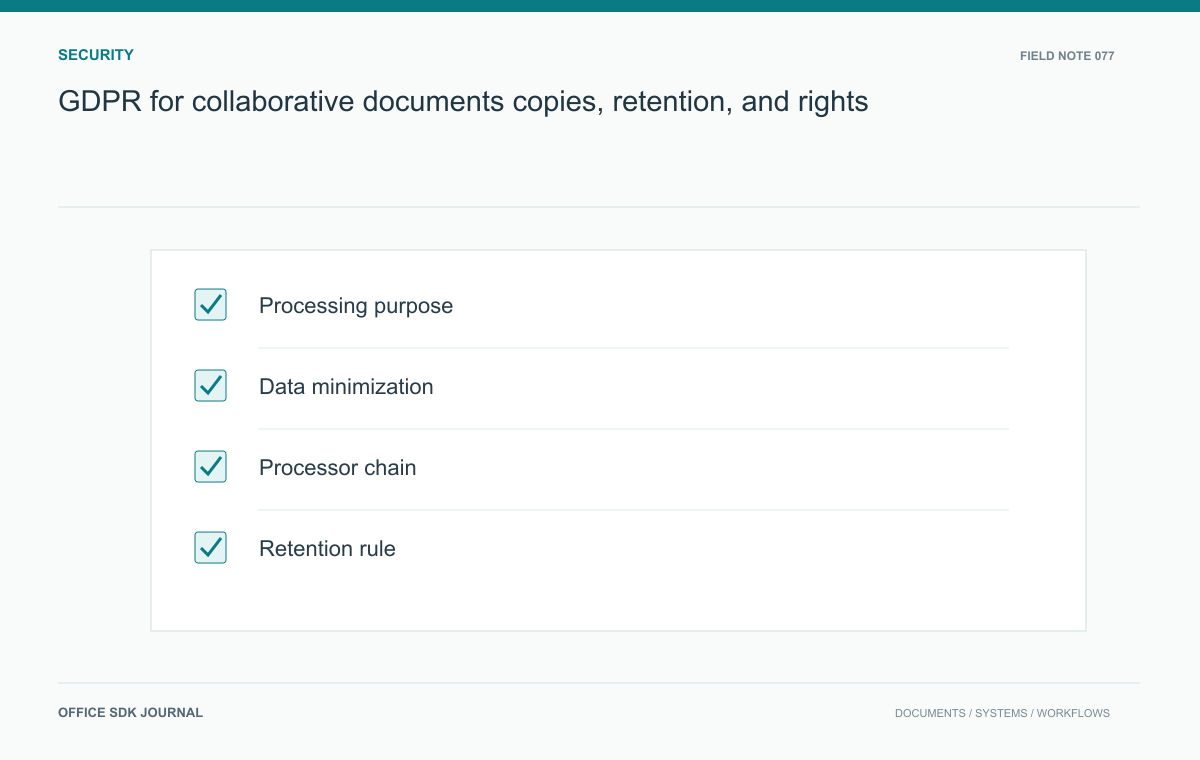
Locate personal data in drafts, comments, exports, indexes, and backups before implementing retention or rights decisions.
Read story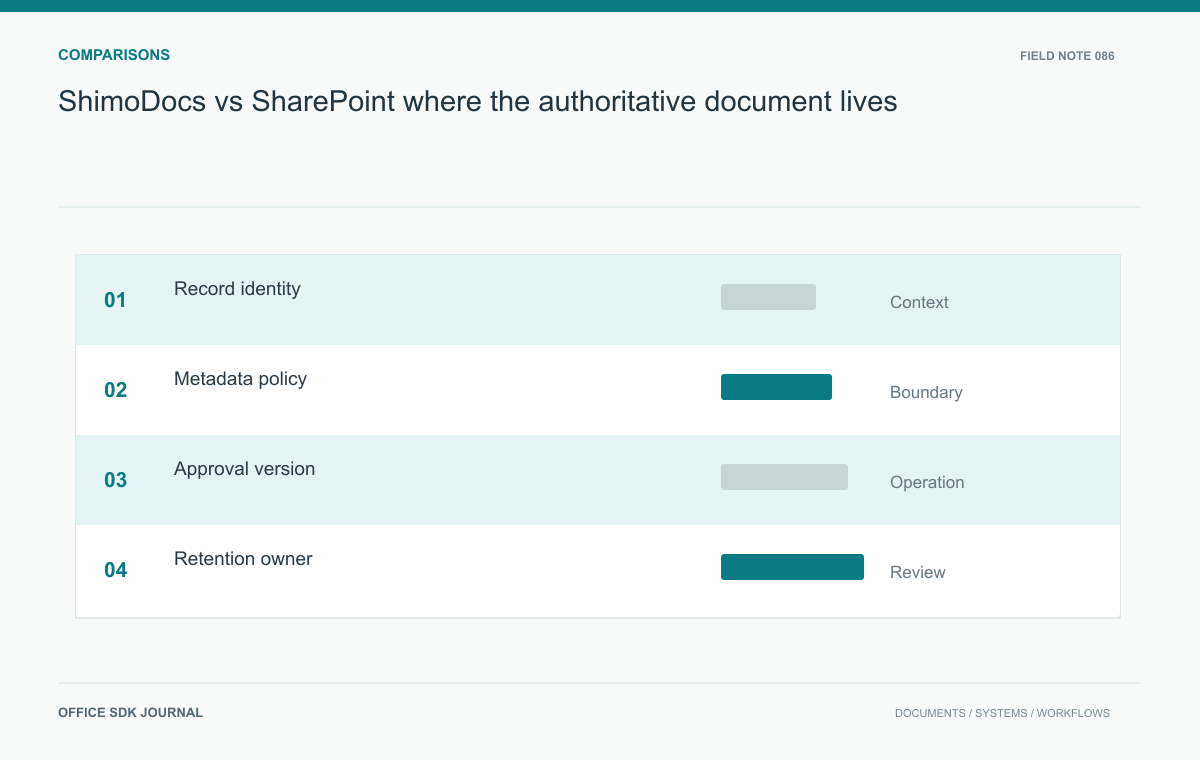
Evaluate editing and document management through metadata, approval versions, lifecycle handoffs, and recovery.
Read story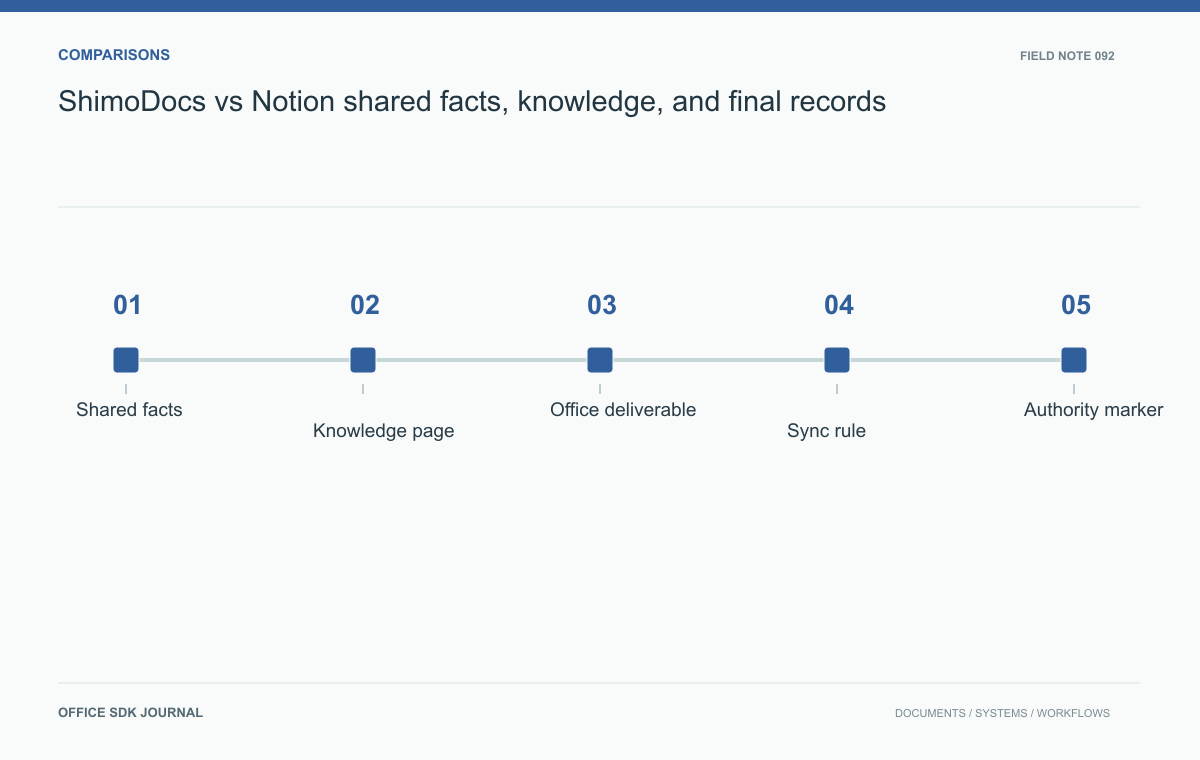
Compare the proposed content models through project handover, update ownership, synchronization, and portable exports.
Read story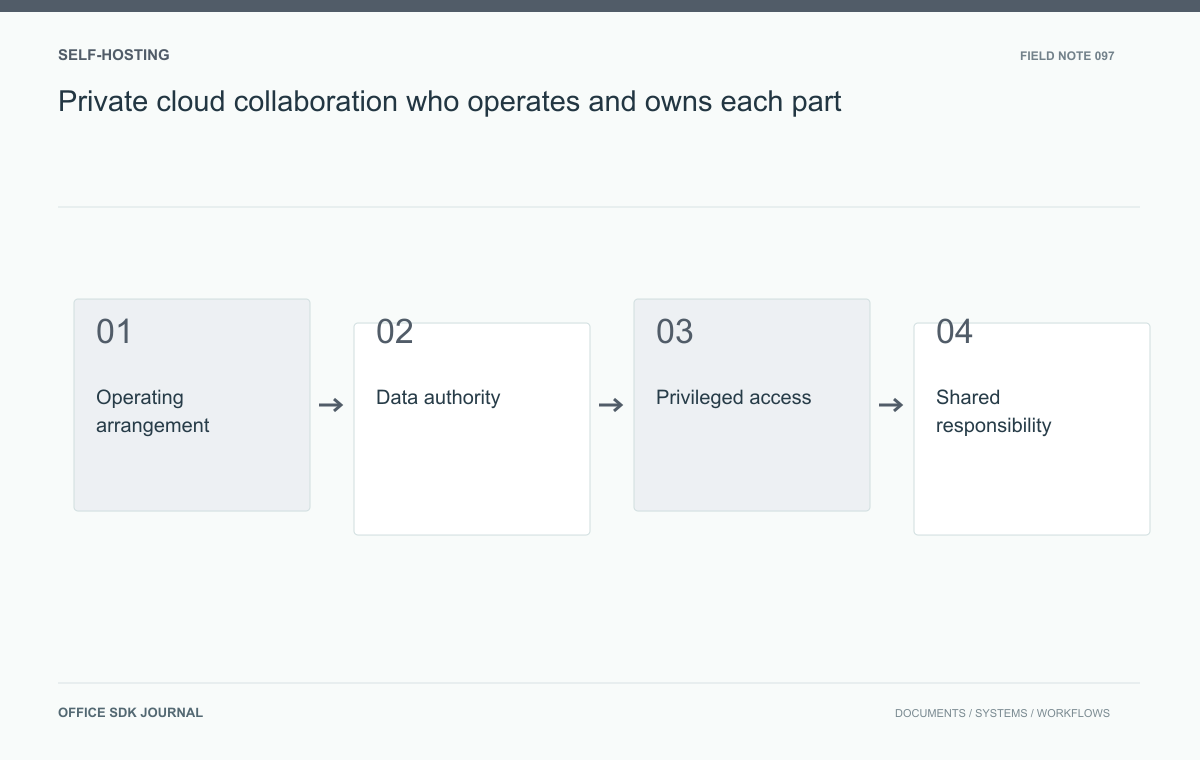
Write a responsibility model for infrastructure, document state, privileged access, maintenance, and recovery.
Read story