

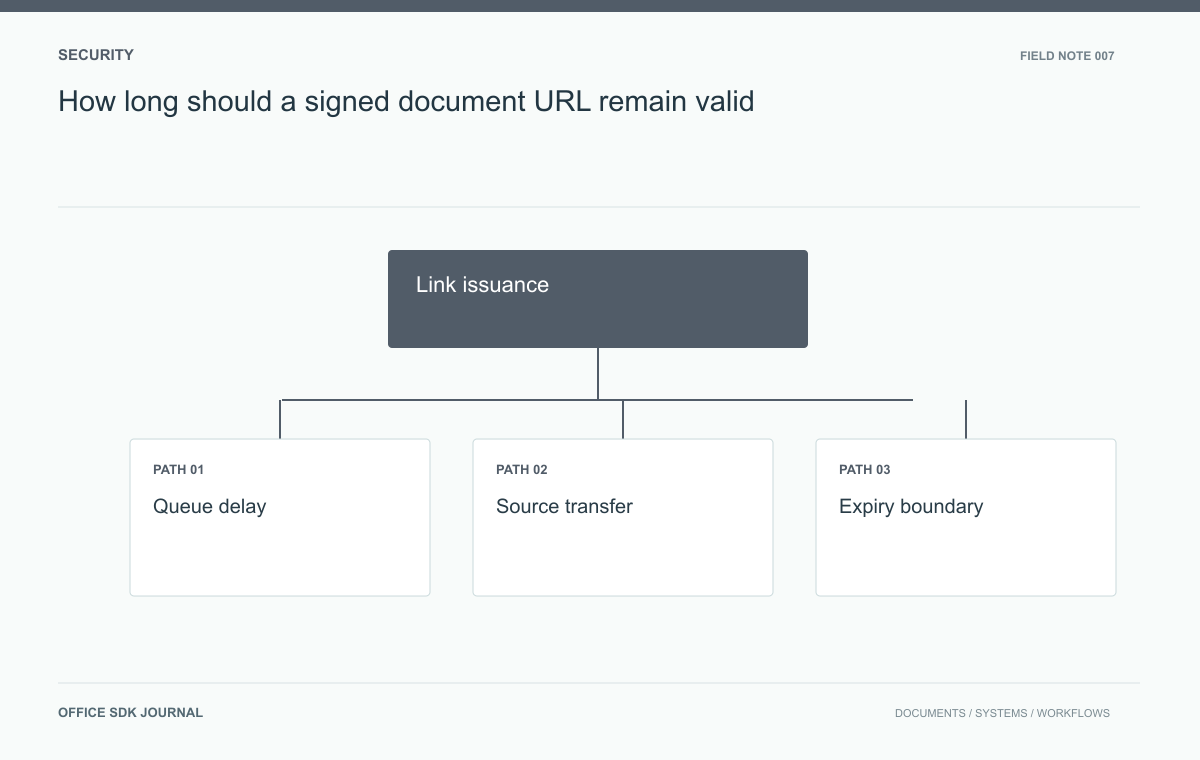
How long should a signed document URL remain valid?
Choose link expiry from queueing, download, and retry behavior while limiting the exposure of temporary document access.
Read storyConversion is where format claims get tested. Every article here treats import, export, and transformation as separate operations to validate with representative files before production.
23 articles · Document conversion
Choose link expiry from queueing, download, and retry behavior while limiting the exposure of temporary document access.
Read story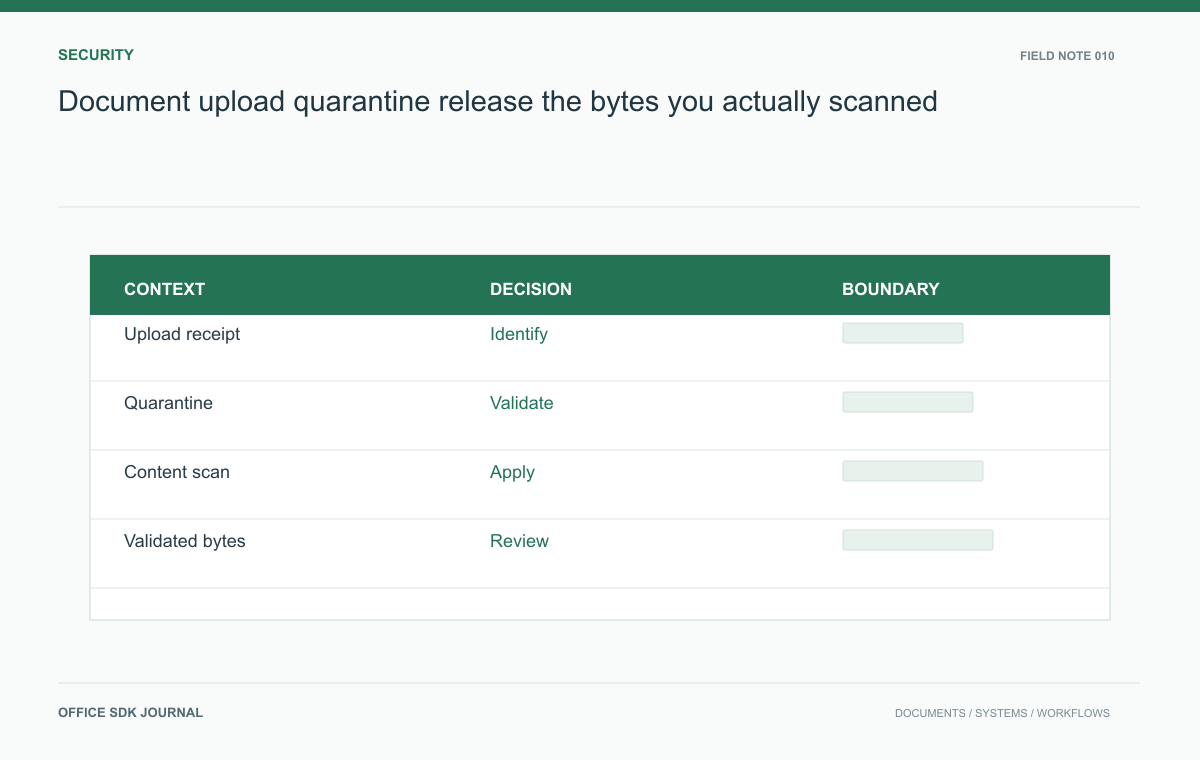
Structure uploads so validation, scanning, and release happen before untrusted files reach shared document workflows.
Read story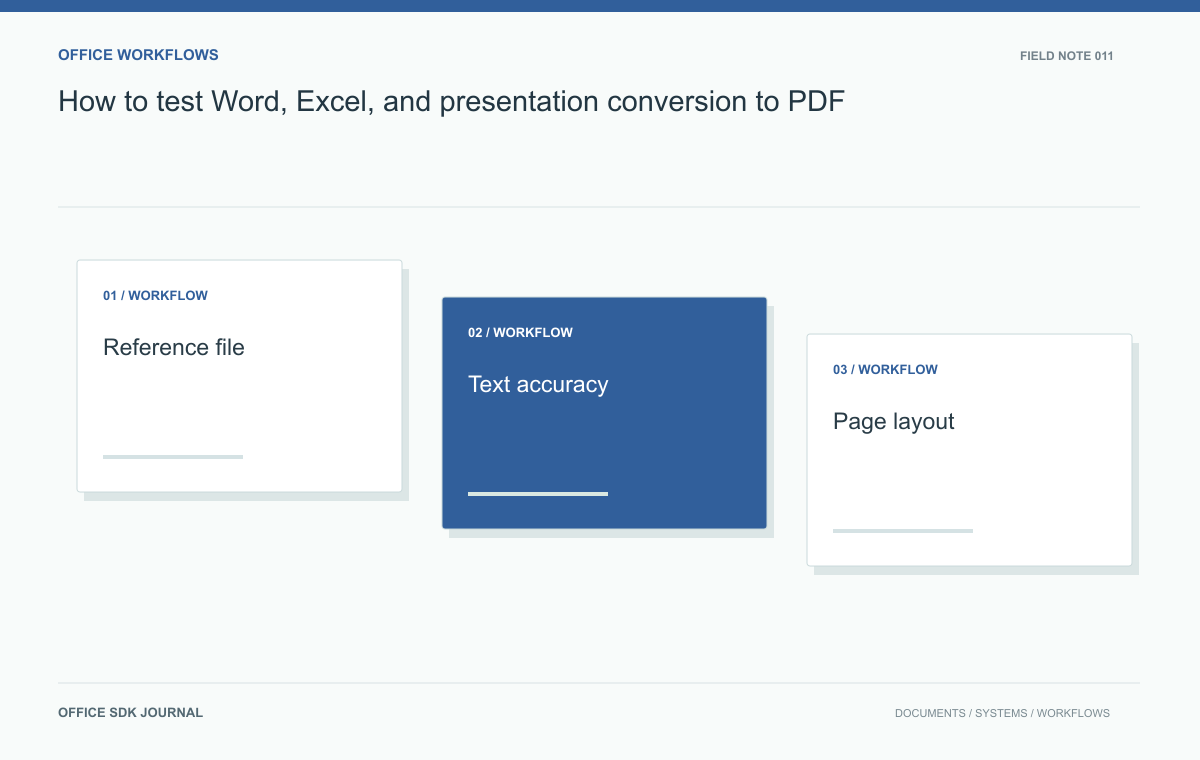
Compare structure, critical values, and rendered pages with an agreed corpus instead of relying on a successful conversion response.
Read story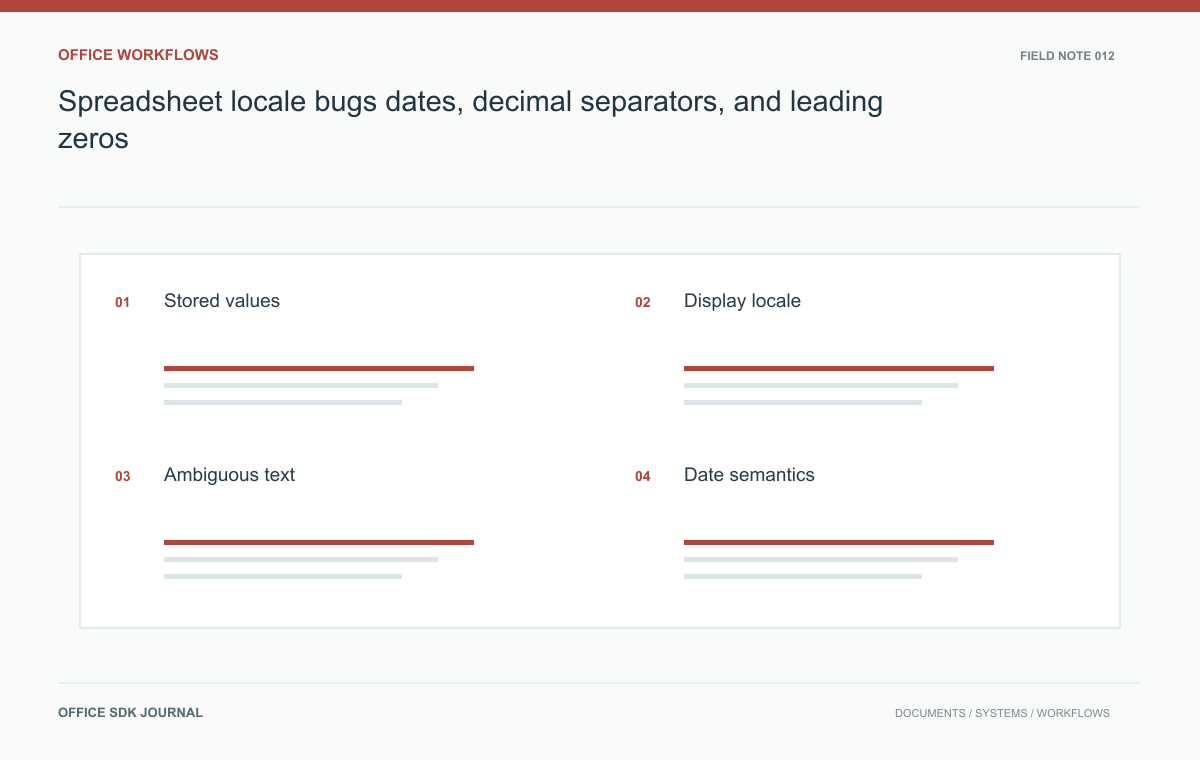
Test stored values, display formats, and text imports separately when spreadsheets move between users and systems.
Read story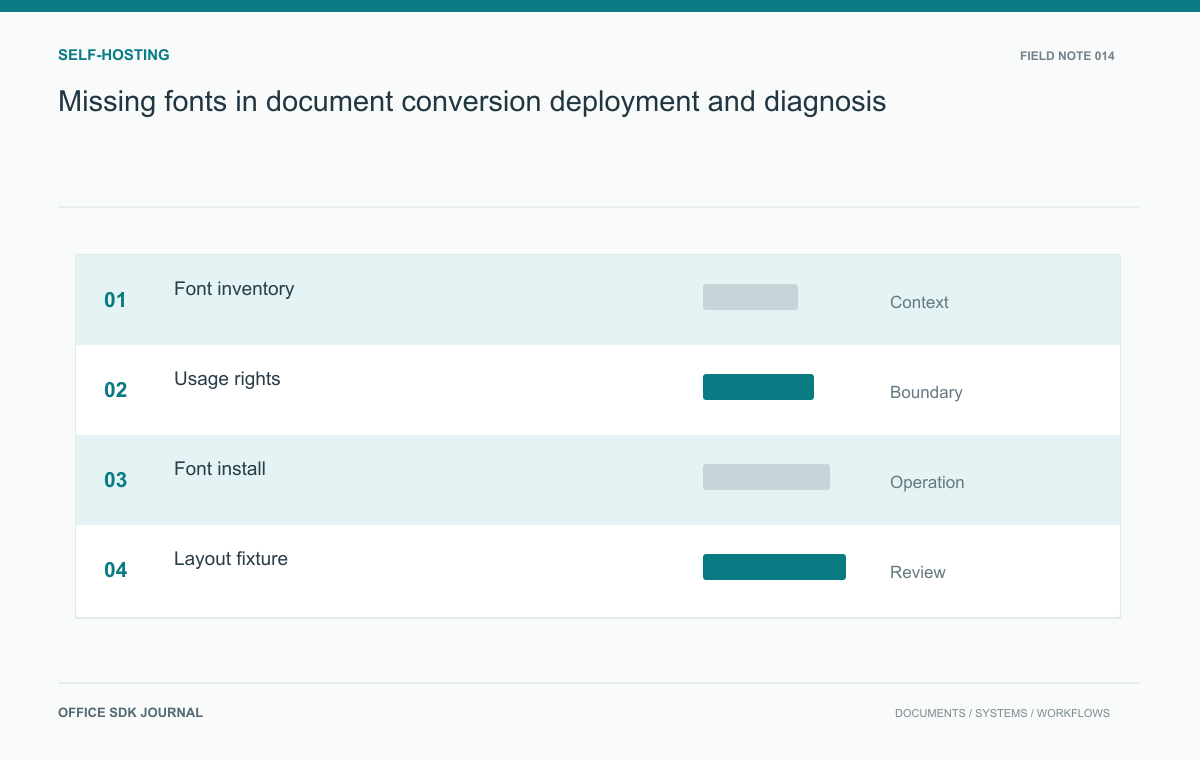
Inventory, license, install, and verify fonts across editing and conversion environments to reduce unexplained layout changes.
Read story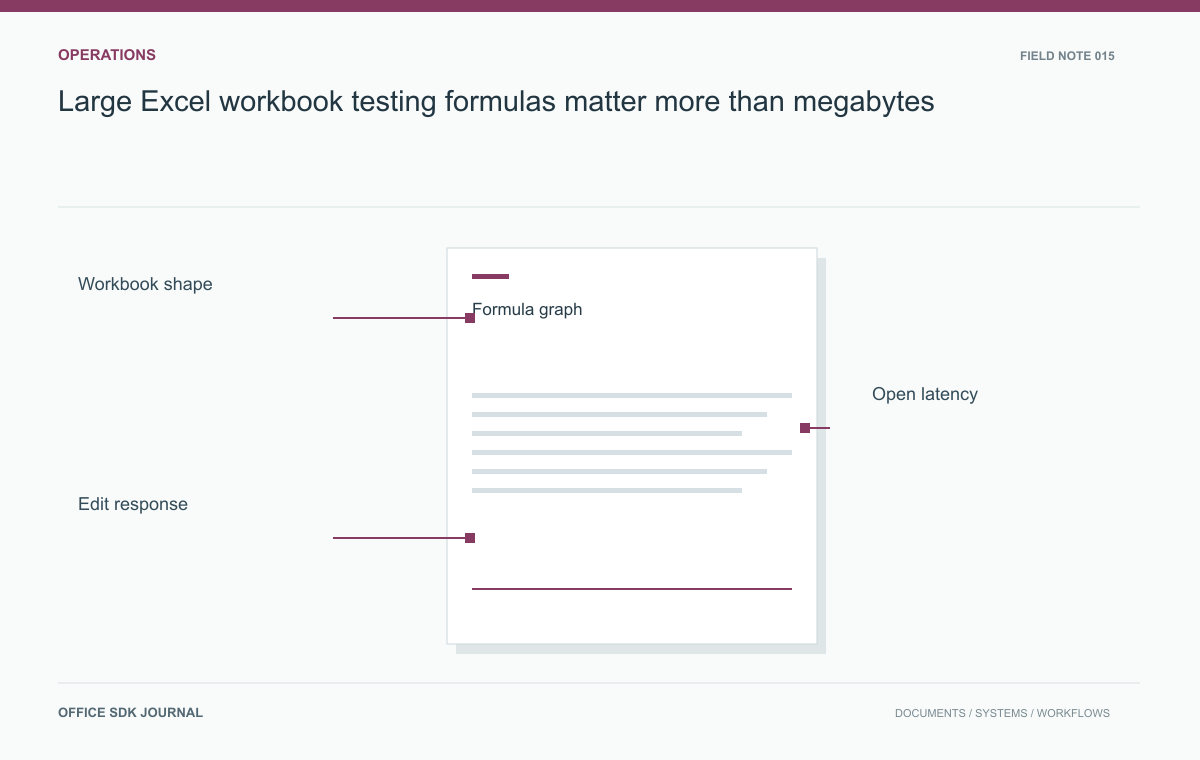
Build a workbook acceptance matrix that covers formulas, formatting, charts, and user tasks alongside byte size.
Read story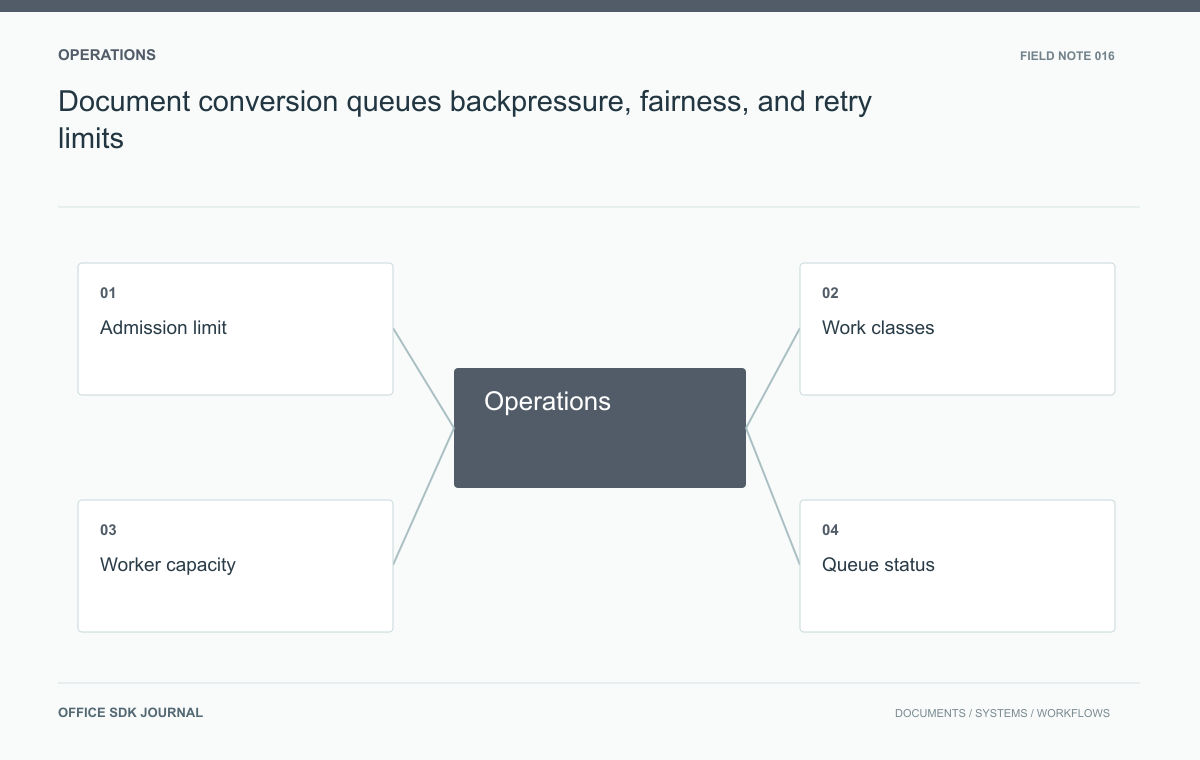
Use admission limits, fair scheduling, and visible queue states to preserve predictable conversion behavior under bursts.
Read story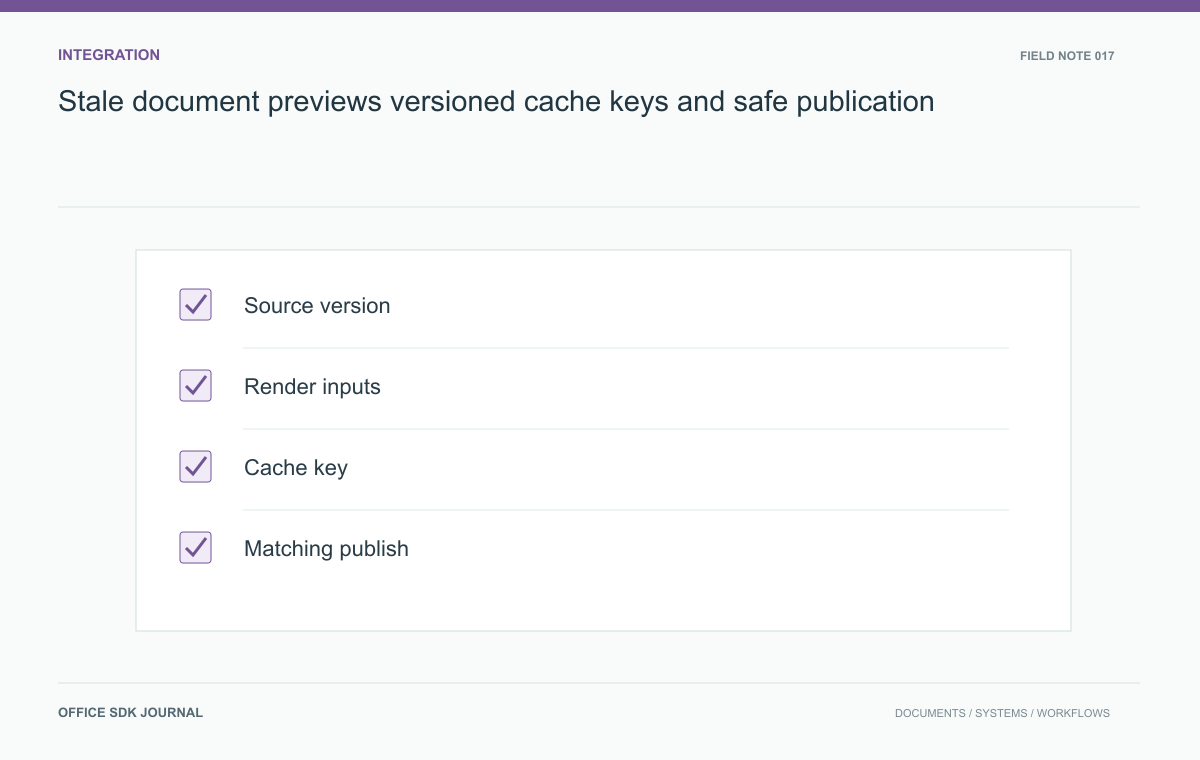
Design preview cache keys and publication rules so a fast cached response does not show silently outdated content.
Read story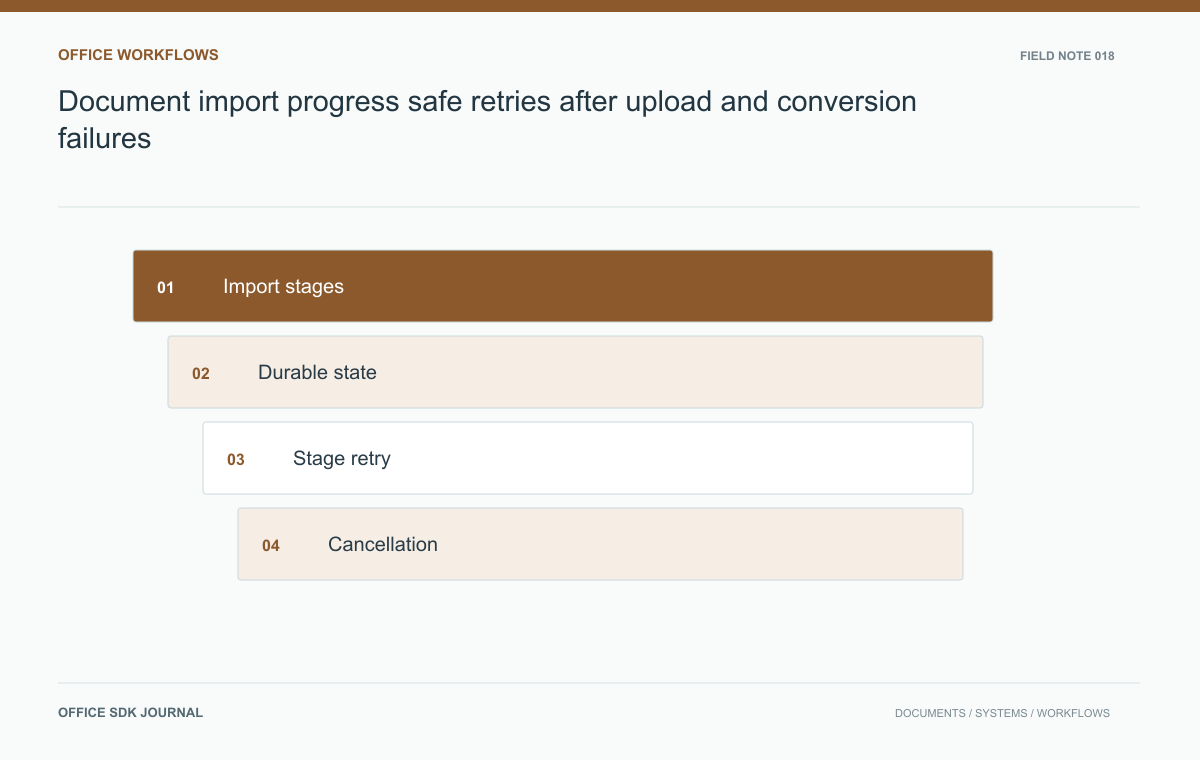
Give users honest progress, safe retries, and clear recovery when upload, validation, conversion, or registration fails.
Read story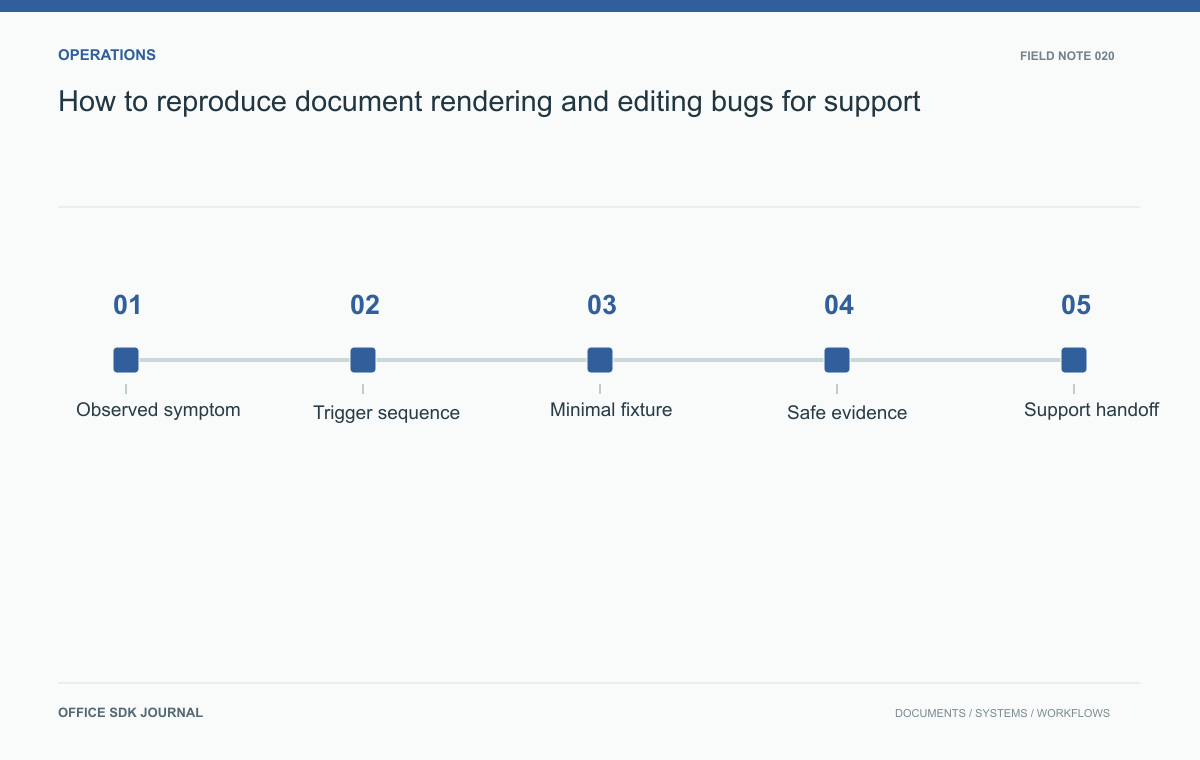
Collect the environment, operation sequence, and smallest useful fixture so document failures can be reproduced safely and precisely.
Read story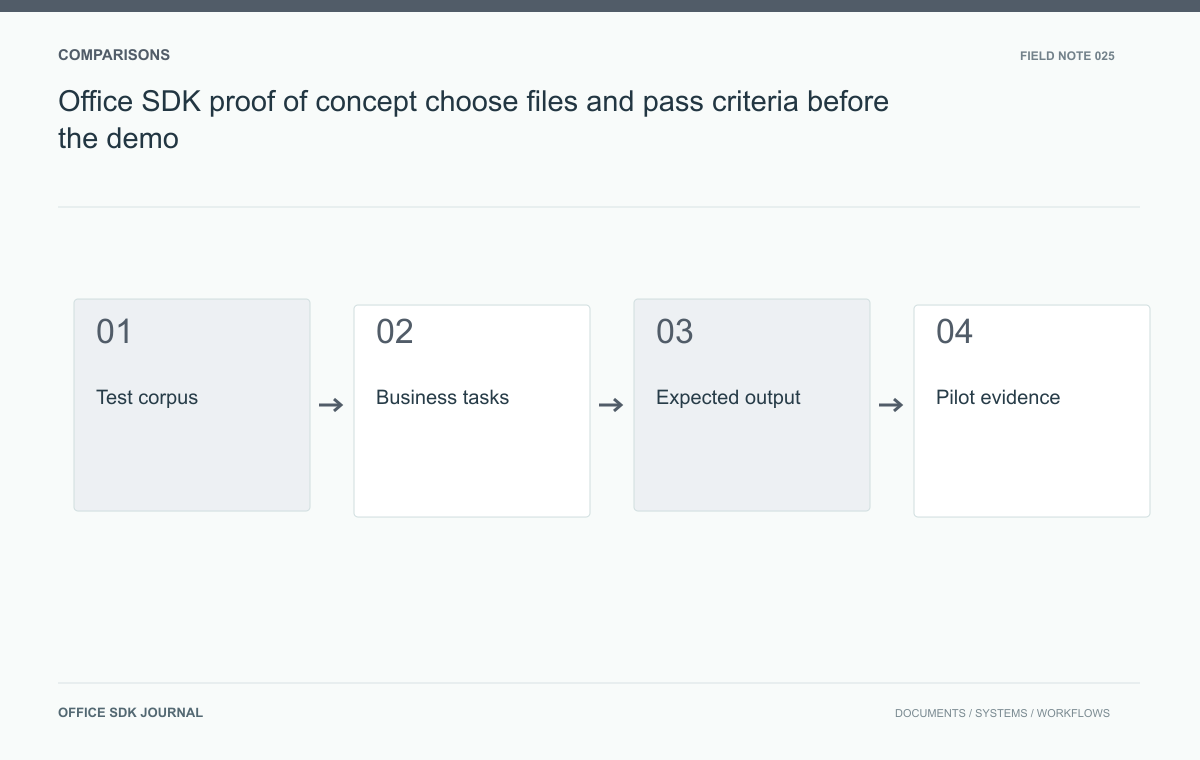
Choose realistic files, user tasks, and acceptance criteria before a pilot so results support an actual deployment decision.
Read story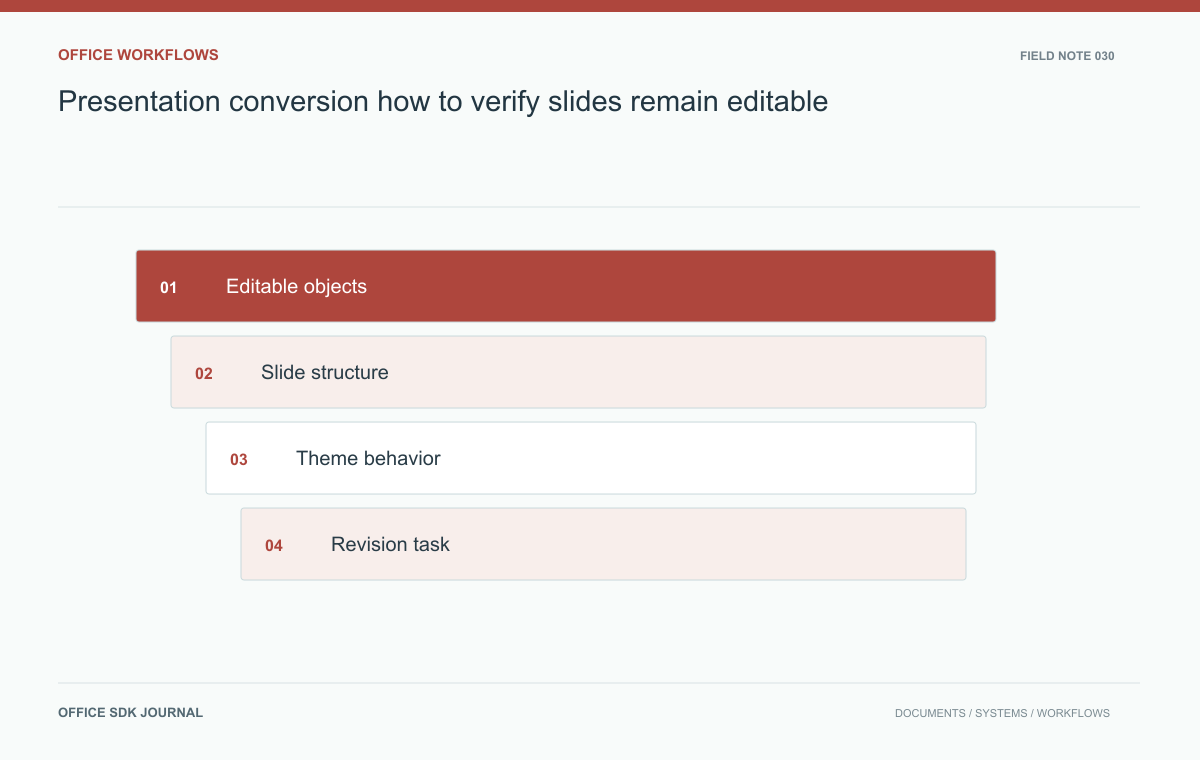
Verify text, shapes, charts, notes, and master behavior when a presentation must remain editable after import or conversion.
Read story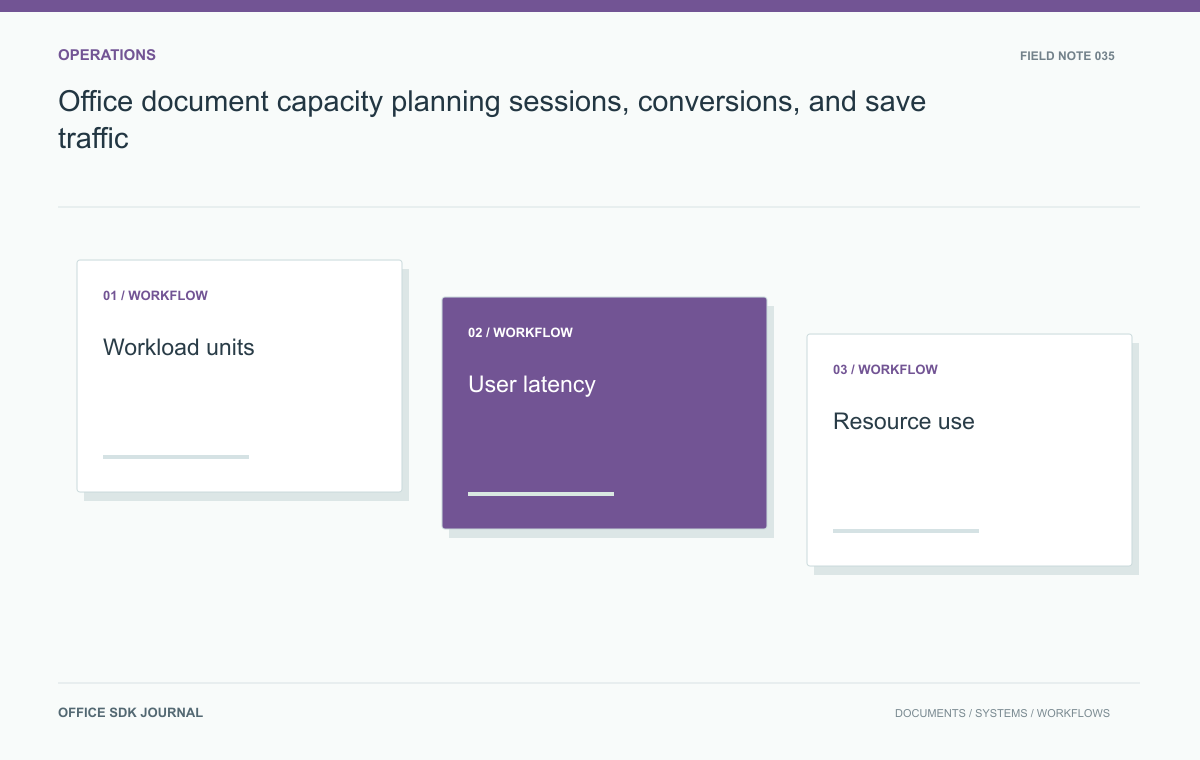
Distinguish open sessions, requests, conversions, and save traffic so capacity estimates reflect the real document workload.
Read story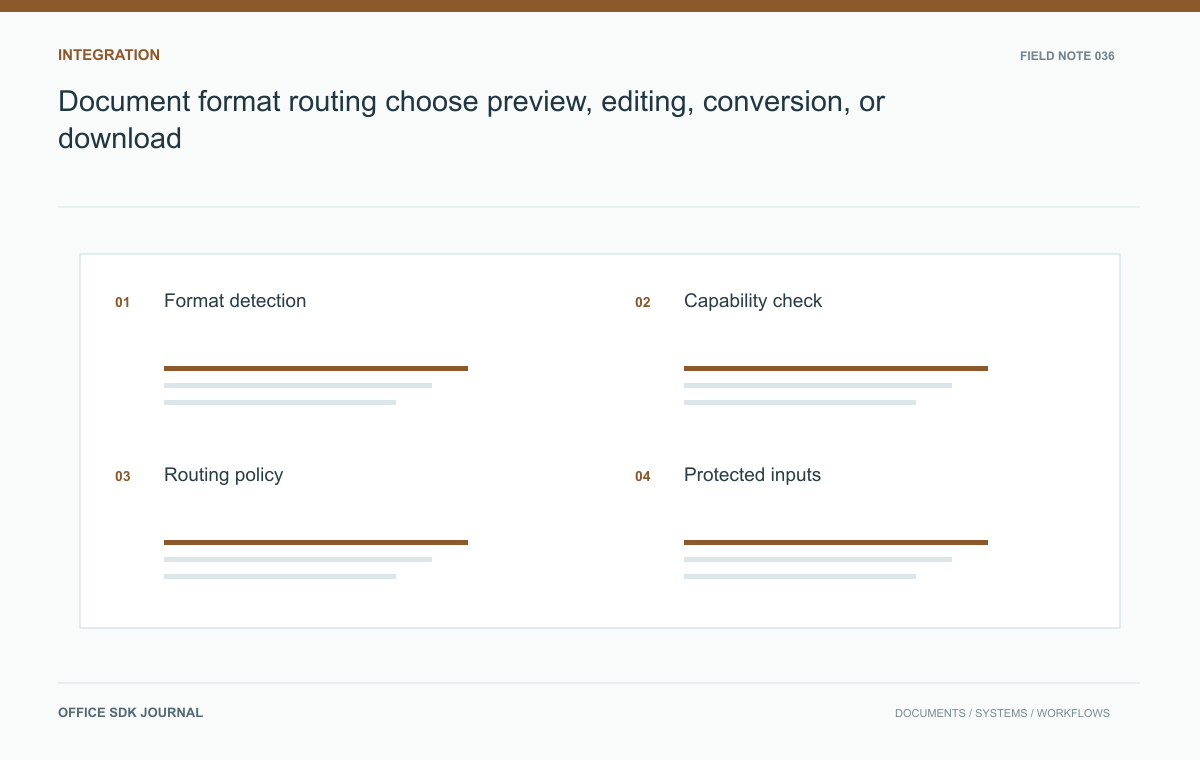
Choose preview, editing, conversion, or download paths using validated content type and task requirements, with clear fallback behavior.
Read story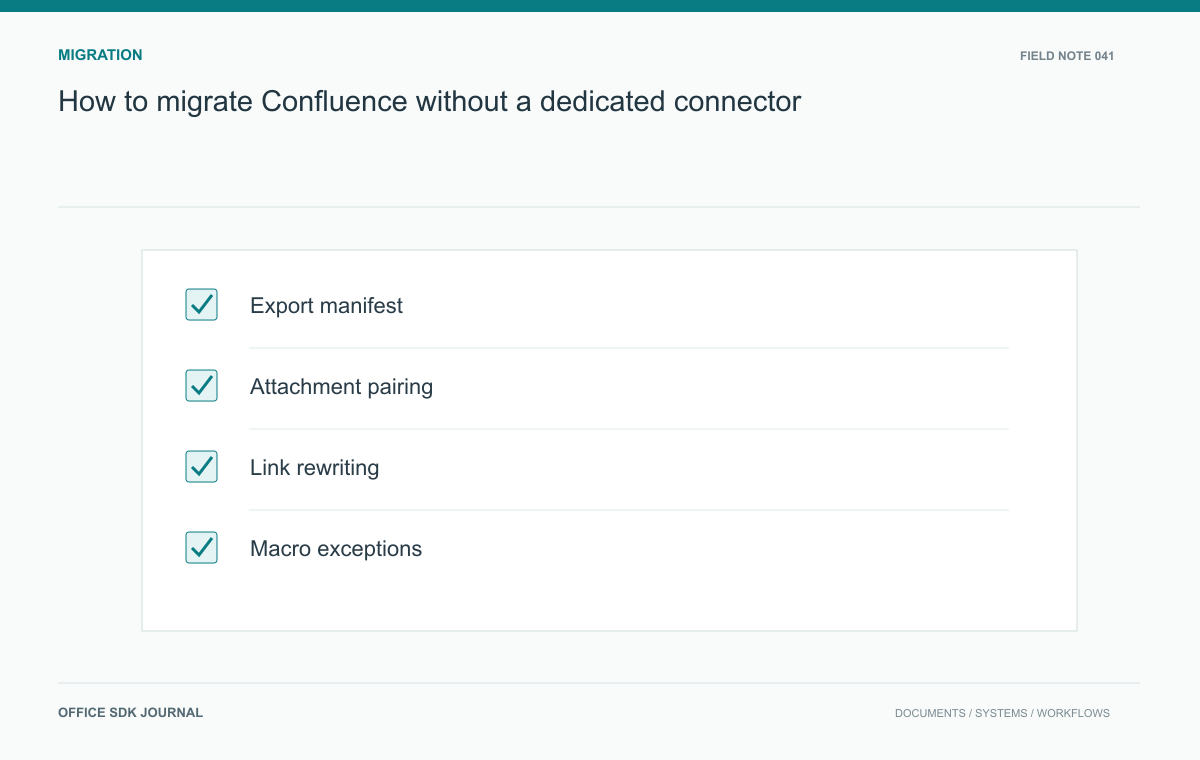
Prepare a manual knowledge migration with explicit handling for attachments, links, permissions, and unsupported content.
Read story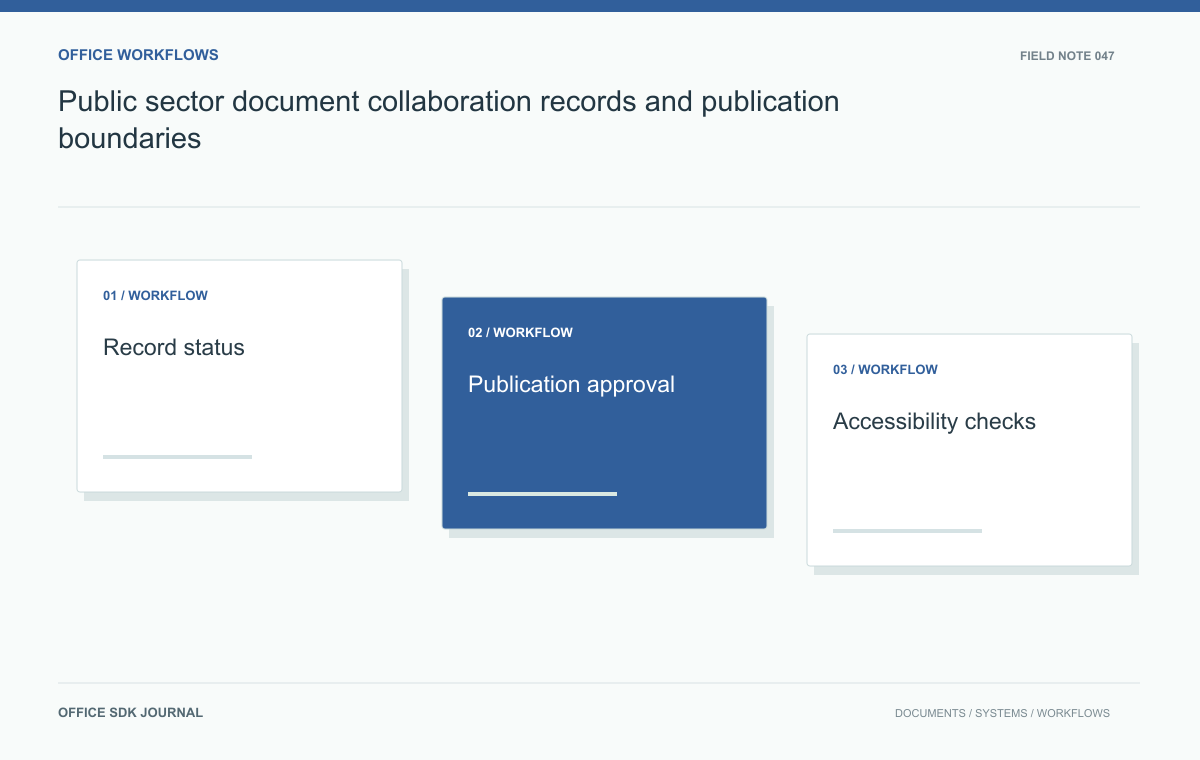
Define working drafts, official records, access decisions, and accessible publication in public sector workflows.
Read story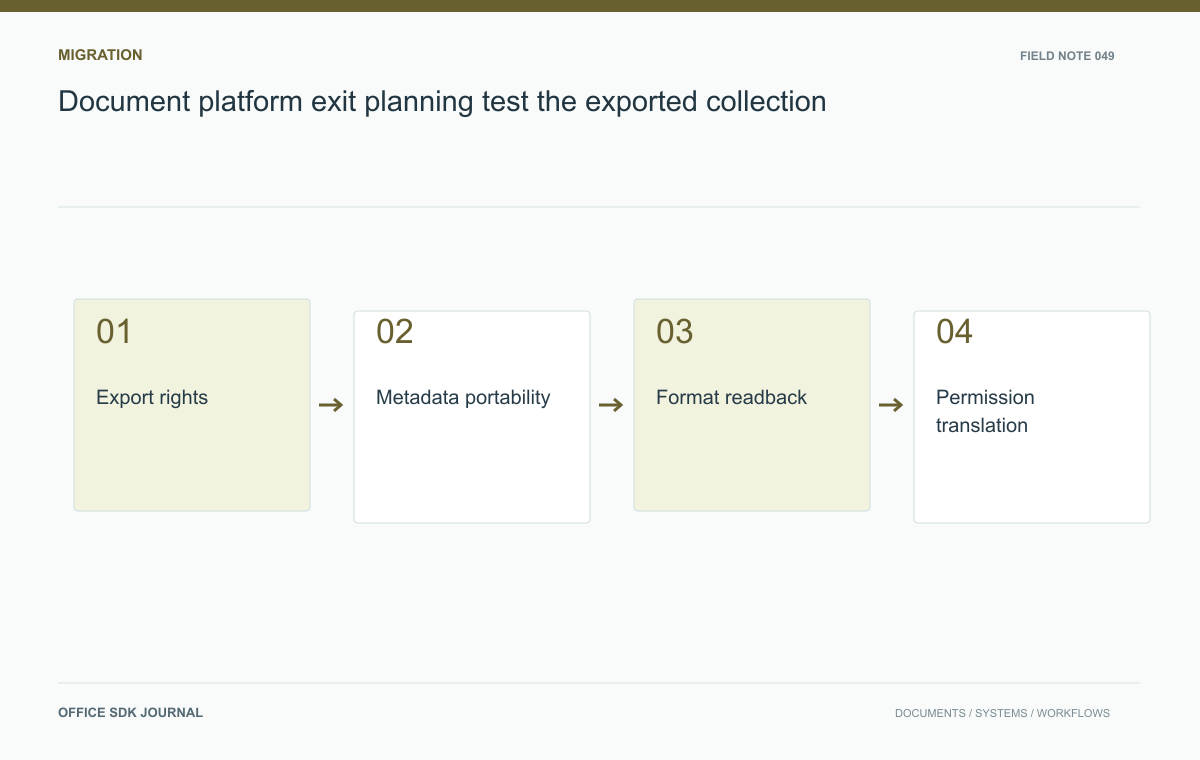
Test export, metadata recovery, permission translation, and downstream usability as an ongoing portability obligation.
Read story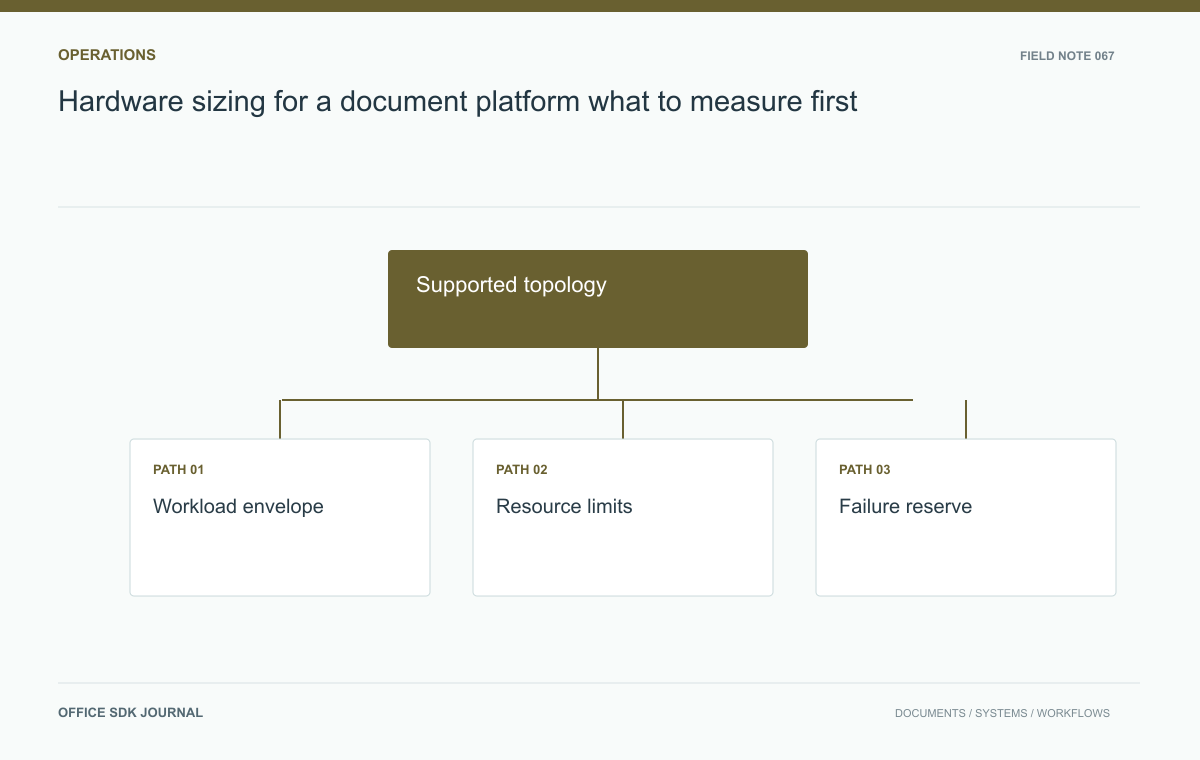
Translate representative editing, conversion, storage, and failure scenarios into defensible hardware requirements.
Read story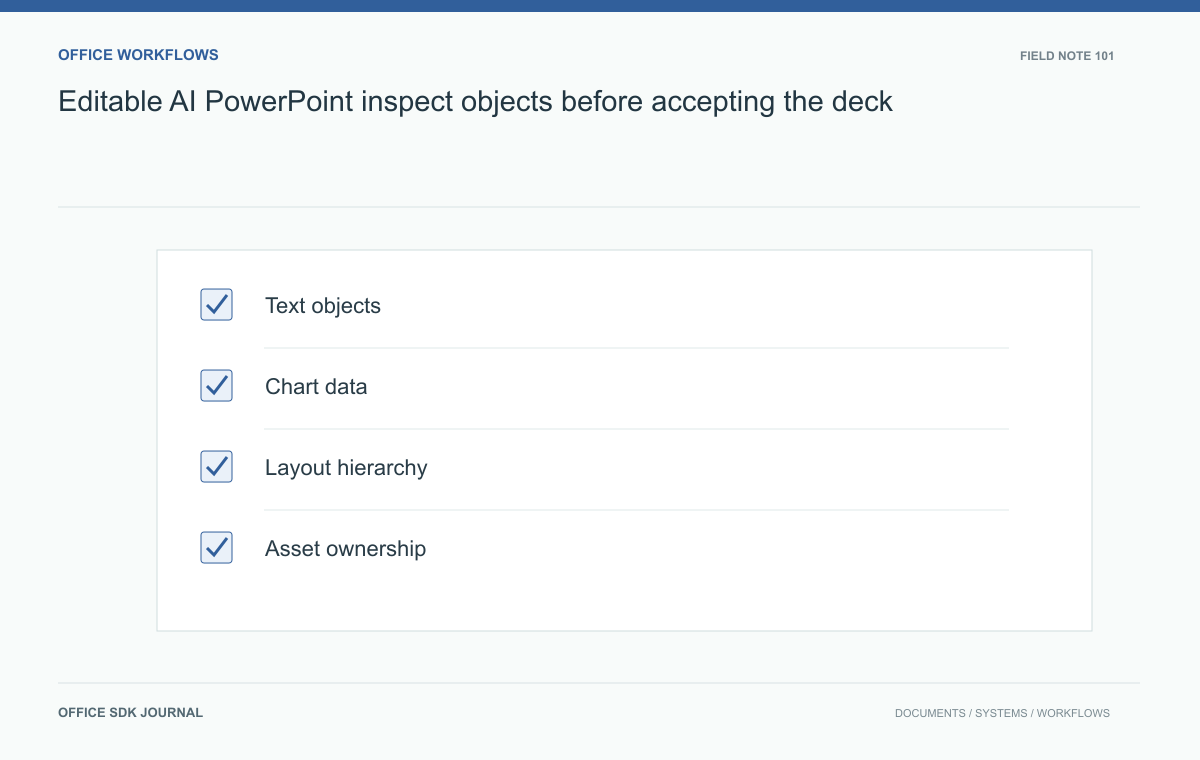
Verify editable charts, text, diagrams, themes, and the next real revision in the recipient application.
Read story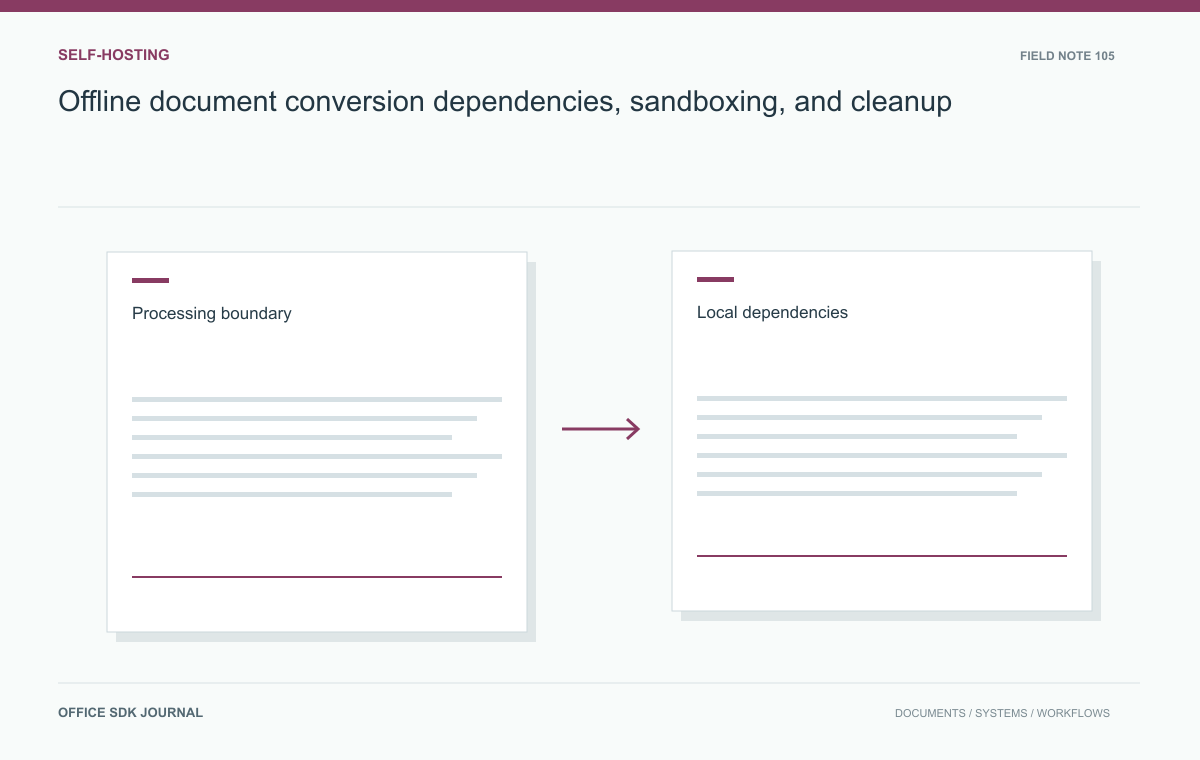
Prove the offline boundary and validate local outputs under ordinary operation, failure, and maintenance.
Read story
Preserve document meaning and evidence through local parsing, context selection, inference, and rendering.
Read story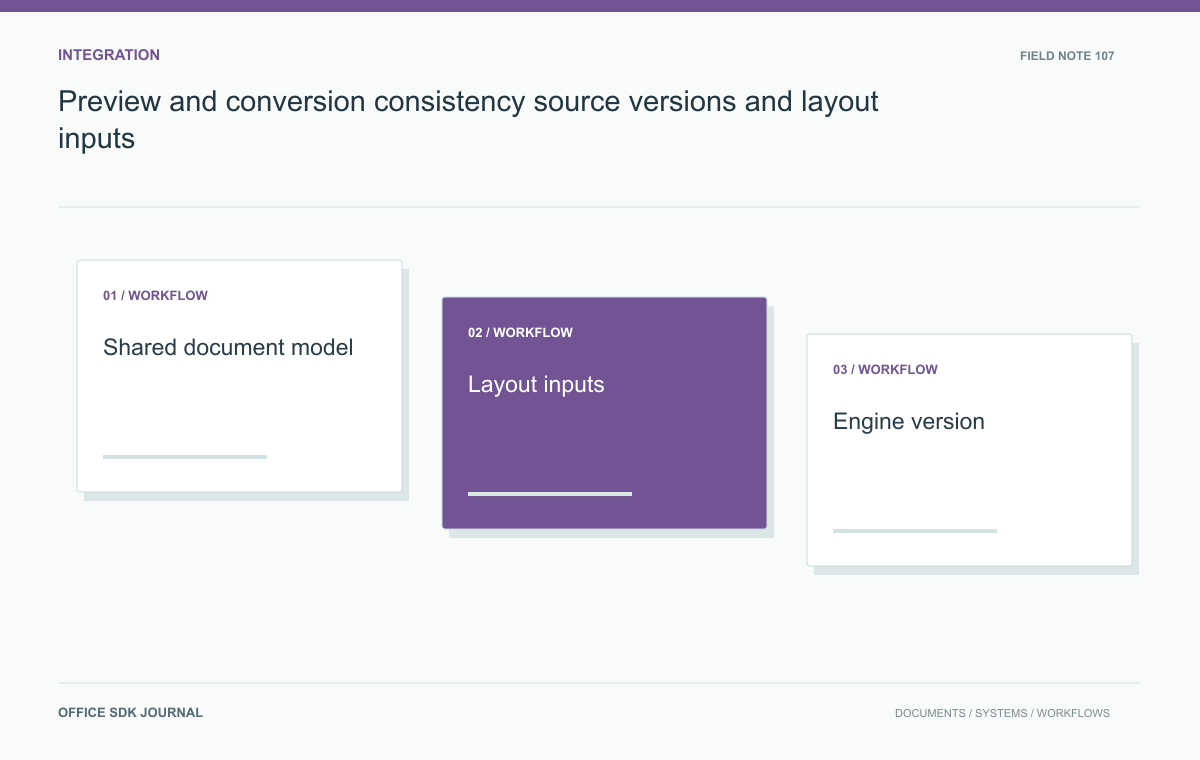
Keep preview and converted output aligned through common models, explicit layout inputs, cache versioning, and approval guards.
Read story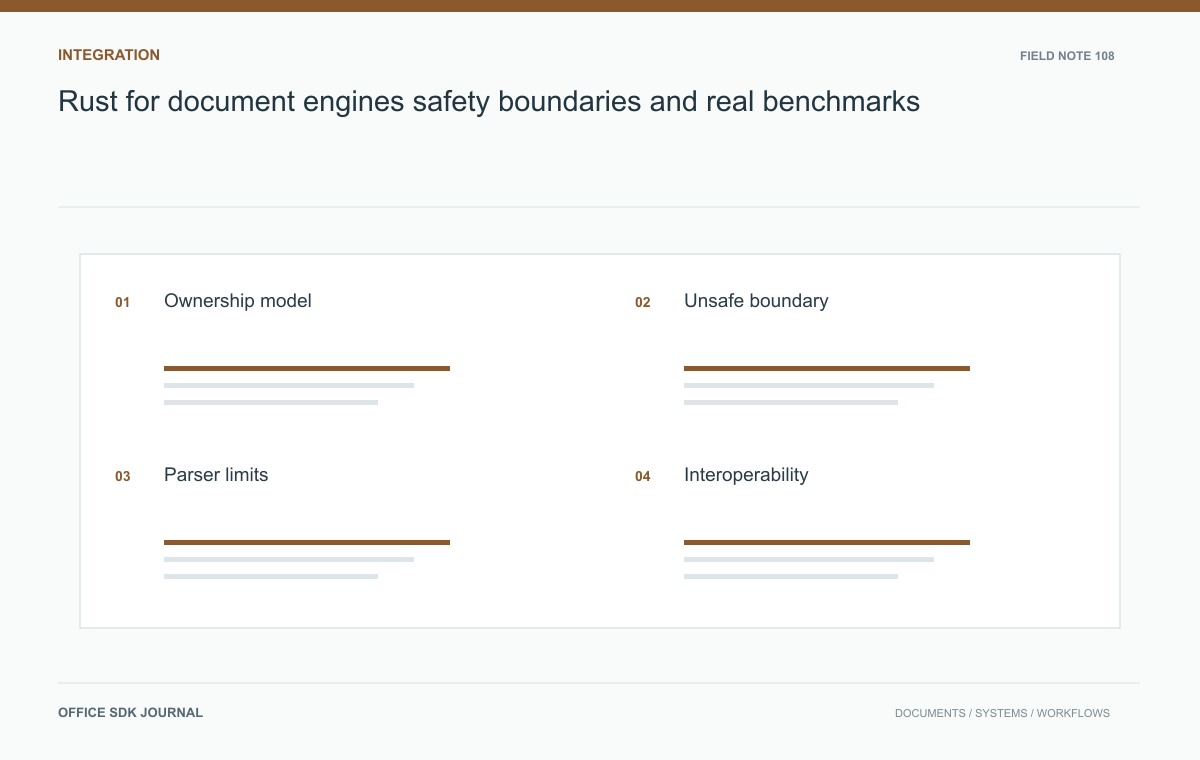
Assess safe code, native interfaces, parser limits, correctness, deployment, and maintenance without language-based performance claims.
Read story