

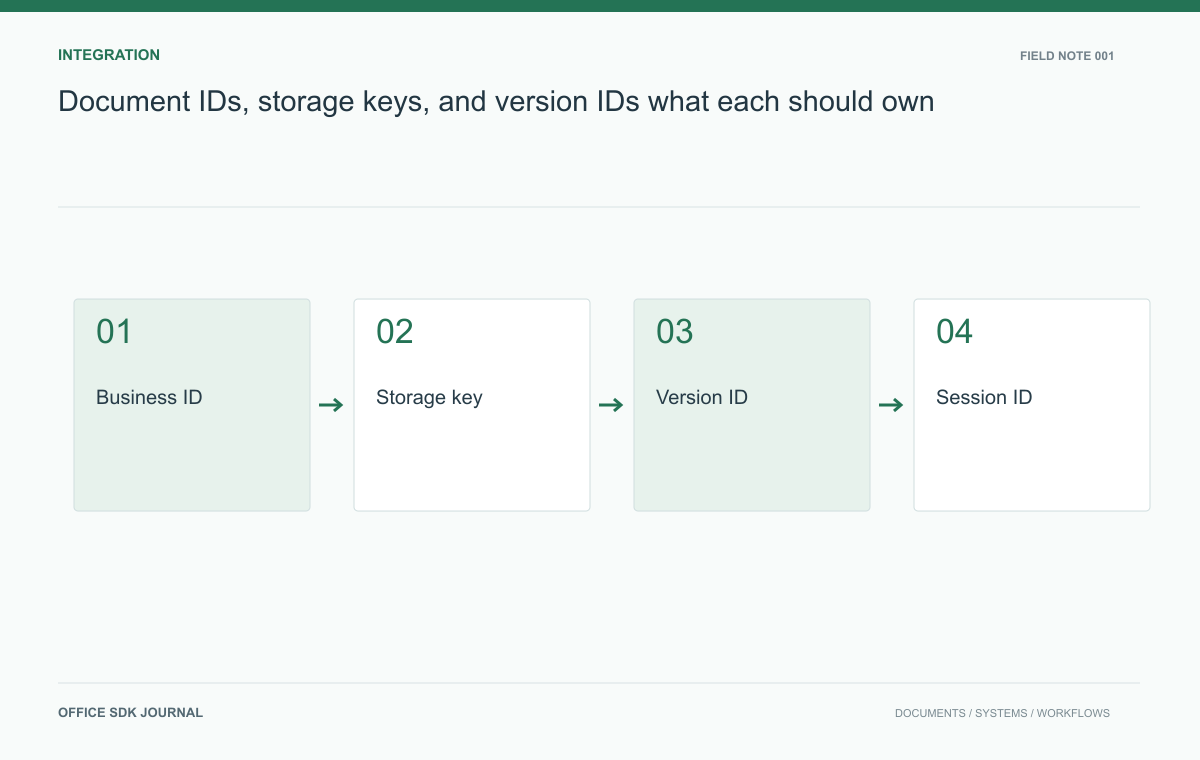
Document IDs, storage keys, and version IDs: what each should own
Separate business identity, stored objects, and editor sessions so renames, copies, and migrations remain predictable.
Read storyVersion questions decide whether an embedded editor can be trusted in production: which save produced which version, and which record points to it. These notes treat version identity as a first-class integration concern.
30 articles · Version control
Separate business identity, stored objects, and editor sessions so renames, copies, and migrations remain predictable.
Read story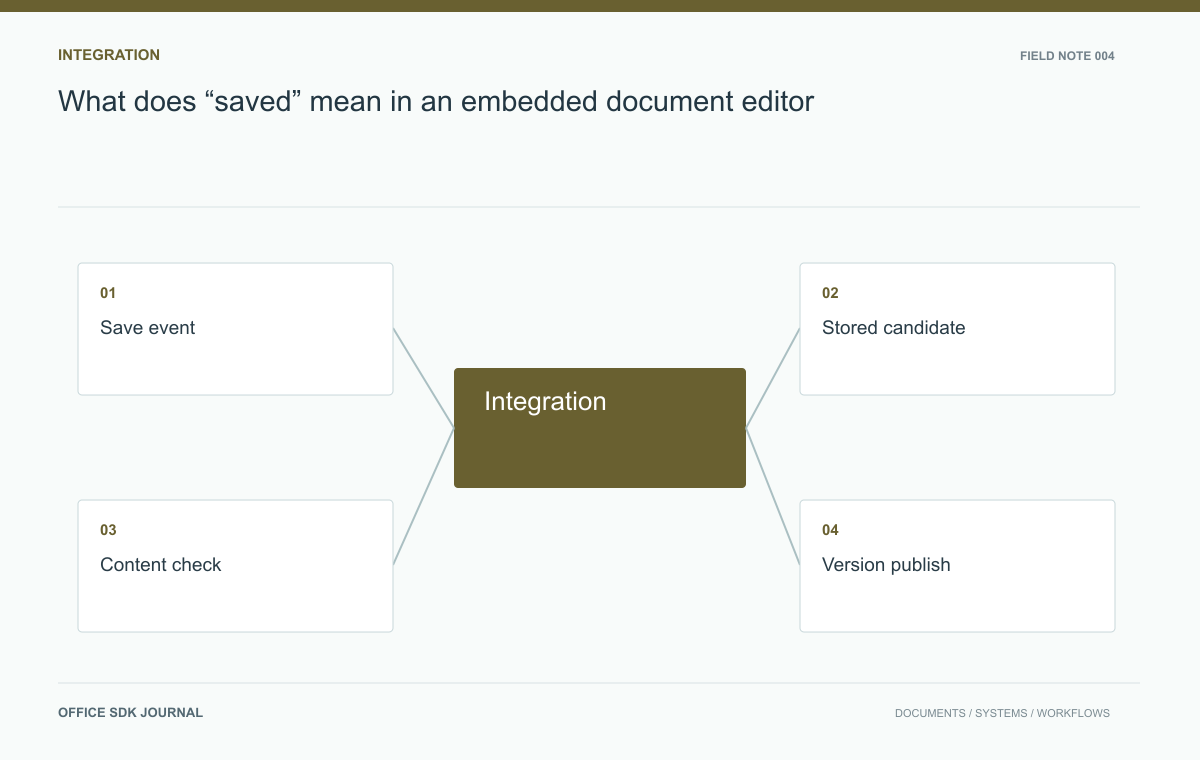
Distinguish session updates, durable application versions, and exported files to build a save contract users can trust.
Read story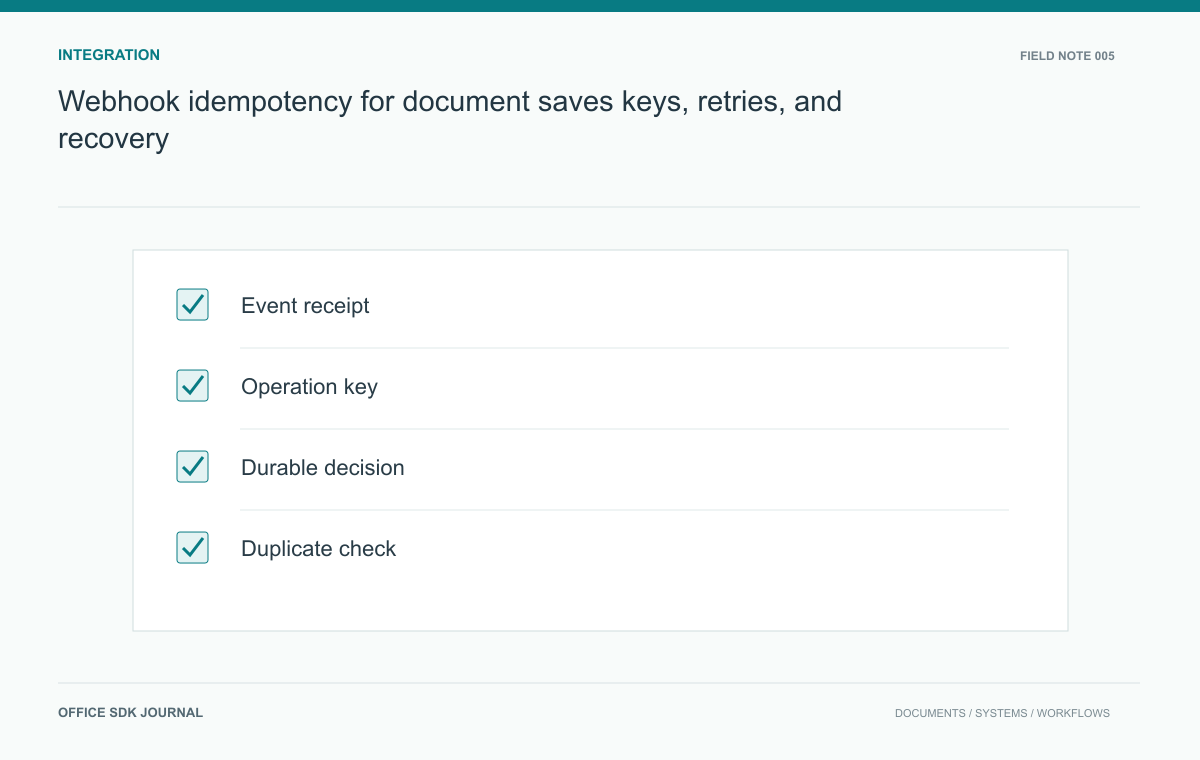
Design callback handling around authenticated events, durable acknowledgement, and idempotent effects.
Read story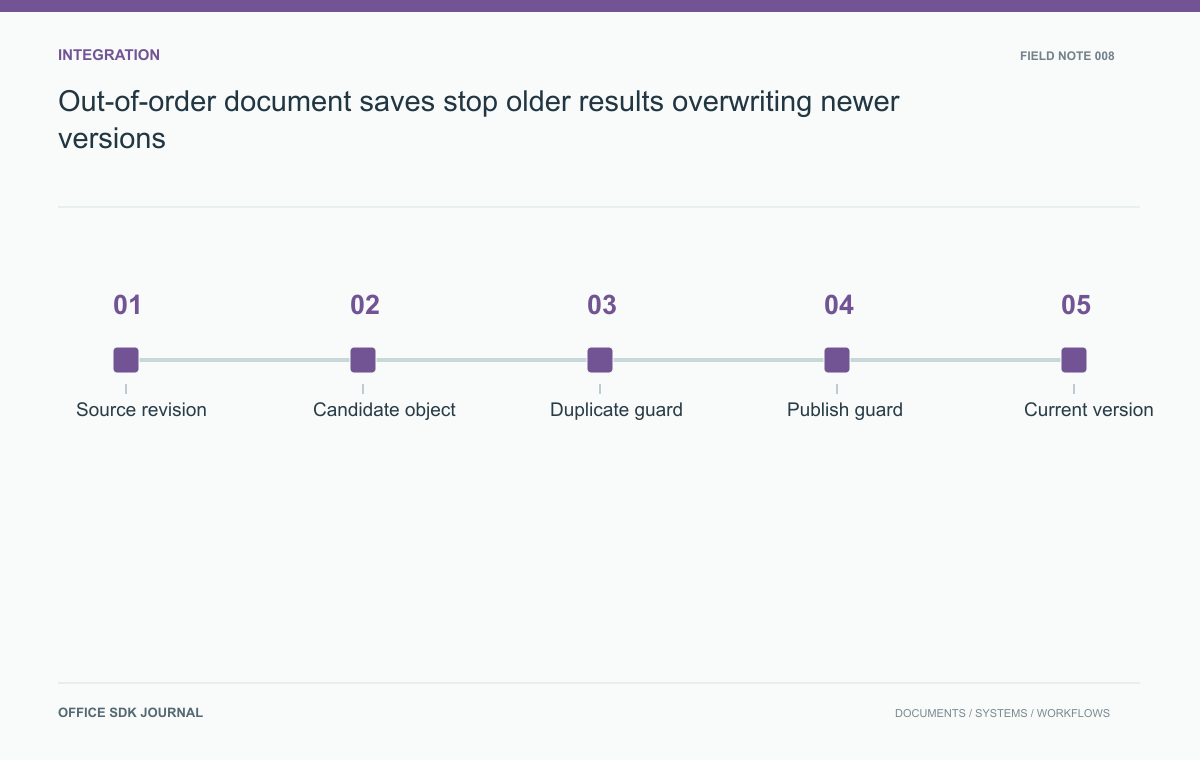
Use explicit version ordering and guarded publication to handle duplicates and delayed save delivery without moving content backward.
Read story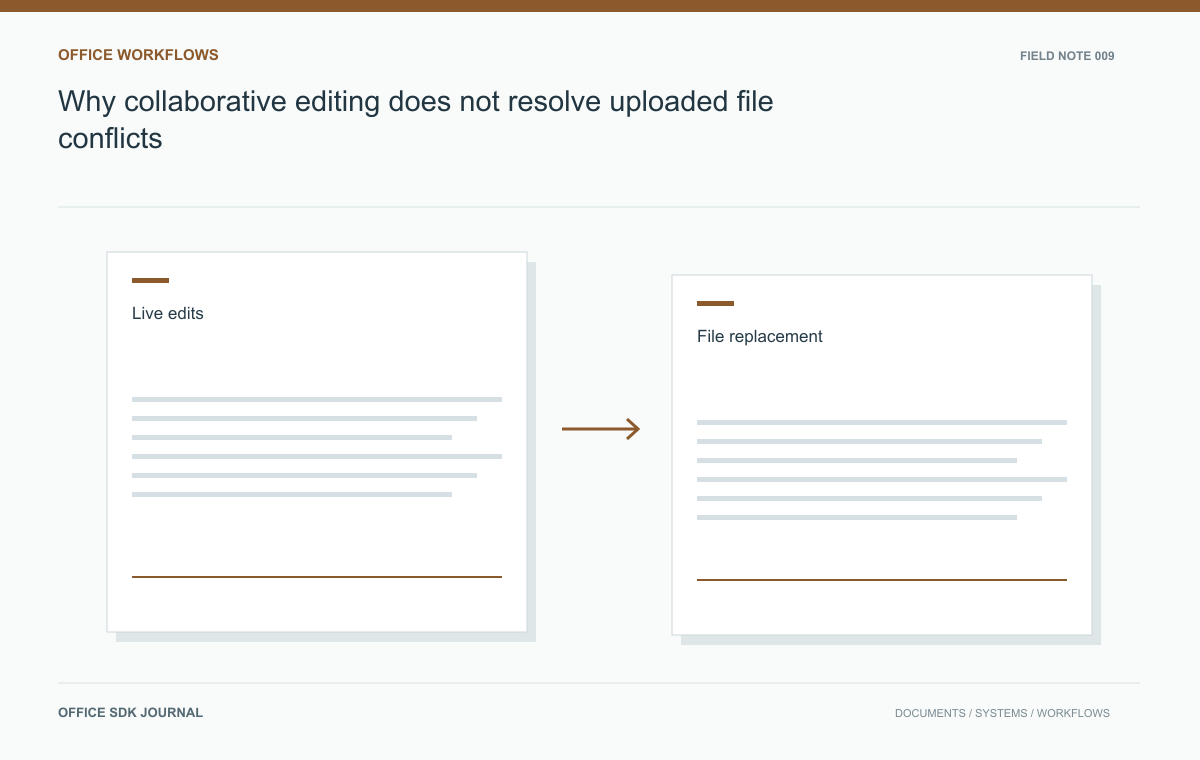
Understand why a collaborative editor still needs application rules for uploads, restores, and external replacements.
Read story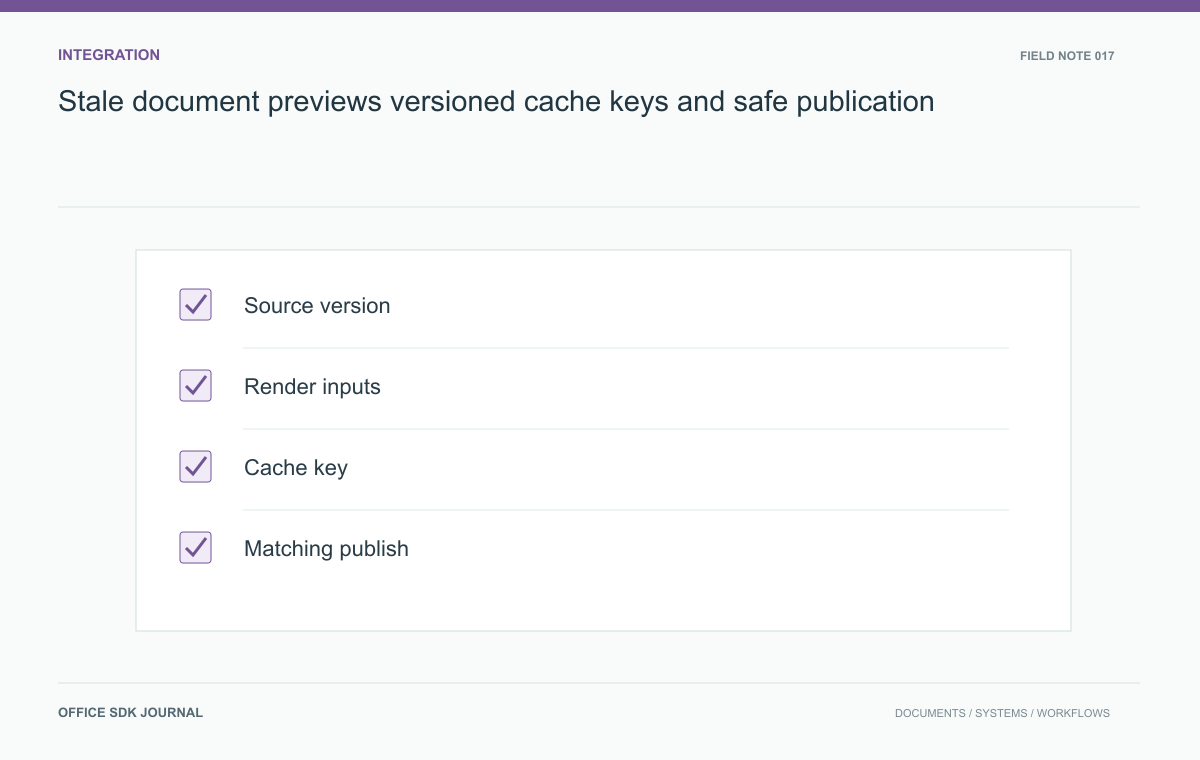
Design preview cache keys and publication rules so a fast cached response does not show silently outdated content.
Read story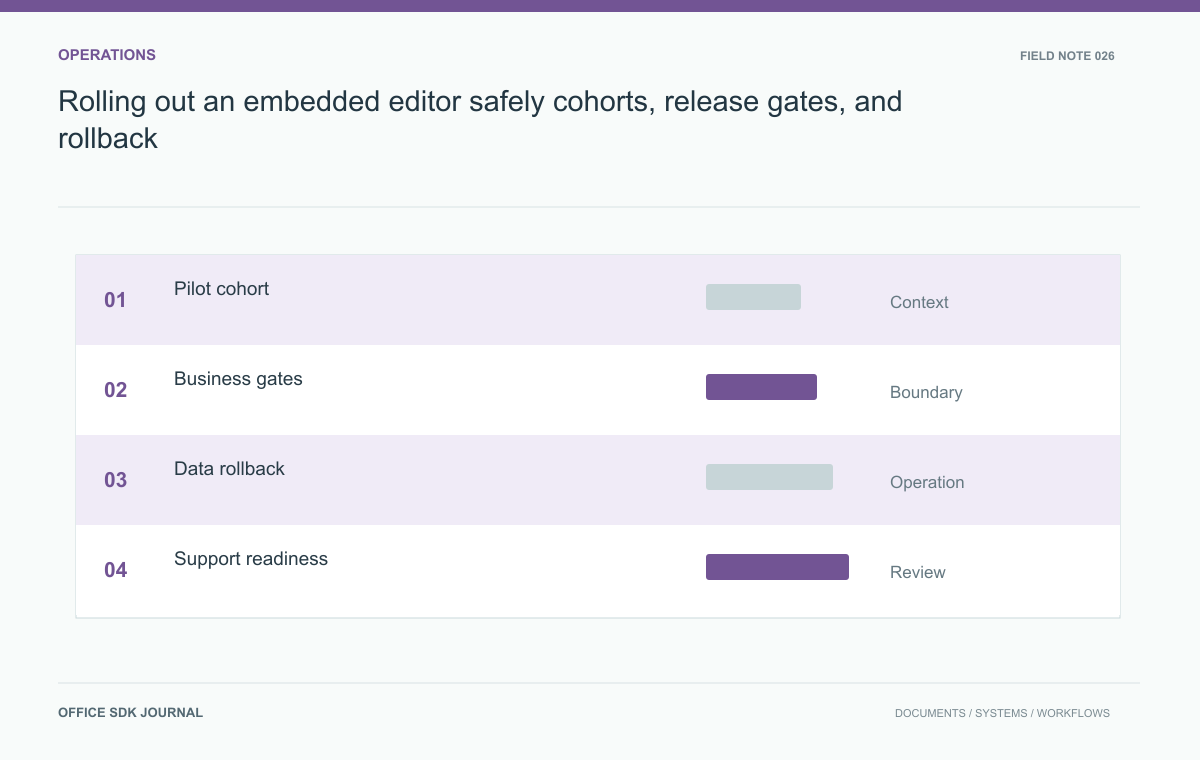
Release to defined cohorts, observe content and save behavior, and prepare a rollback that respects documents already changed.
Read story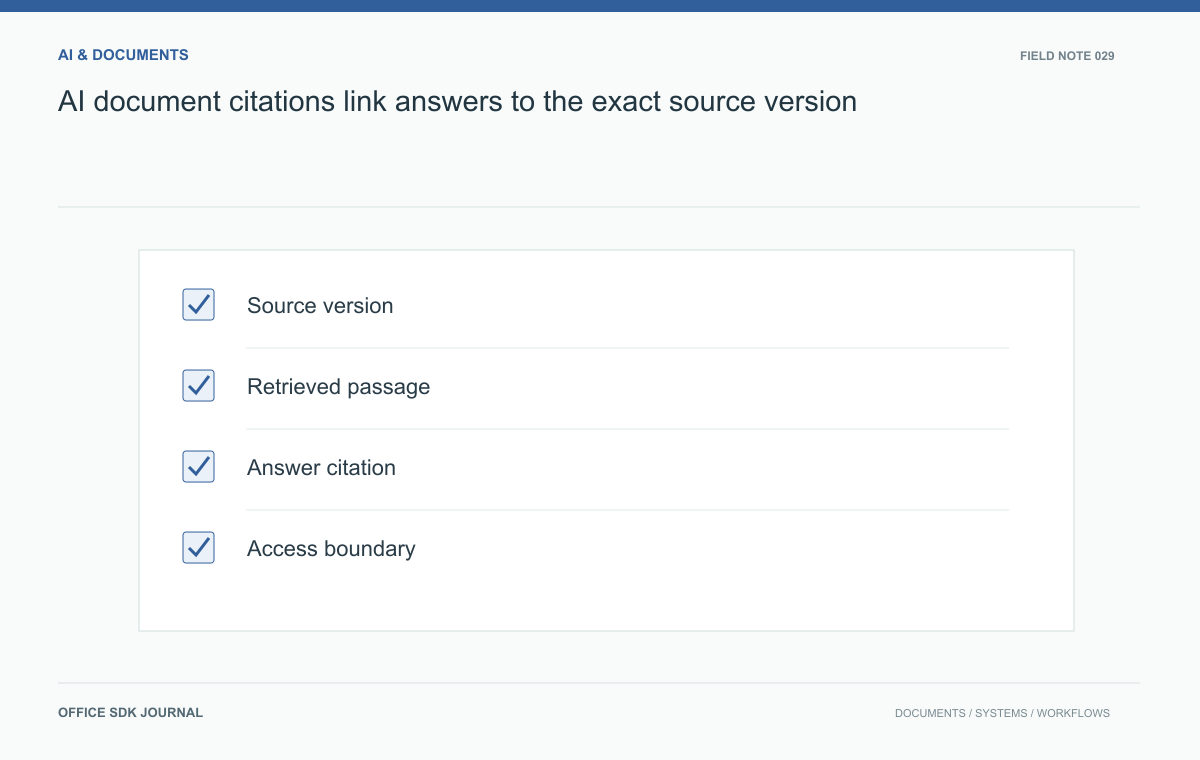
Attach useful provenance to generated answers so readers can inspect evidence, detect stale sources, and review uncertainty.
Read story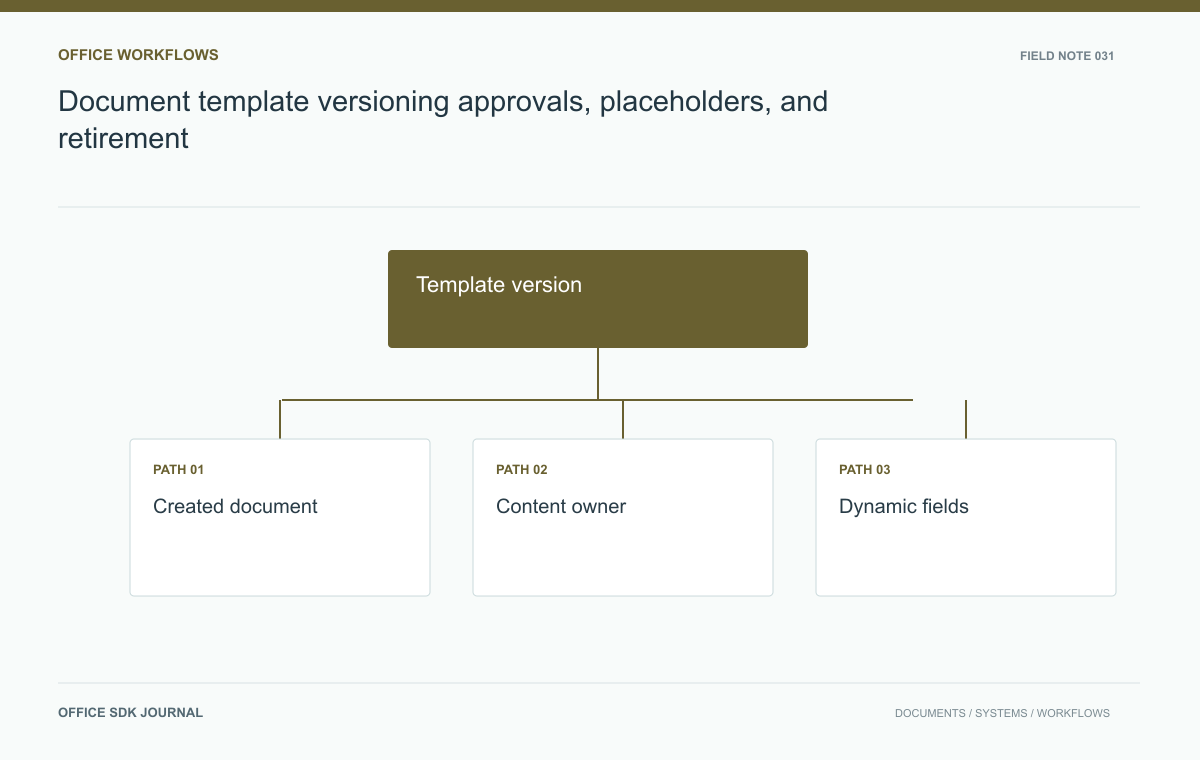
Separate approved template versions from created documents, with clear ownership, change review, and retirement behavior.
Read story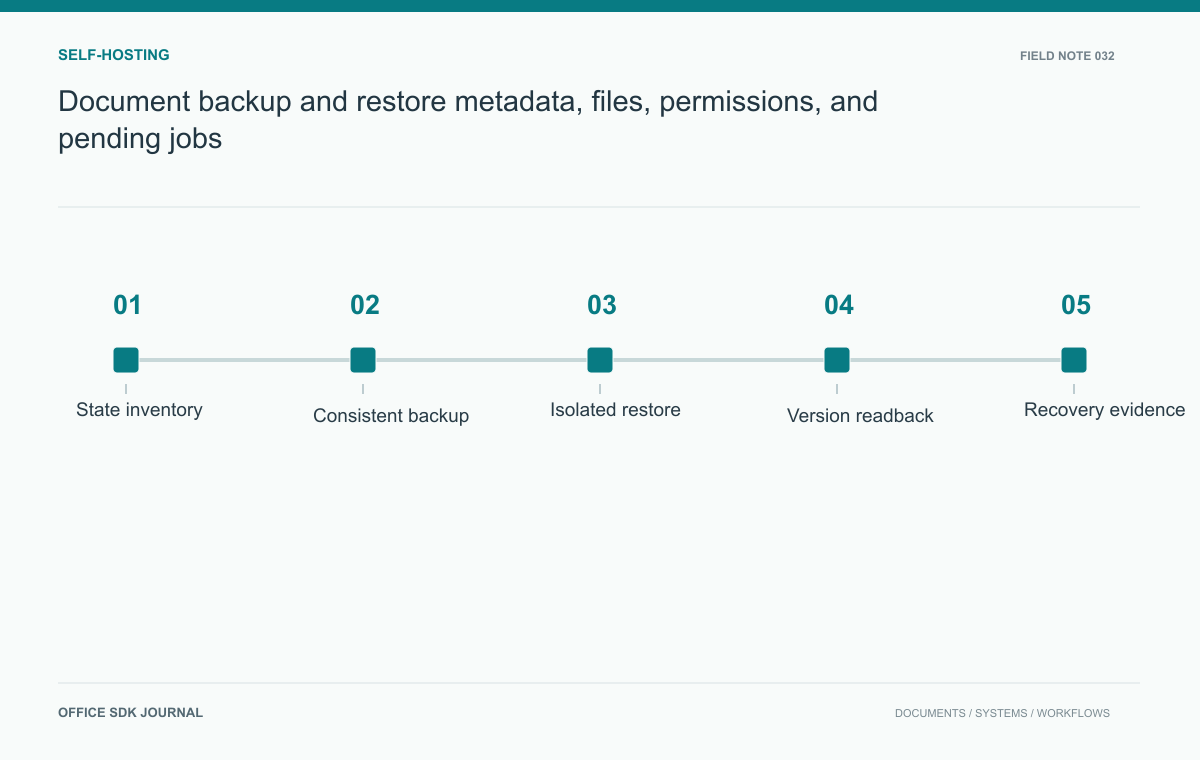
Test recovery of metadata, stored bytes, versions, permissions, and integration mappings as one coherent document state.
Read story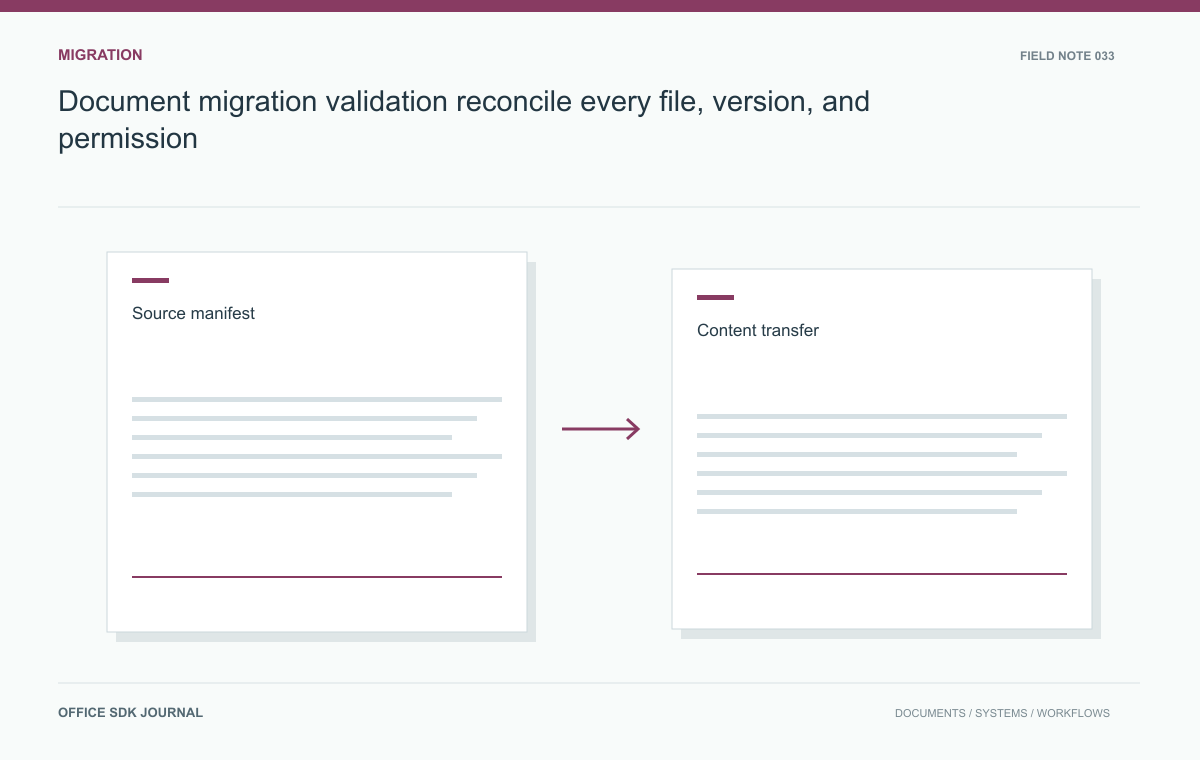
Track every source document through transfer, transformation, permission mapping, and final acceptance with an auditable manifest.
Read story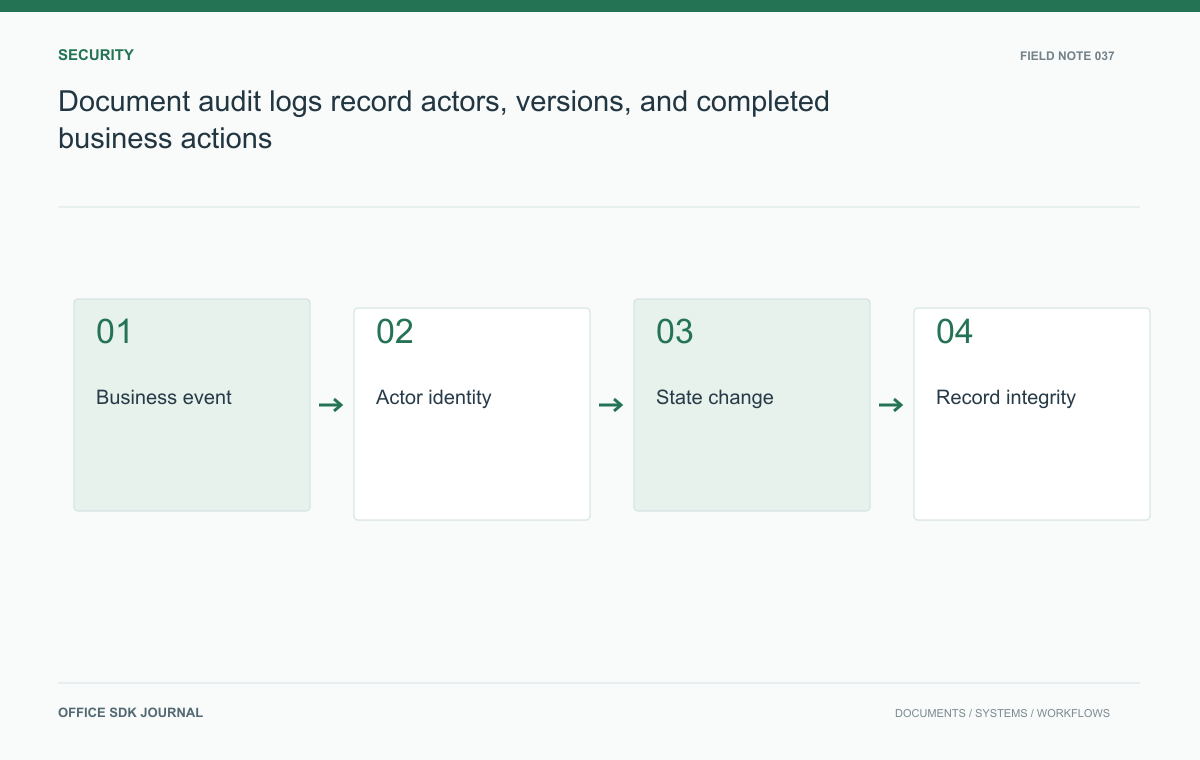
Record business actions, version relationships, and authorization context without confusing audit history with raw application logs.
Read story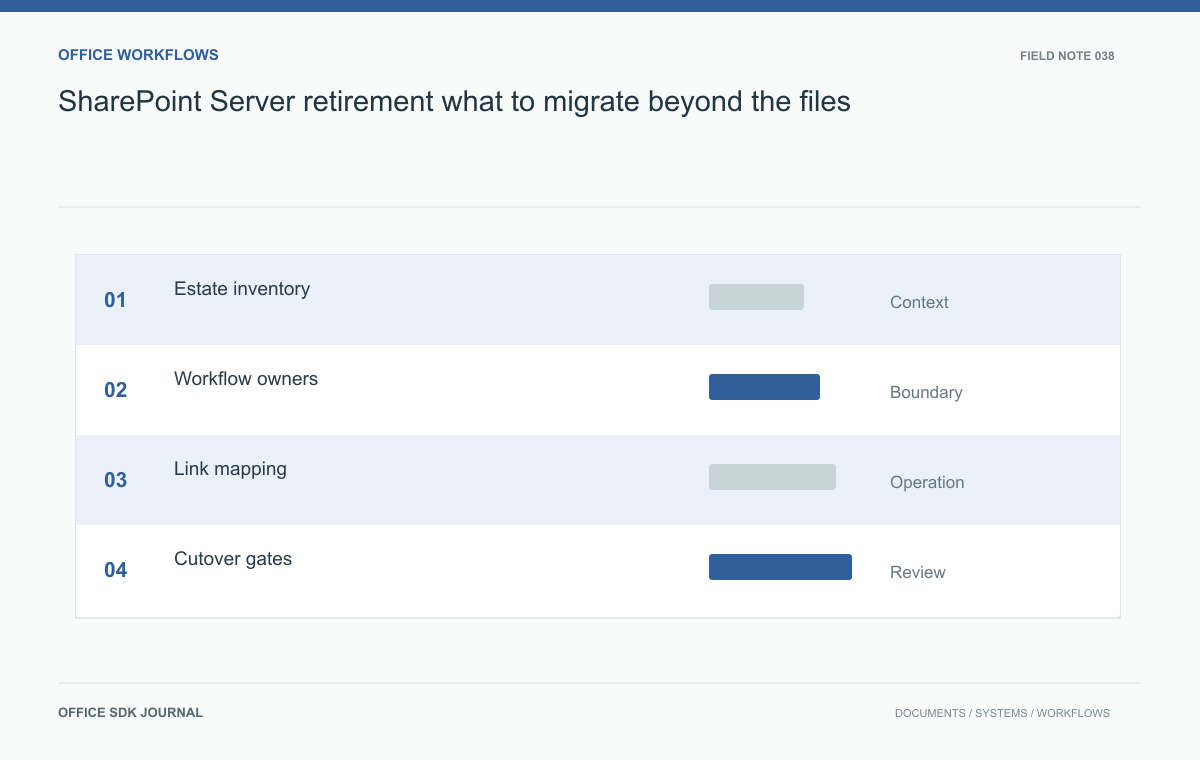
Build a replacement inventory around records, permissions, workflows, and recovery obligations.
Read story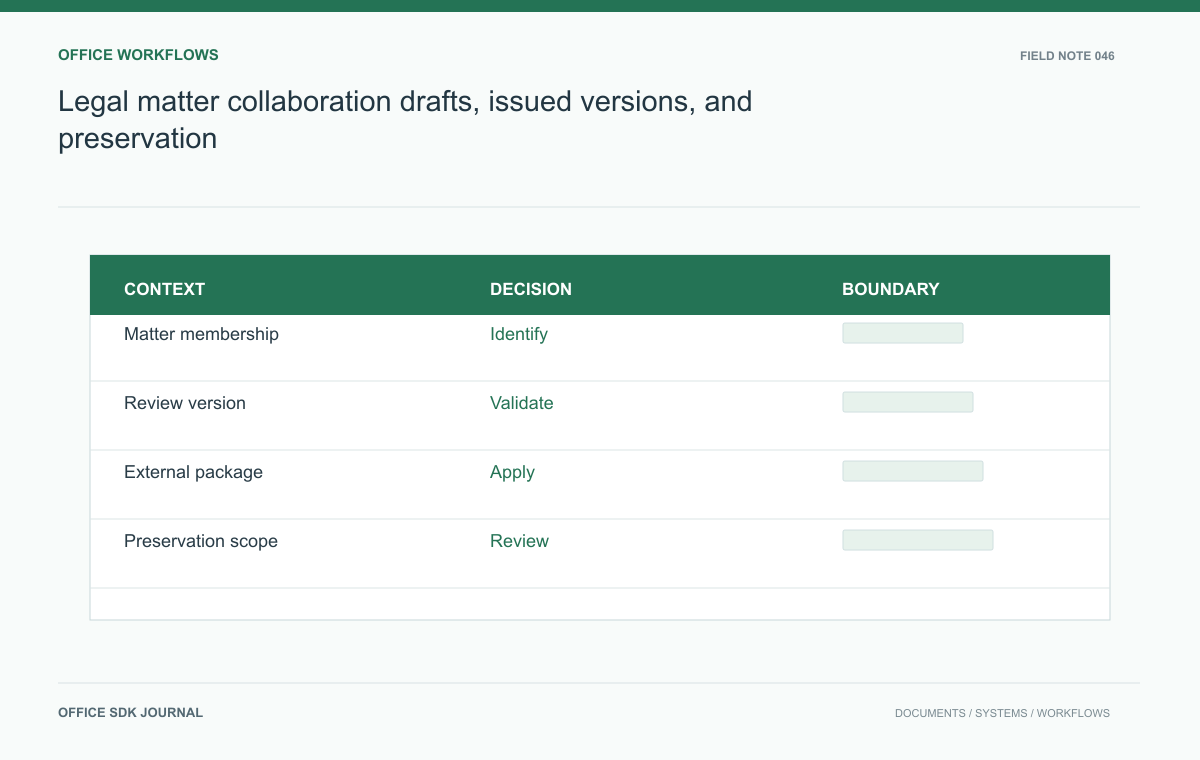
Connect matter membership, review versions, external exchange, and preservation duties in one document workflow.
Read story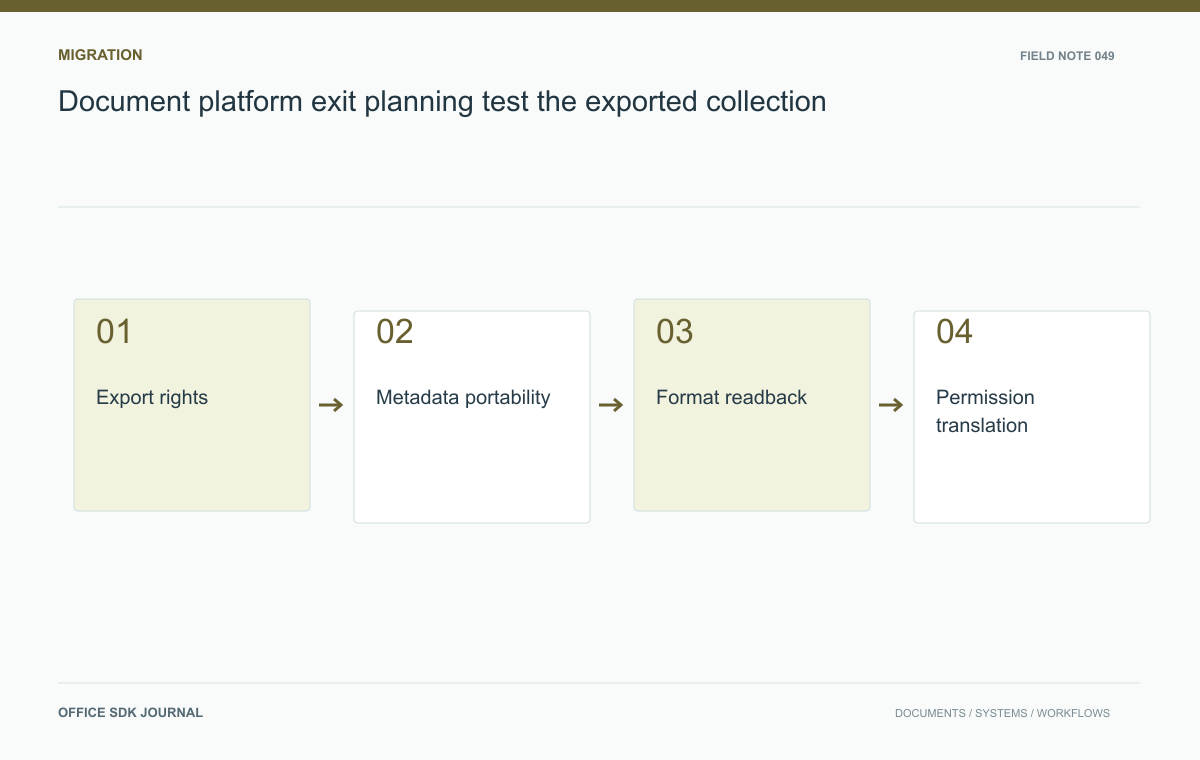
Test export, metadata recovery, permission translation, and downstream usability as an ongoing portability obligation.
Read story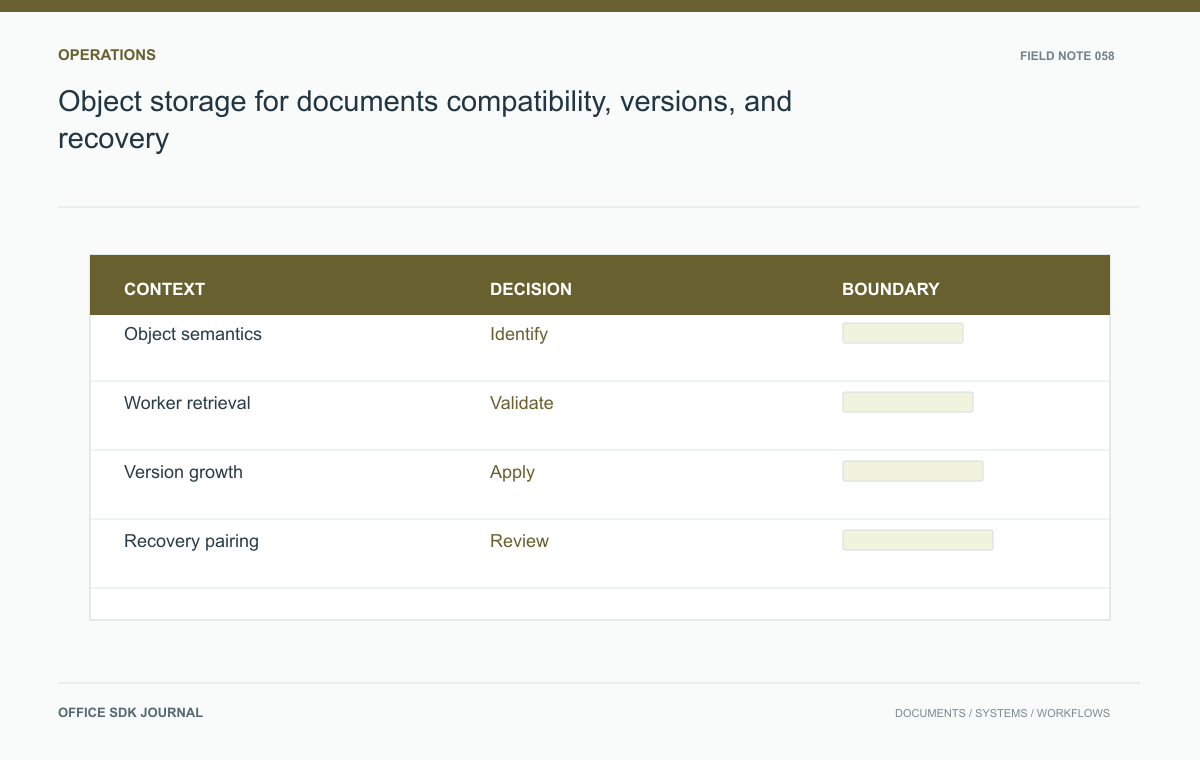
Evaluate storage semantics, temporary access, version growth, recovery, and operational responsibility with real document paths.
Read story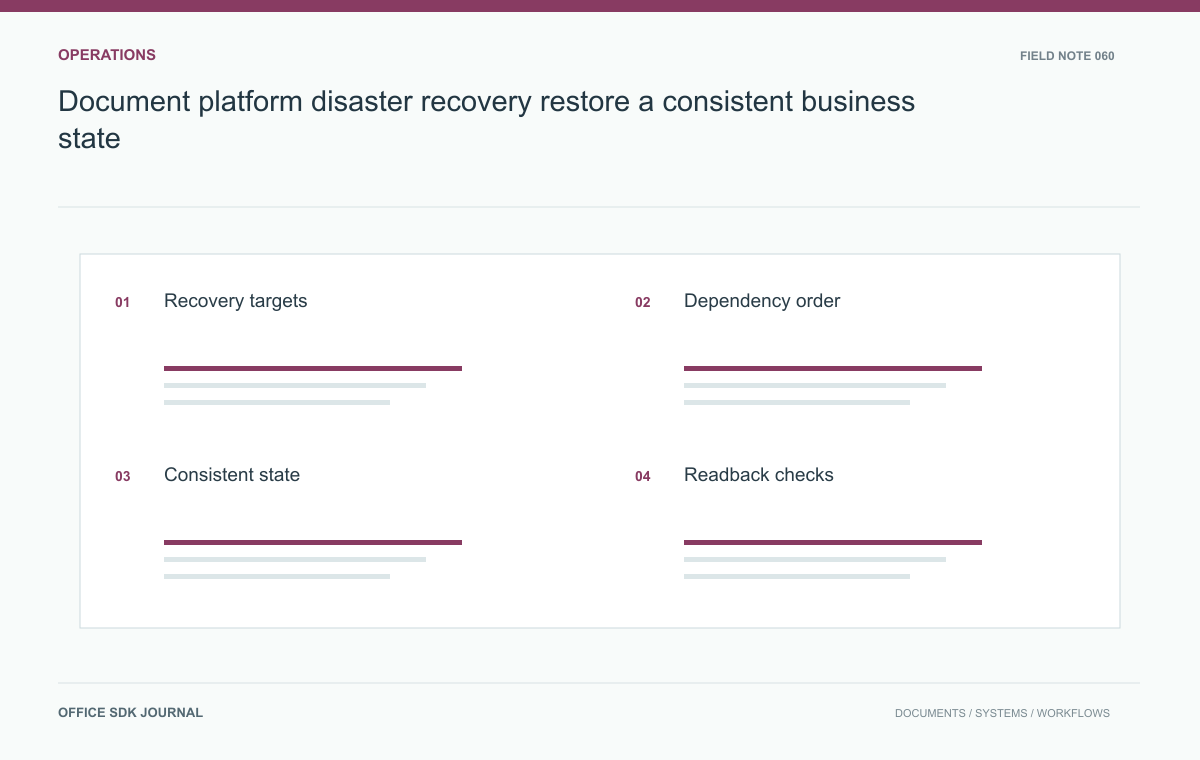
Build a disaster recovery procedure around content consistency, identity, dependencies, user readback, and controlled reopening.
Read story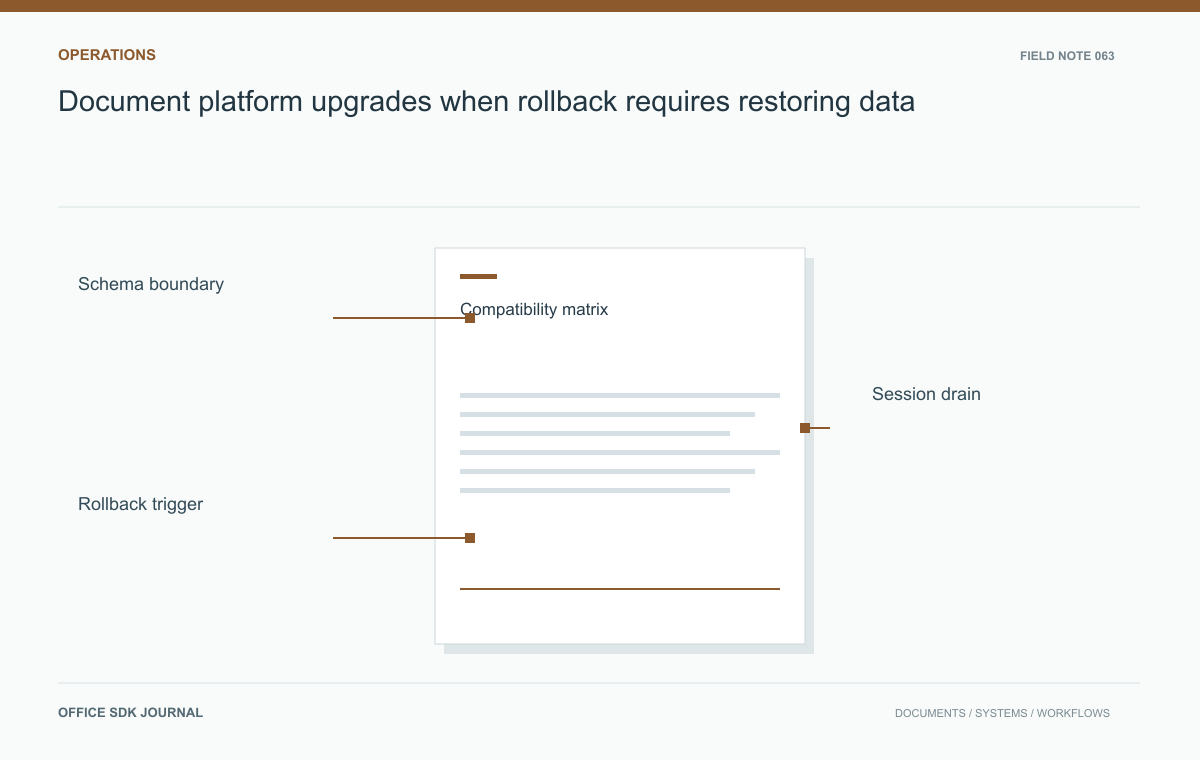
Identify schema changes, state compatibility, session handling, and validation gates before upgrading a document service.
Read story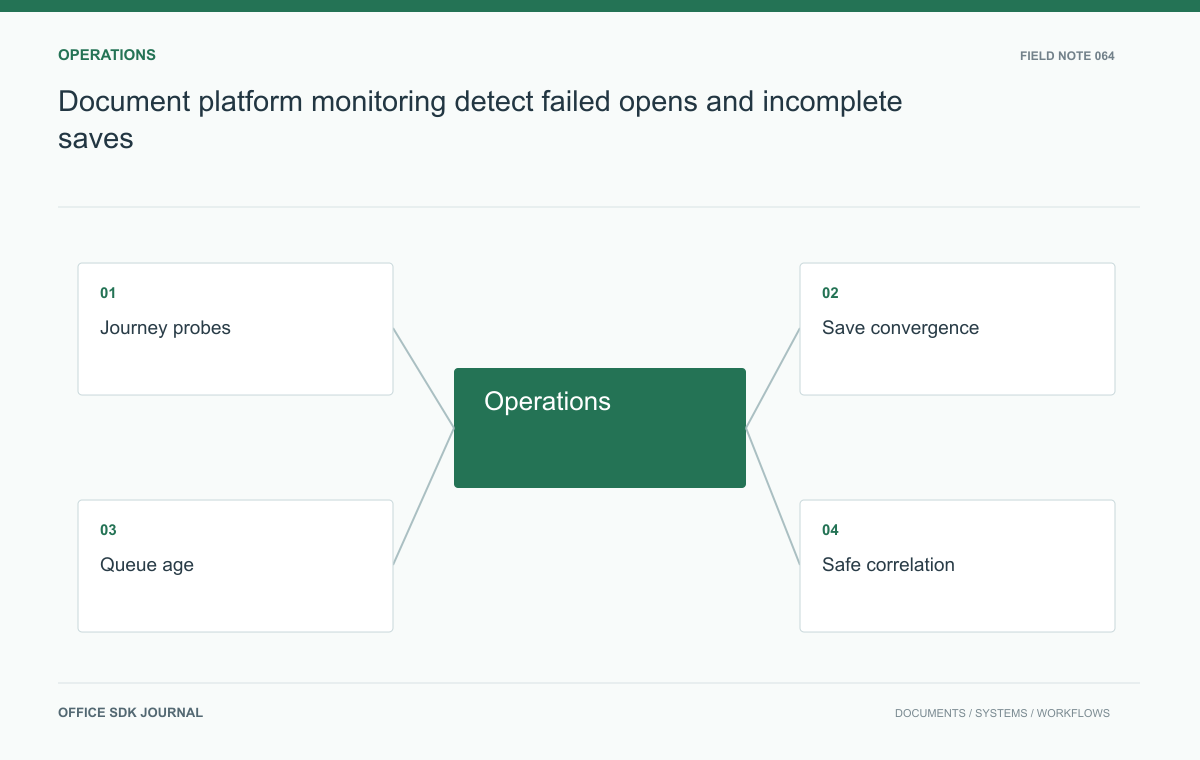
Build document service monitoring from user journeys, queue behavior, persistence evidence, and actionable alerts.
Read story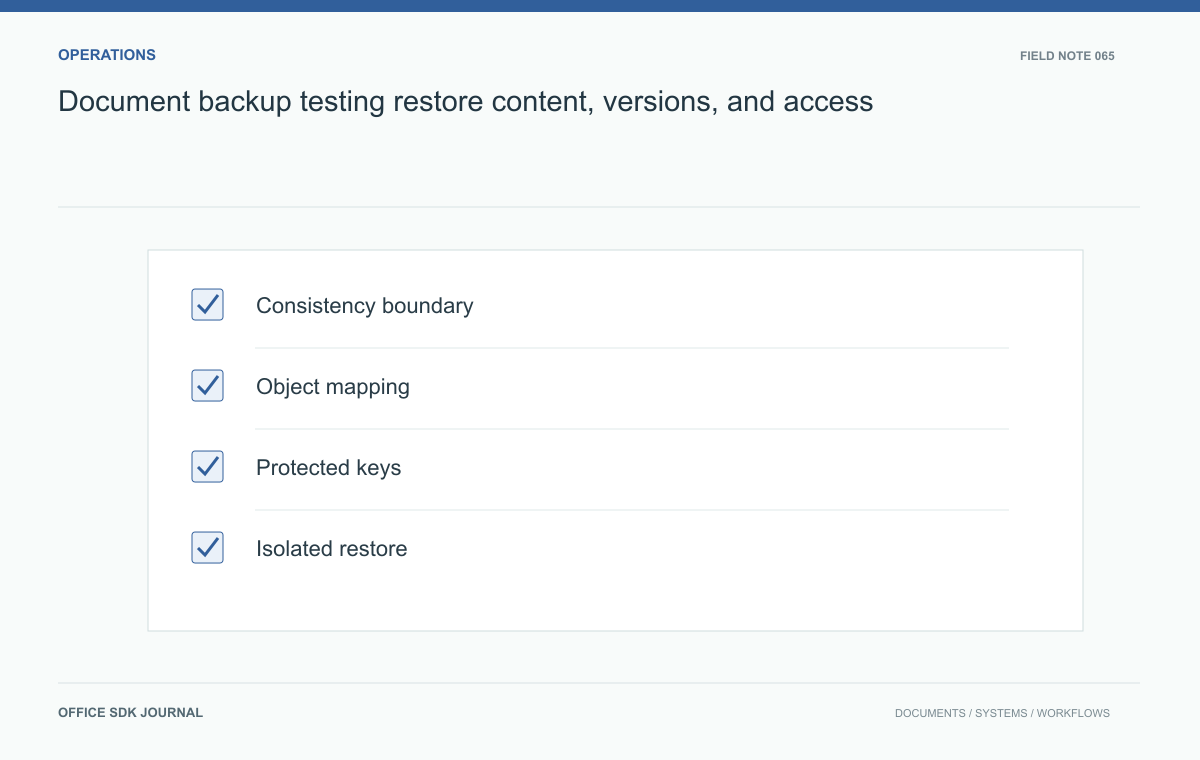
Coordinate content, metadata, configuration, and keys, then verify ordinary user readback from an isolated restore.
Read story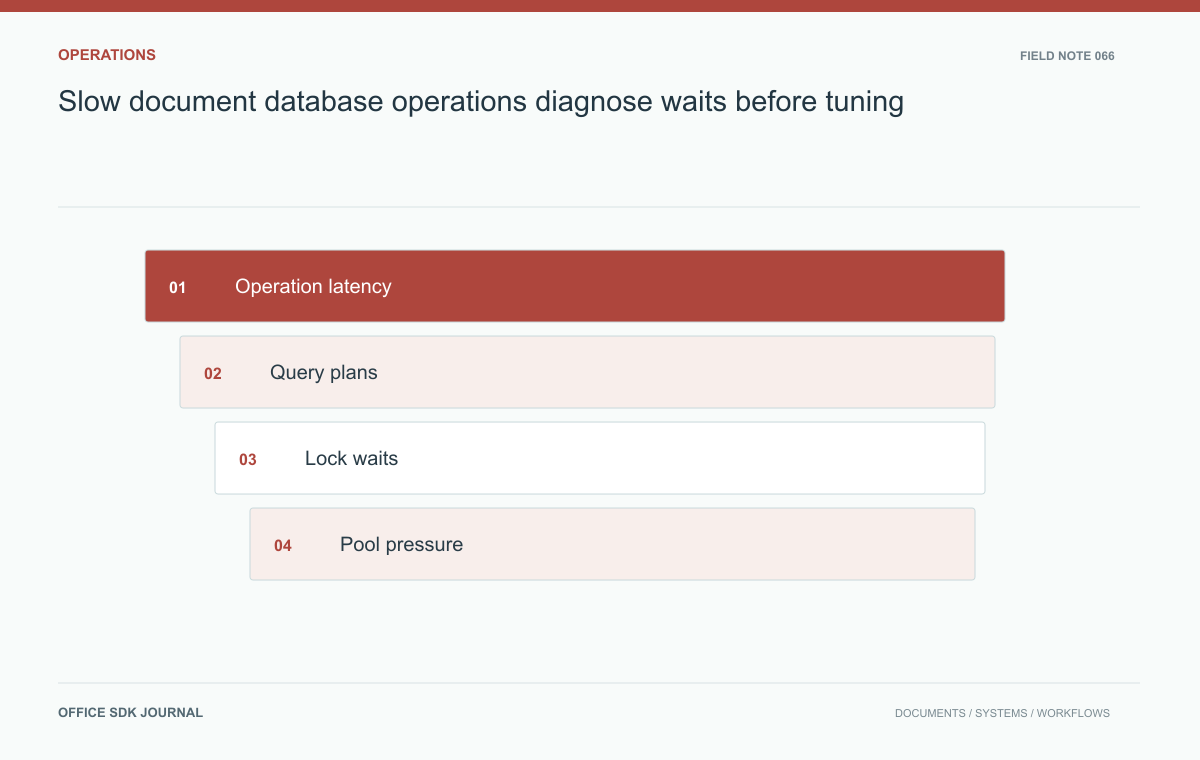
Connect slow document operations to database evidence before changing indexes, pools, memory, or maintenance settings.
Read story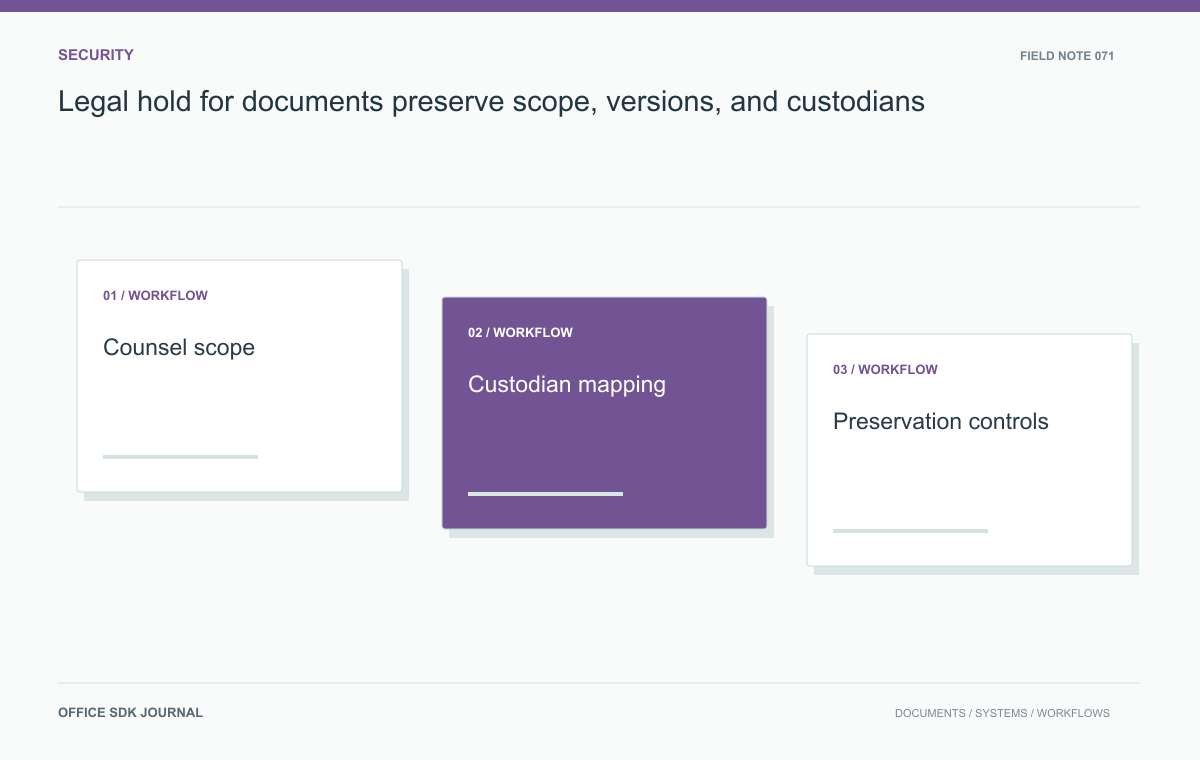
Connect counsel's scope, technical preservation, custodians, verification, and controlled release of a document hold.
Read story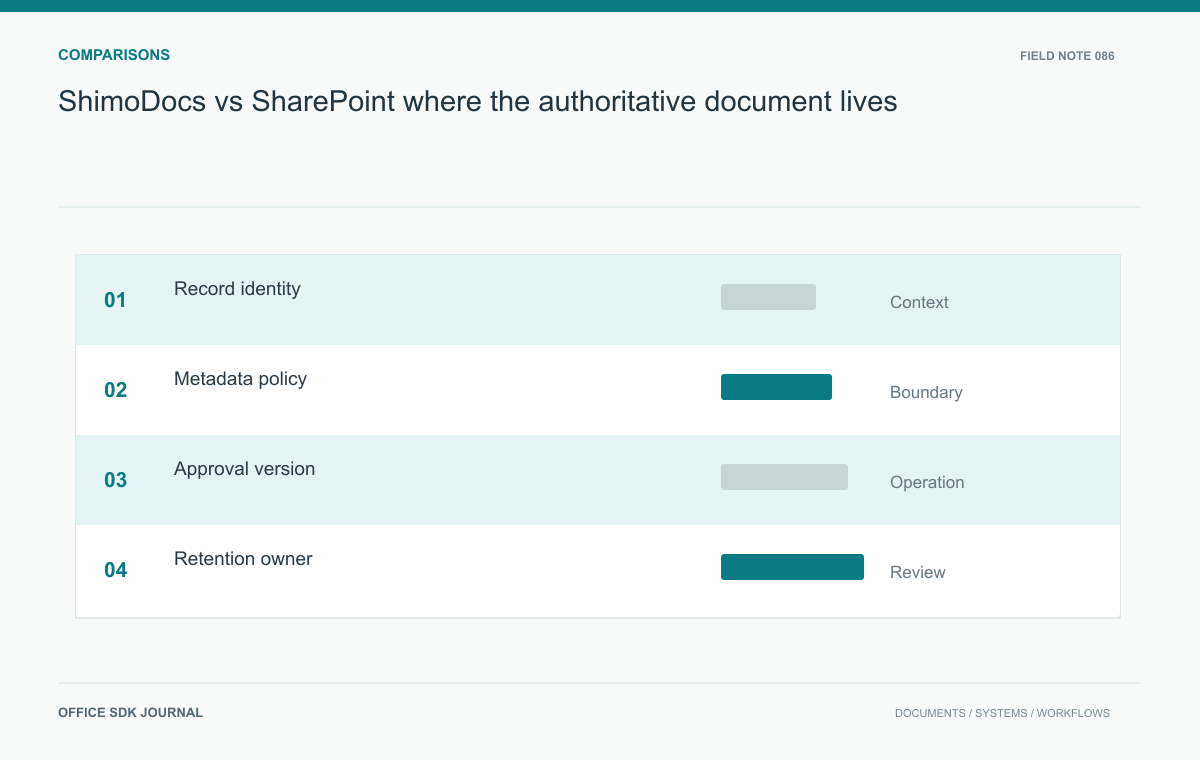
Evaluate editing and document management through metadata, approval versions, lifecycle handoffs, and recovery.
Read story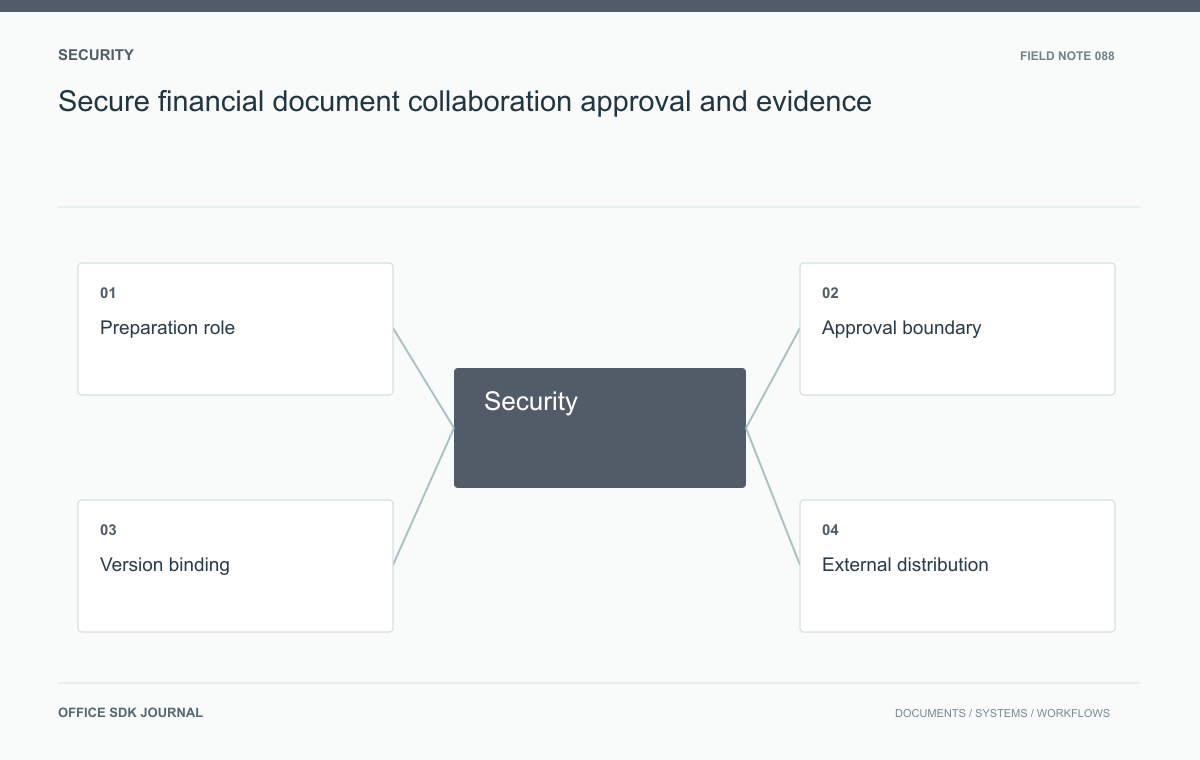
Protect financial document workflows with version-bound decisions, controlled external access, and recoverable evidence.
Read story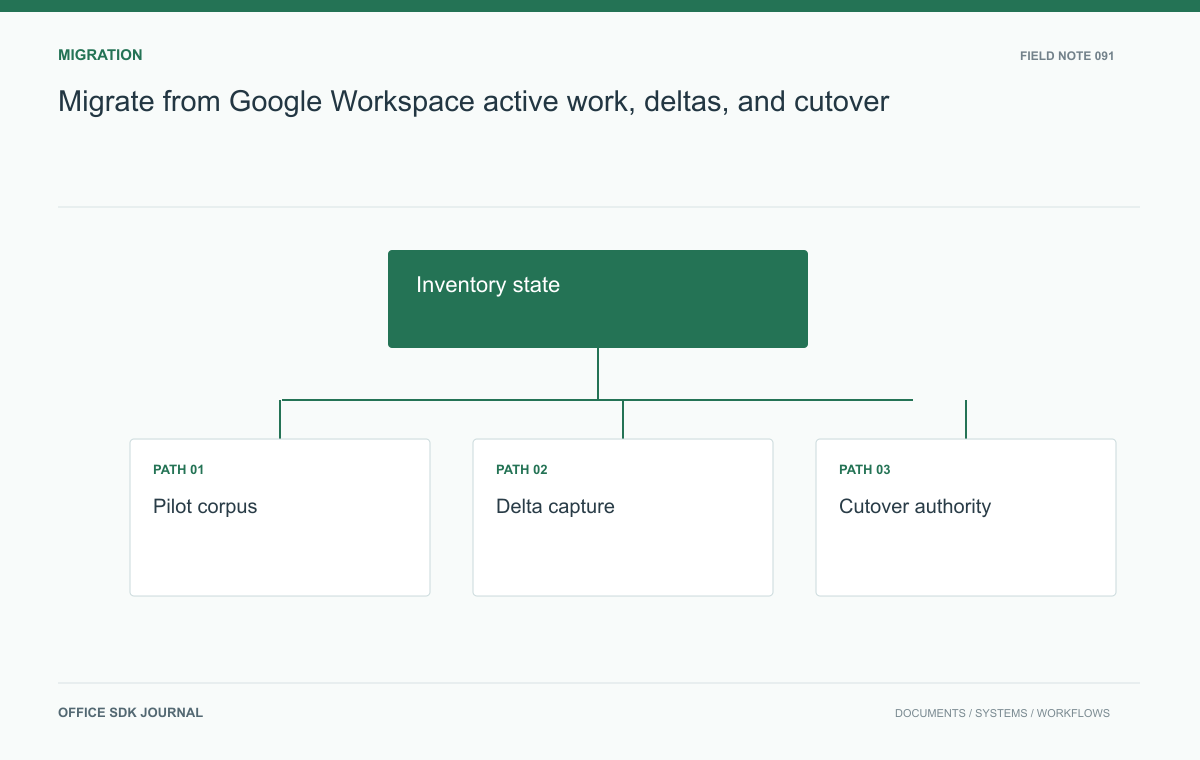
Move documents without losing unfinished work or the context of links, permissions, and submitted versions.
Read story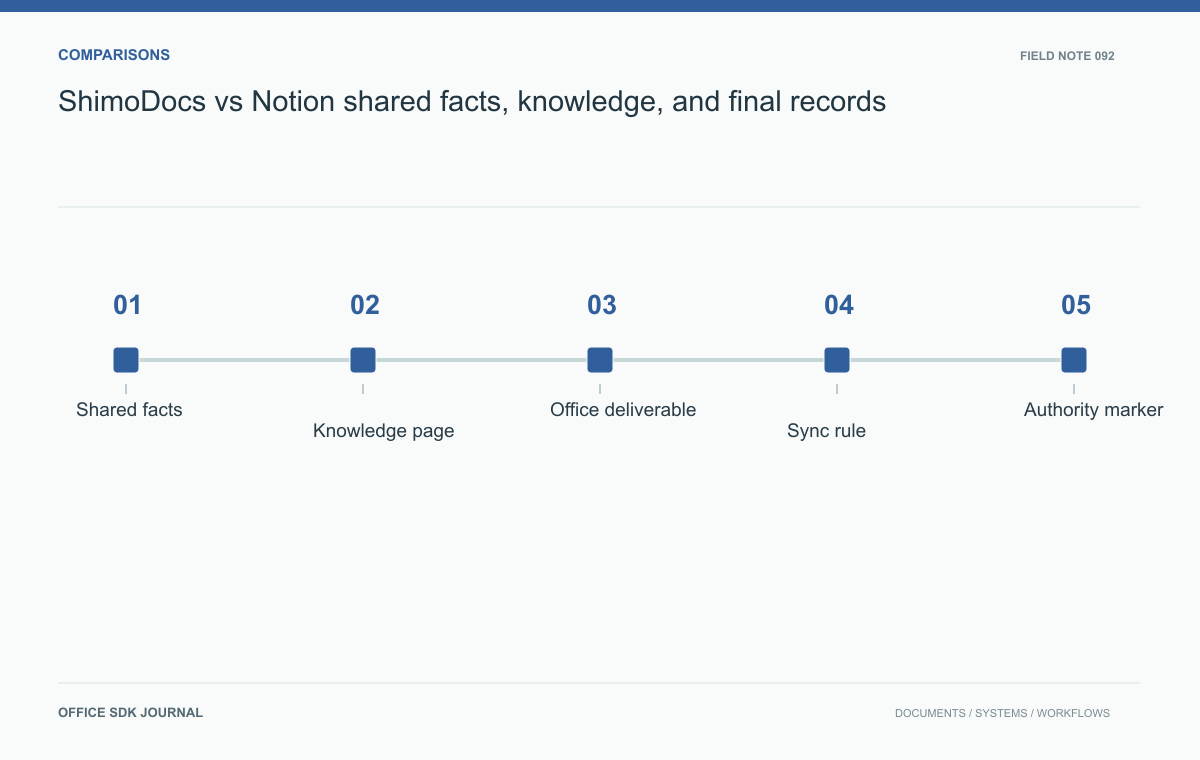
Compare the proposed content models through project handover, update ownership, synchronization, and portable exports.
Read story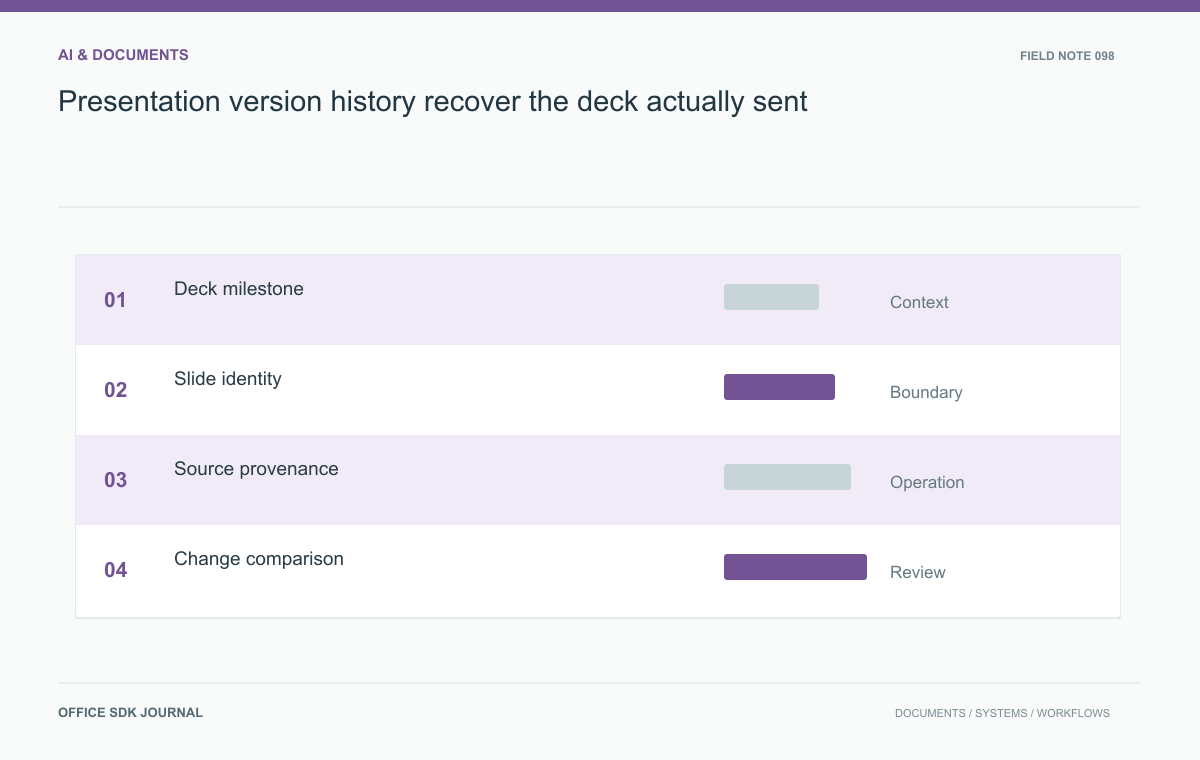
Keep milestones, source provenance, comparisons, and distribution records so deck history answers real questions.
Read story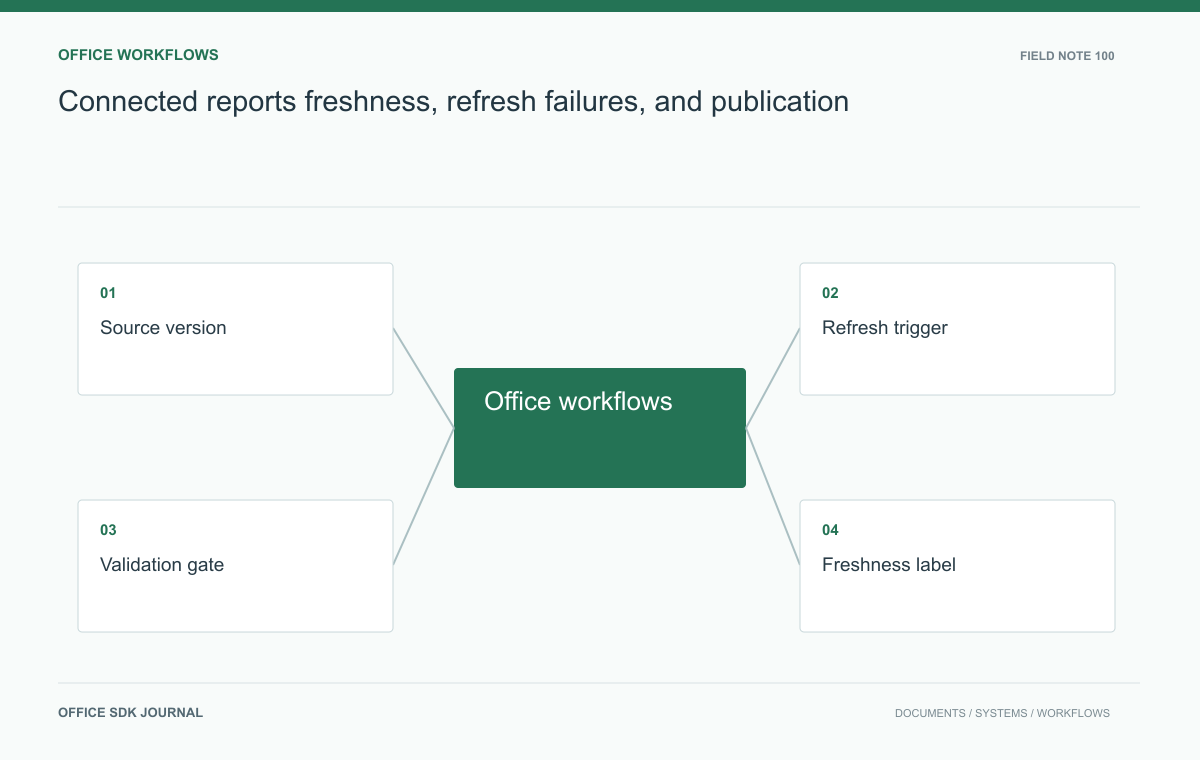
Set source version, validation, stale-data behavior, and fixed publication rules for connected reports.
Read story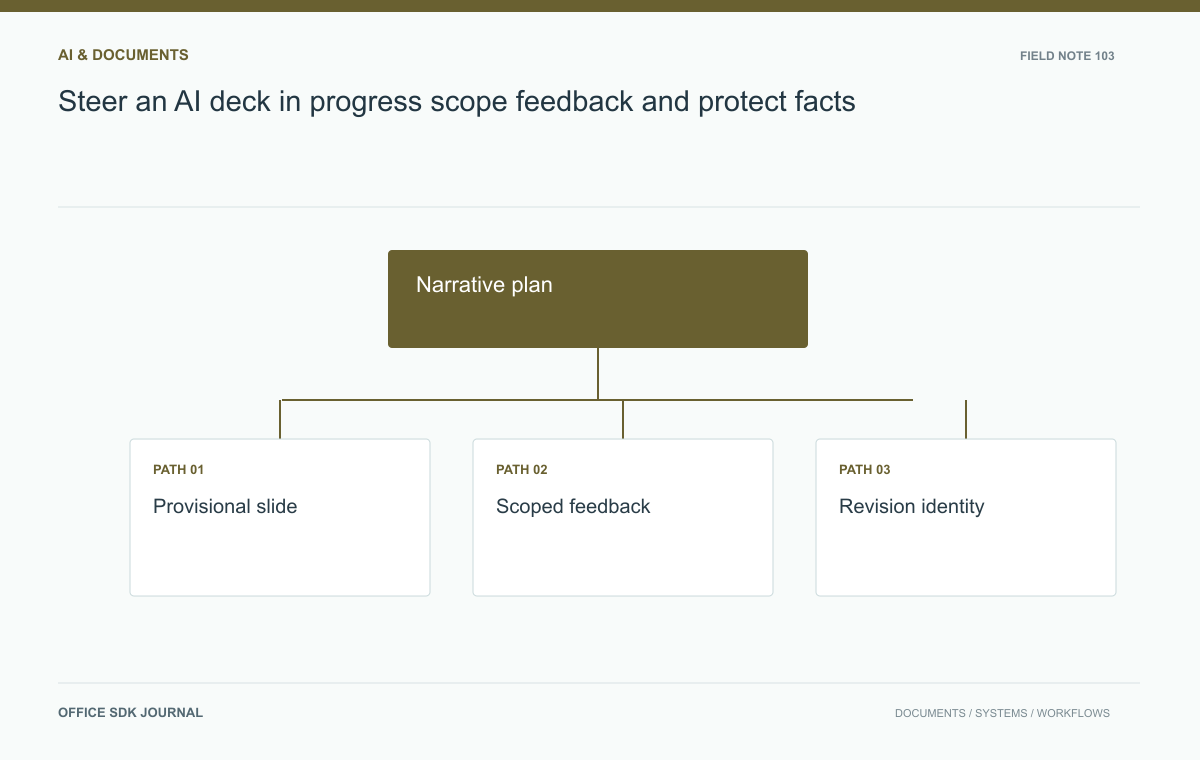
Use accepted outlines, versioned comments, bounded revisions, and final consistency checks during deck generation.
Read story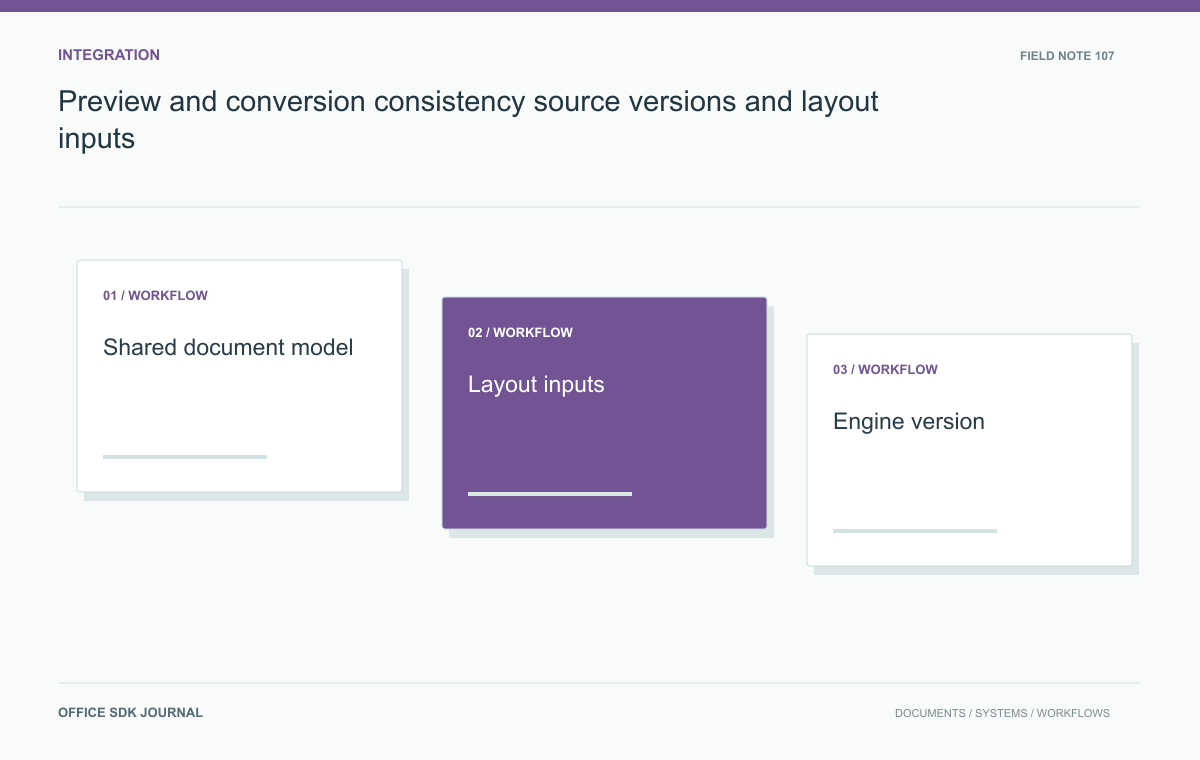
Keep preview and converted output aligned through common models, explicit layout inputs, cache versioning, and approval guards.
Read story